The Story Behind OpenClaw Nobody Is Telling You
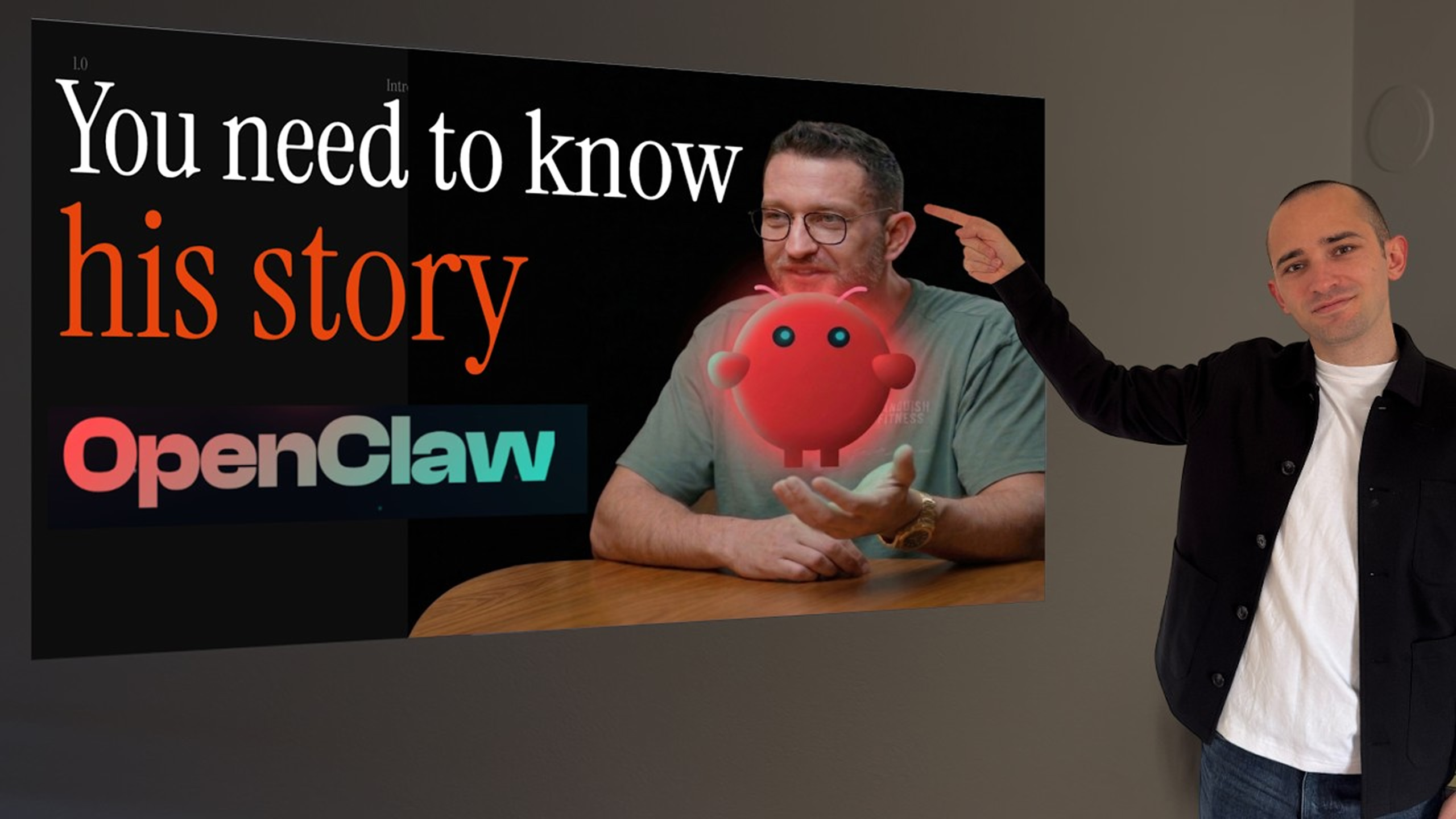
You need to know the story of the OpenGlow founder because this guy before OpenGlow, he actually built a hundred million dollar company. How did he do that? So I'll tell you how he did it and what can you apply for your own startup. Then he then obviously created OpenFlow, OpenFlow, OpenGlow after.
So how did he do it, right? What is this method to generate winning ideas for startup and to finish with if You know about open glow is because he went fucking viral. How do you do that? How do you optimize what you do for virality? Let's dive into it before let me introduce myself. My name is Ben. I'm the founder of pitch deck creators I have raised over a hundred and sixty million Over the last four years and the reason why i'm doing that is that i love startup and i'd like to share those stories anyway let's dive in so yeah this guy was not a random guy right he actually created a company that have that raised not that didn't raise and that's one of the point but that became a hundred million dollar company he exited it for right and so you know you often read in crunch base or in tech crunch like oh
this guy did x or y and z and you often fail to see what in you know not your fault obviously right because there's a ton of information but it's super super easy to feel like you're falling behind and stuff where hey those guys have been here in the game forever right so what was his first company and I think what's interesting here about his first company is actually how he came about doing his first company which is solving a problem he actually has right and this is something I've often see founder missing
but we'll come to that later if you look at Airbnb that's exactly what happened right Airbnb couldn't pay rent in San Francisco because it was it's even more expensive what it is right now right you were couldn't find a taxi in Paris that's the point it was solving an actual problem right his problem was PDF on iPad right it was terrible and oh let's go back and what I wanted to add here is that he was the story here is that he was applying for a visa in the US and he needed to handle a lot of you know PDFs and shit and so he was hard
for him so it's a problem that he lived and i think the key point here is that it's okay if you don't um figure out the solution to the problem directly right it's okay but you should be fixated on a single problem that is painful and this is something that i see is that you see a lot of people now that dreams about building a startup but dreaming about building a startup is dangerous because sometimes you just forget about the main thing, which is solving something people want.
Right. The Waysie shit. And so, yeah, as I mentioned earlier, he bootstrapped that company to a hundred million dollars. bootstrap that company to a hundred million dollar and so here the takeaway that you should get is that vc isn't always wrong like you don't need to always i don't know what i put that title here but what i'm trying to say is that you don't always need to raise venture capital right it's a in and you can bootstrap your way all the way there right however and I think that's the key point it's like when you say oh I can't
raise and and it's so hard to raise and that's my problem the reality is that probably that is not your problem the problem is that you don't have traction yet right and and you say yeah but I need to raise to get traction and that is a proof that no you should be able to find uh a way to get traction without a lot of capital because now the bar has raised for everything ai made the bar race for everything and traction is part of it now it felt like nothing back to the story back to our friend uh peter and I haven't even introduced his name
But a guy's named Peter And he felt like nothing right and so he went raised although that kept again didn't raise all that cash We built that big company 13 years of life and boom after that completely burn out right people management board meetings Customer conflicts conflicts you know no coding anymore because that's and I think it's interesting right because if you want to build a very large company this is where you're heading to you know so keep that in mind it might be fun and all at the beginning and and I mean
those can be fun for some people but when you read those this should be fun to you right and so what he did is that he took a one-way ticket for Madrid and then here you know here we are in 2024 somewhere around that where he's burned out like what if I come in my life I need to reconnect with the essence of life right and he goes to Madrid right but retirement become boring right he's like what the fuck am I doing with my life and so he went to start building again he goes back to his computer in
just about a year ago and there having having the most interesting thing is that he built 43 apps before open flow and none of them work right and so you could see that as a failure which which to some degree it is, but there's a few learnings here. First is that he didn't give up, right? He built 43 apps.
How many pivot did you do, right? Did you do 43 different shit, right? But I think what's interesting is that here, I think you need to think of that as building block to arrive to OpenClo. And this is where, and this is is the key this is where the loops repeats because the way he created open CLO is the same way he created his first company and the thing is he had the mission right he wanted to build all of those apps right but those apps they were hard to build slow to build until he wanted to build all of those apps right but those apps uh they were hard to build
slow to build and so he wanted to have agent to help him right and that's exactly how we build it now the virality i'm sorry to announce you but it was completely accidental right and so here there's no secret sauce however did my research and there's a few things you can take away from how it went viral because at the beginning it didn't go viral at all people didn't care like people he posted on twitter he said it's like a person on twitter and people like uh i don't get it right um and so what happened is that he created a discord and here he offered, in startup words, a demo, something for people to use.
And when people started to experience it from their own, they realized how great the shit was. And so the good thing is Otter started to explain what he was doing for him in ways that is more understandable. And this is why your YouTube feed has been flow with open clue because you have people who saw the solution understand it and explained in a better way that he was and so now for you what does it mean right how do you go viral but this is even beyond that not exactly not only how do you go viral but how do you make someone understand what you do so then to use it so then to invest in you is that you need to explain
correctly what you do and here you be thank you Benjamin that doesn't help a lot right but how do you do that how do you explain what do you do for my experiment king countless big check and spending a shit ton of time writing them, the key difference here, what you need to do is to make them feel the pain, how painful it is.
And if we look back to OpenGLO, people only understood when they were able to use it. How do you put the VC, your user in the shoes of the problem of the person who has the problem and if you can do that you can raise so that's the takeaway solve an actual problem not a dream be patient it takes time like it's okay if it doesn't work from the beginning show it show what you do give a demo investors, don't just explain it, and make people feel the pain.
That's it for today, if there's any other founder story you want me to cover, just drop it in the comment. Thank you, bye bye.
You might also like: