This equation will decides if you raise money
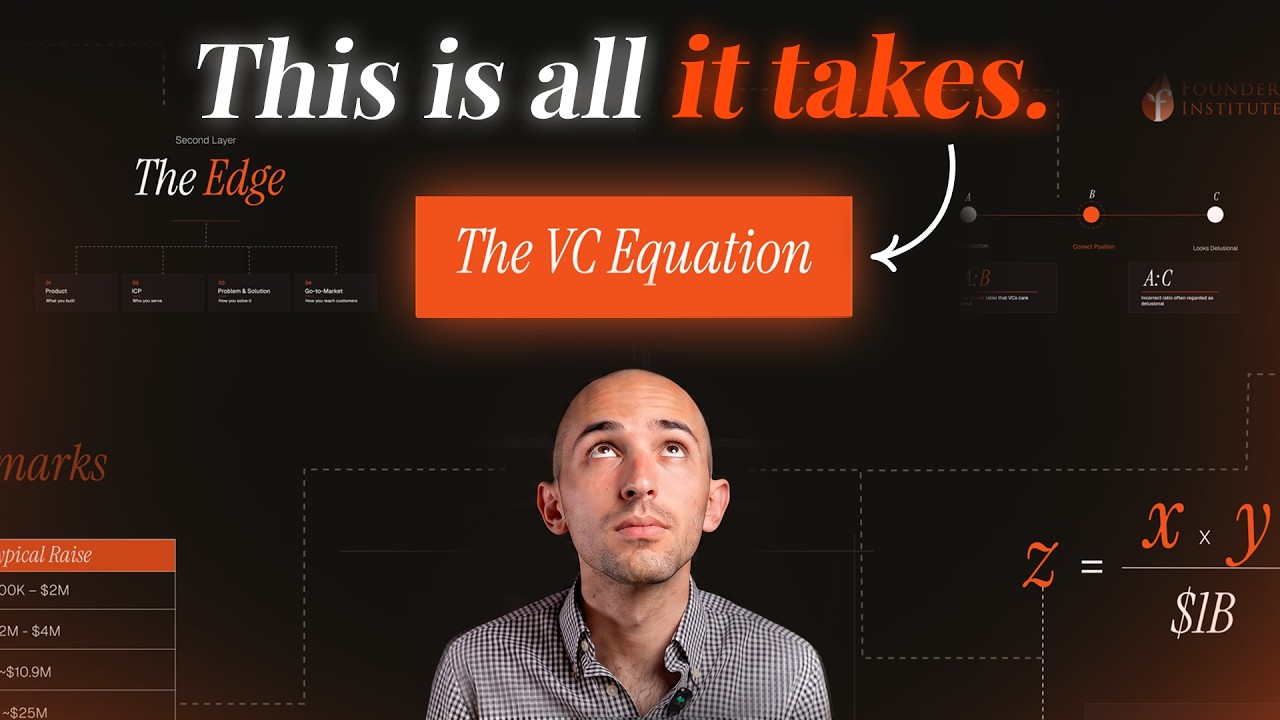
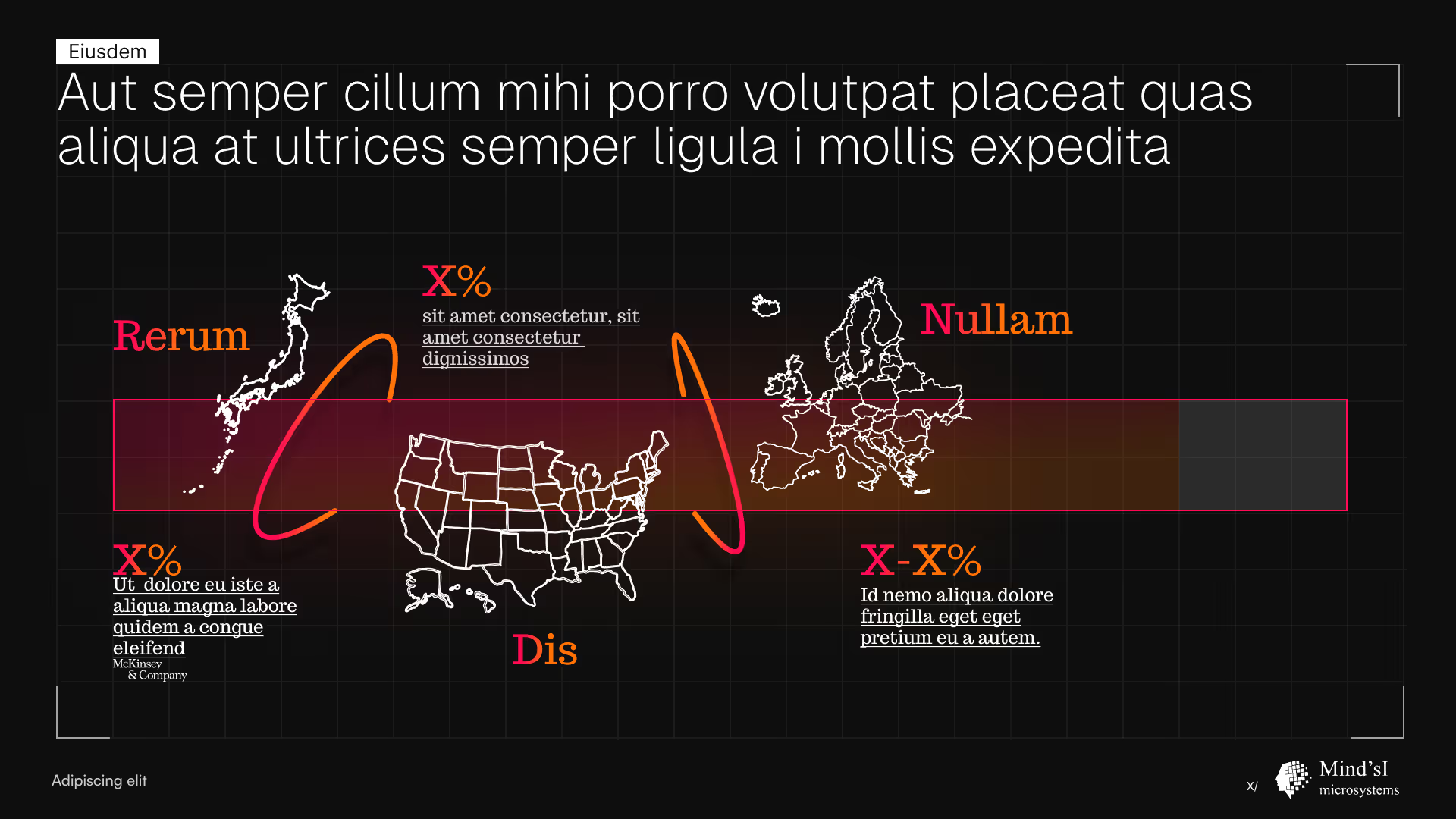
This is the equation that every VC used to evaluate your startup. And watch this closely because every founder who successfully raised had those six variable rights. And while you pitch that could be the one that closed the round, all of this potential could be wasted before the VCs even see the first slide. The first variable is the one that kills you before a VC even open your decks. You could have the best product, the strongest traction, the biggest market in the world, but if you're pitching a phone that doesn't invest in your space, none of this matter, which is why the variable number one is spit. And the question that the VC is asking is, is it a good match for our fund? And to make sure that there is a match, there's three dimension that they look at. Industry, stage, geography. If any of those are wrong, the whole thing goes to zero.
Before you send a single email, check the fit. check every single element and today it's super easy to do that you can just use AI to do your research but there's one tricky one the stage because what stage really mean is traction because your stage is defined by how much traction you have so you have two path the best path is to create a relationship with the VC and send them an email to try to understand and to get that data from yourself but there's a fallback uh you can use this benchmark here which is done by Founder Institute and it's quite reliable uh we have a podcast where we interview VCs and on there we discover that there's a pretty good match with what's in this benchmark and the reality. The second question a VC ask is what do you actually do and should your startup even exist and this variable has two layer the gap and the edge.
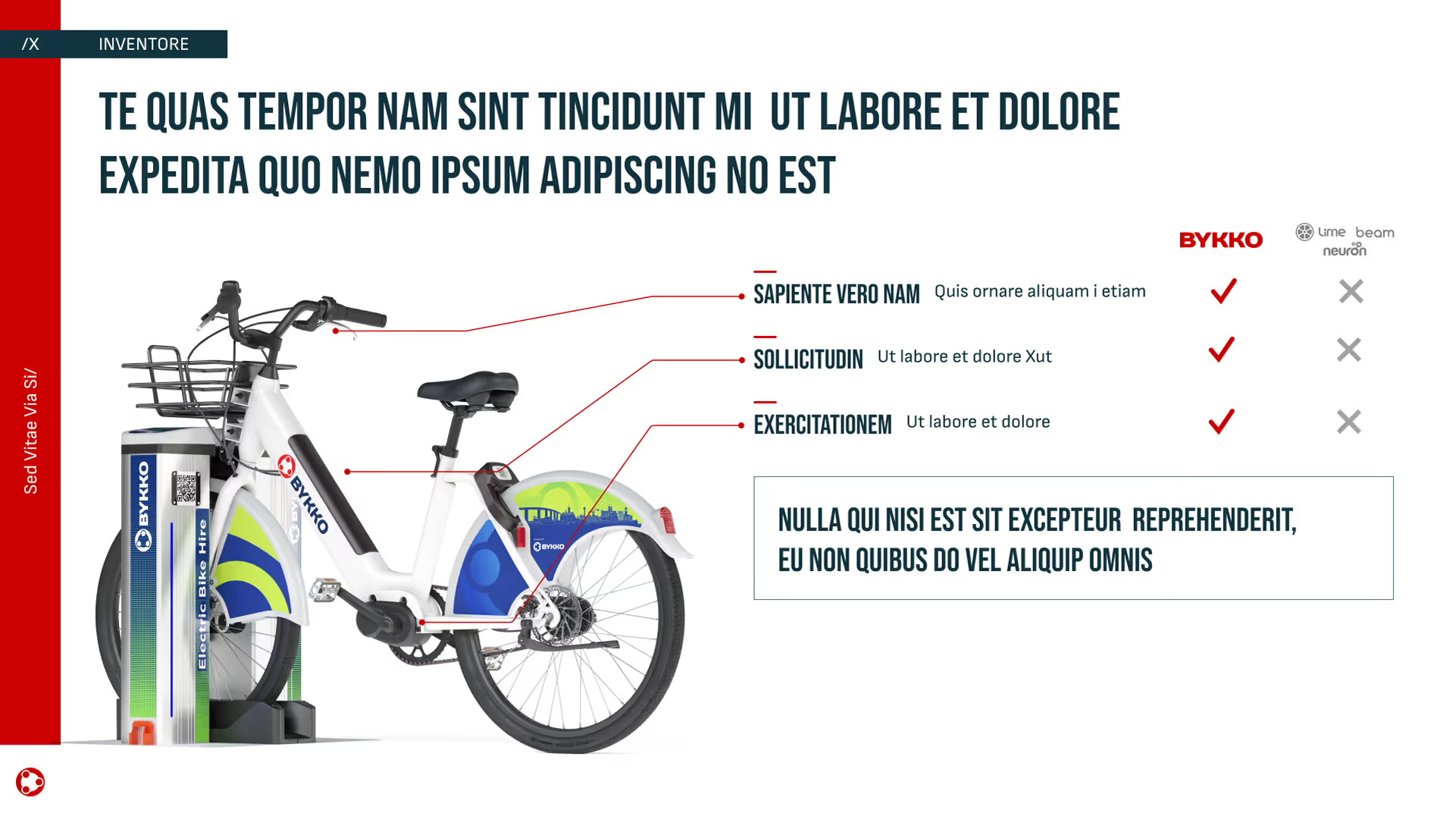
The first layer the gap on one side there's where your customer is right now on the other side they're where your customer want to be and the distance is the gap to have a strong gap there's three condition you need to be big you need able to measure it and you need to be painful let's take a look at what it means here's what most founder writes hiring is inefficient now look at the quantified version companies spend $4,000 in 2 months to make the wrong hire The first tell me nothing. I can feel it. I can size it. The second one I can measure it and I know that this is a big deal for the company. But having a gap in the solution isn't enough. The VC also need to know what do you understand that your competition doesn't and that's your edge and it's measured across four dimension. Your product, your ICP, your problem and solution and your go to market. Michael Syel from YC calls this the most important part of the pitch. Now the VC will look at probably the most important part of your startup. Do you have the right team? A lot of founders thinks that is just the bios on their team slide. A VC evaluate two things and they weight them very differently.
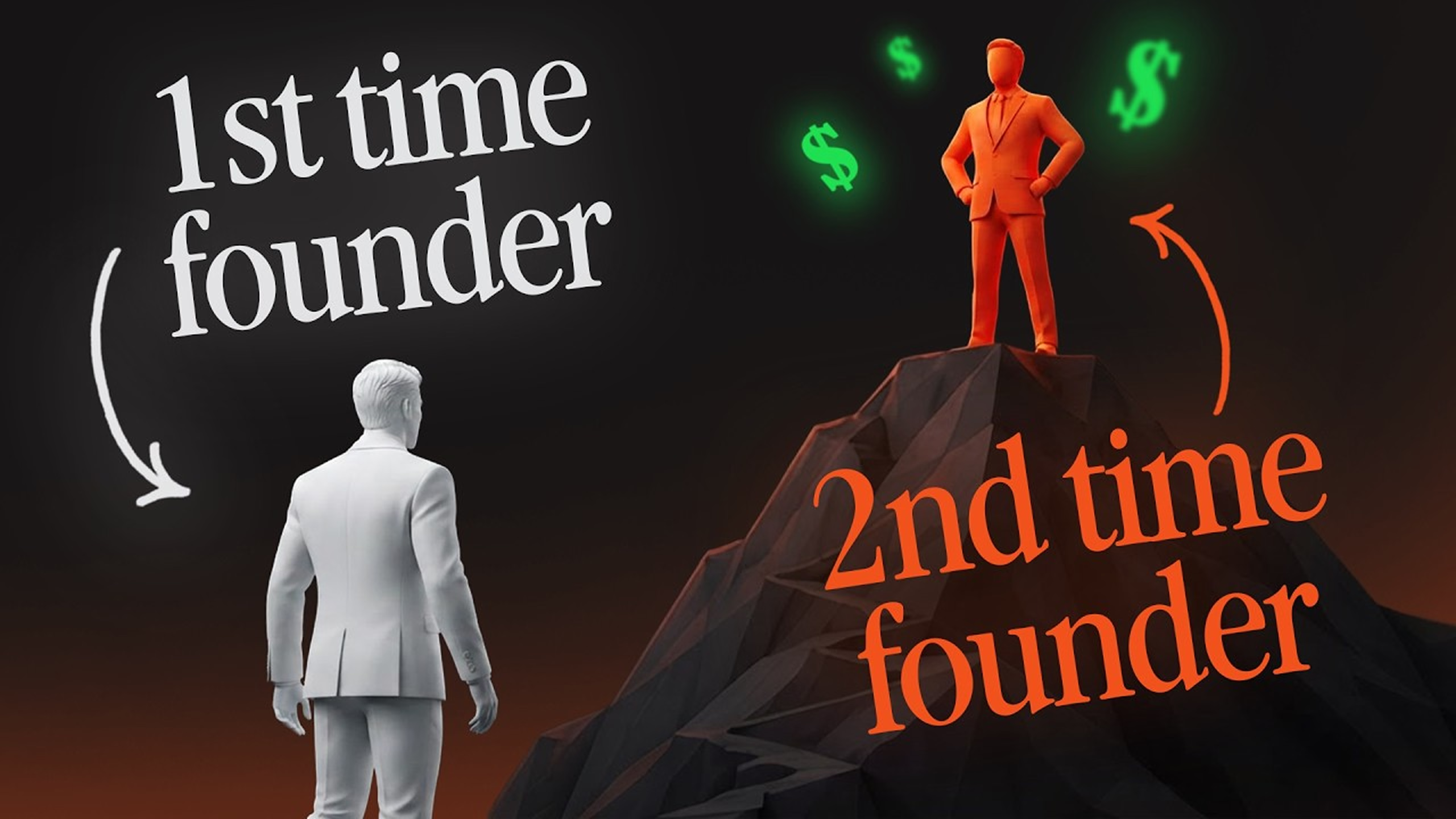
The first one and the most important one, have you built a startup before? Do you understand what it takes to go from zero to one? This is the single most important signal a VC look at. A second line fighter with a track record can raise with significantly less traction because their experience they risk the investment. And the second thing, do you have experience in the field where you're building? Do you know the problem from the inside? And here's the insight that I discovered working with different fund. Startup experience and traction work as a trade-off. The more startup experience you have, the less traction VC need to see because there's trust you'll get there. But if you're a first-time founder, you need to compensate with a stronger traction.
This is why serial founder can raise on a napkin and a first- time founder sometimes struggle even to raise with a 50k MR. It's not unfair. It's the VC pricing the risk. Now, I know it can be really hard to understand if you're actually doing a good job at putting all of this within your deck. So, what I've done is that I put a link down below where you can summon your deck. And if you do that, I'll do a completely free patch deck reveal. Now, let's get back to it. This is a killer question because you can have everything right, you can have the trash, you can have the team, but if your TM is not big enough, you won't raise. Most founders throw a number on the slide, a $50 billion market from a statistic report and think that's enough. But VC don't care about this number from a random report. What they want is to see your math. And the math are actually quite easy.
Take your full ICP, all the customer segments you can eventually serve, and multiply that with your business model. How do you charge your customer and how you will charge them in the future? Divide that by the billion dollar. And if the result is one or above, you have a VC scale market. and below one you don't because it's really hard to build a billion dollar company within a market that is a billion dollar market. The math just don't work. Now there's a fine line here. The goal is not to put a billion dollar market on the slide and hope nobody ask questions. You see see through this instantly. That's the job, right? And so what you need to do is go back to your vision. Think about your company in 5 to seven years. If everything works out, if you execute, if you expand, what could this become? Right now, your ICP is specific and it should be, but what is the credible path to reach a much larger market? Let's take the example of deal now a billion dollar company. When they first raise, they were targeting 200,000 small companies hiring contractors.
That made for a $600 million market. But they had the vision that they were building something that could work for any company size. And that open 50 to$100 billion market. Now we are four variable in fit product team market. And if you arrive here and they're all strong the VC a real opportunity but now become the last two variable but this is something you see pay close attention to. Do you have the right trajectory? Remember the the benchmark table I showed you earlier. It come backs here.
The VC is asking where you are now and what is the next realistic step you have to take. So if you're a SAS company and have 20K in MR and trying to raise a $10 million s a you're skipping a step and VCs will see that the ratio between where you are and where you're going need to make sense. A VC want to see that you know exactly where you stand and that the next milestone is one step ahead not three. If you overshoot, you look delusional. And after the VC believe your trading jury is realistic, there's one final question.
Do you have a credible road map? This is where the number need to get concrete. How much should you actually raise? And there's benchmark for this too. Here's some data from Carter showing run size by stage. But the benchmark is just a range. The real question is how much money do you actually need? Your ask should cover what you need to invest in your product and your go-to market strategy. And this is what the VC will actually look at. Can your investment in your product and your go-to market strategy actually get you to the right milestone? So now the sixth question every VC is asking fit product team market trajectory and roadmap.
Now to increase your chance to raise you need to increase your surface of luck. And how do you do that? You do that by being able to not only have those component in your company but actually be able to pitch them. So yes, in a pitch tag, but also when you meet people as a founder, you're the number one communicator of what you're creating and you should be able to communicate it fast. So I've created here a video that helps you create a 30-cond pitch so that every time you meet someone that could have a potential interest, you can tell them what you do in a convincing way. You can watch it here.
You might also like: