Pitch Deck Slide Mastery
Learn the purpose, structure, and best practices for every essential pitch deck slide.
Explore every slide
If there’s one slide in your pitch deck that investors care about instantly, it’s your Traction Slide. This is the proof that your startup is moving, growing, and resonating — and it’s the slide that communicates that progress faster than anything else.
As you build it, keep one guiding question in mind: How can you make it effortless for an investor to understand exactly what you’ve achieved? Traction isn’t about dressing up numbers; it’s about clarity. And clarity comes from two sides:
The writing — using simple, direct language to explain what you’ve done, without jargon or fluff.
The design — visually representing your progress so that an investor can grasp it in seconds.
These two elements together are what make a Traction Slide truly powerful — and why traction is one of the core pillars of great pitch deck design.
In the next sections, we’ll dive deep into how to structure, write, and visualize your traction so investors immediately get the picture.
Traction Slide: What is it and Why is it Important?
Ever glanced at a startup and thought, "Is this the real deal?"
Enter the Traction Slide. It's not just a flashy bar chart or a list of numbers. It's your startup's heartbeat displayed in HD.
Why's it so darn important? Because investors aren't just investing in ideas. They crave evidence.
Whether you’re showcasing rising revenues or the new big-shot partnership you've clinched, the Traction Slide is your golden ticket. Think of it as your bragging rights: showcasing your startup’s momentum, validation, and most importantly, its potential to skyrocket.
In a world where startups can flicker out faster than a candle in the wind, your Traction Slide stands tall, whispering to investors, "Bet on us. We're going places."
Key Milestones to be Included in Traction Slide
Ever wondered what makes a Traction Slide pop and sizzle? It's all about showcasing the right milestones.
Let's unpack the essentials that'll make investors sit up and take notice.
User Growth Metrics
Got a growing user base? Flaunt it!
Users, after all, are the lifeblood of your startup. If your user numbers are climbing monthly, it's like having a glowing neon sign that screams: “We're hot right now!”
.avif)
Month-on-month growth isn't just a fancy metric; it's the pulse of your product's allure. Picture a graph, soaring upwards, capturing the excitement of every new sign-up, every active user.
This isn't just about boasting; it's about painting a vivid story of demand and scalability.
After all, in the pitch deck universe, a surging user graph isn't just data—it's pure adrenaline for investors.
Revenues
Show me the money! That's what every investor's inner voice is whispering, even if they're all smiles and nods.
Revenues in the traction slide?
Whether you're flashing dazzling MRR figures or charting an upward swoop in annual returns, revenue is a tangible testament to your startup’s allure.
.avif)
Not yet rolling in the green? Fear not! Even a budding sales funnel can hint at promising goldmines ahead.
But remember: honesty reigns supreme. A candid, month-by-month revenue snapshot doesn’t just charm investors; it tells them your startup isn’t just making noise—it’s making a bank.
Customer Testimonials/Case Studies
Ever heard the saying, "Your customers can be your best advertisers"?
In the startup world, this couldn't be truer. In the traction dance, customer testimonials and case studies are your show-stopping moves.
Positive feedback? That's your product’s standing ovation. Trustpilot raves or an enviable NPS score?
Consider those your encore calls. While raw numbers reveal your appeal, it's these firsthand accounts that offer investors a window into your impact.
.avif)
They show your solution isn’t just viable—it's transformative.
So, don't be shy; flaunt those rave reviews and quantifiable success stories.
Key Partnerships or Deals
Ever noticed how a startup suddenly becomes more "legit" after striking a deal with industry giants? That's the magic of key alliances.
Flaunting these partnerships in your pitch deck isn't just a boastful move; it's strategy. It showcases your business's credibility and its knack for rubbing shoulders with industry bigwigs.
By revealing these alliances, you're indirectly telling your investors: "Look who trusts us!"
So, whether it's a strategic collaboration or a nod from a renowned brand, wear it as a badge of honor on your traction slide.
After all, nothing screams a 'reliable bet' to investors more than established industry connections.
Product Development Milestones
In the startup world, standing still is moving backward! That's where product development milestones come into play.
On your traction slide, it's not just about flashing user numbers or profits; it's about showcasing your product's evolution journey.
From that first version, which was... let's admit, a bit rough around the edges, to your latest polished iteration. Every tweak, upgrade, and overhaul shows your commitment to excellence.
It tells your investors, "We're not just resting on our laurels; we're relentlessly refining!"
So, toss those development badges proudly on the slide. They're a testament to your never-ending quest for perfection.
Press and Awards
Press coverage and awards are your startup's shiny trophies, and they deserve a spotlight on your traction slide. It's not just about vanity; it's about validation!
Being recognized by the press or bagging an industry award tells investors that you're not just another startup; you're THE startup to watch. It's like having industry experts giving you a gold star.
Here is a compelling traction slide example of Klima’s pitch deck, a fight climate change app:
.avif)
So, go ahead, flaunt those headlines and glittering accolades.
They're not just bragging rights; they're investor magnets, turning casual glances into focused stares!
Best Tips for Traction Slide
Ready to give your traction slide some swagger? Dive into our top tips to ensure it's not just informative but irresistibly captivating!
Let’s make investors swoon!
Content Tips
Crafting the perfect traction slide? Here's the essence to encapsulate:
- Revenue Showcases: Highlight your earnings if they're rolling in already.
- Vital Metrics: App installs, downloads, user counts, leads, and marketing data - they validate your solution.
- User Feedback: Positive testimonials to reinforce product-market fit.
- Assumption Chronicles: Past predictions and their outcomes, revealing adaptability.
- Problem-Solving Proof: Requests, revenue, and relevant metrics demonstrating real-world problem-solving.
Design Tips
Elevate your traction slide with these snazzy design hacks:
- Font Finesse: Opt for clear, swift-to-scan font styles.
- Pixel Perfection: Always gravitate towards high-res images.
- Simplicity Rules: A minimalist design cuts through noise faster.
- Consistency Counts: Maintain a steady design flow; cohesion captivates.
Questions to be Answered
Here are five crucial queries that a killer traction slide should address:
- Moving forward or stuck in a rut?
- Did past assumptions hit the mark?
- Nailing that product-market fit yet?
- Are customers smitten with your product?
- Seeing a market surge? Got metrics to flaunt?
Final Thoughts
Wrapping up, traction slides aren’t one-size-fits-all. For the fresh-faced startup, it’s all about showcasing budding customer engagement. For the post-revenue pros? Flash those solid sales figures. Every startup has its unique rhythm and rhyme, but the beat remains the same: win investor trust. Your goal? Perfectly choreograph your traction game to captivate your investors. So, whether you’re taking baby steps or full-on moonwalking, ensure you’re belting out your startup’s momentum in the clearest tune. After all, it’s your pitch – make it resonate!
👉 Need help presenting your traction clearly and visually? Explore our Pitch Deck Design Service.

When founders think about the team slide, they often focus on introducing people. But investors look at it differently. They judge your team through the lens of your company: Is this the right group of people to build this specific business? That’s the real question behind every team slide.
Your job isn’t just to list names and titles. It’s to show why each person is the right fit for the challenge you’re solving. If there’s a gap — experience, market knowledge, or technical depth — that’s where complementary roles or strong advisors matter. A VC should look at your slide and immediately feel, “Yes, this team makes sense.”
In this article, we’ll walk through clear examples of effective team slides and break down what investors are actually evaluating. And if you want help crafting the right narrative for your team, the same approach we use in our pitch deck writing work can make this part of your story much stronger.
Team Slide: What is it and Why is it Important?
A team slide is your startup's digital handshake, offering a virtual introduction to the faces and forces propelling your dream.
Think of it as your business's "Meet the Team" moment, where education, experience, and passions collide, illustrating why these are the right minds for the mission.
Why is it vital?
.avif)
Investors aren't just throwing money at your product; they're betting on a synergy of skills, shared visions, and spirited camaraderie that can weather startup storms.
They need to feel the vibe, the inspiration, and the unified drive behind your venture. It's not just about what you're building; it's about who's building it.
Are they worth the gamble? Your team slide answers that.
What to Include in Pitch Deck Team Slide?
Ready to showcase your dream team? But wait! Are you packing the right punches on that slide?
Let's discuss the must-haves that make investors nod in approval.
Team Photos
"First impressions count, don't they? On your team slide, it starts with faces. Clear, professional photos give a human touch, making your dream team more than just names on a screen.
By showcasing professional images, you introduce the heart and soul behind your startup. It's that visual connection, letting investors peer into the passion, commitment, and dynamism of each member.
Here is an example of an attractive team slide:

Faces exude trust and authenticity, so let your team shine in the limelight and ensure investors recognize the personalities powering your vision.
Names & Titles
Photos make an intro, but names and titles? They're the handshake.
Just as you wouldn't address a CEO as an intern, it's pivotal that investors know who's who in your startup zoo.
Let names and titles serve as your team's badges of honor, offering a peek into their roles and significance.
Think of it as your startup's roll call; a clear, quick guide to the champions of your venture.
Brief Background Overview
Behind every name and title lies a story, right?
A succinct background overview acts as your team's mini-autobiography. It's like giving investors a condensed, flavorful sip of each member's journey—where they’ve been, what they've conquered, and why they're aboard this ship.
Here is an example of a team slide with a catchy overview for each member:
.avif)
A sprinkling of history for a robust understanding. It's more than credentials; it's about context.
Professional Experience
The realm of experience—where theory meets action.
Here’s where your team's past ventures, successes, and lessons come to the fore. It's like flipping through a highlight reel of each member's professional milestones.
Here is an example of an attractive team slide with relevant professional experience:
.avif)
To an investor, this isn't just a résumé; it's assurance. Assurance that your team isn't just passionate, but seasoned, ready to tackle challenges with finesse.
Special Achievements
Every team has its superstars, and every superstar has their shining moment.
Special achievements are those gold stars on your team's report card. They scream 'We've done remarkable things before, and we'll do it again!'
.avif)
It's like the cherry on top, the extra oomph, the flair that sets your team apart.
Investors don't just see awards or accolades—they see potential turned into proven prowess.
Relevant Skills
Skills, the toolkit of the modern trailblazer. Beyond just titles and experiences, it's the skills that act as the gears turning your startup's machinery.
Think of them as specialized weapons each member wields.
.avif)
And why relevant? Because in the startup arena, precision matters.
To investors, these aren’t just skills, they're direct indicators of how aptly your team can navigate the turbulent tides of entrepreneurship.
It's a promise of expertise in action.
Design and Content Tips
Crafting an impeccable team slide isn't just about content; design and presentation are pivotal.
Dive into these tips to ensure your slide strikes the right chord:
- Keep it Concise: Briefness is the soul of wit. Showcase team essentials, and eliminate the fluff.
- Use Bullet Points: Structure matters. Separating info ensures clarity and boosts readability.
- Prioritize Images: A team photo adds warmth and engagement. Keep visuals personable and genuine.
- Consistent Formatting: Uniformity screams professionalism. Keep fonts and layouts cohesive across the slide.
- Audience-Centric Customization: Understand your audience. Highlight only what they'd deem valuable.
- Embrace Simplicity: Less is often more. Present information visually, prioritizing brevity and impact.
- Best Over All: Showcase highlights, not an autobiography. Elevate relevance over quantity.
- Graphic Appeal: Utilize logos and infographics. A single graphic can narrate a richer story than dense text.
- Limit Member Display: Focus on the top 5-6. Highlight founders or pivotal roles, ensuring clarity.
- High-Quality Visuals: Prioritize high-resolution pictures. Blurred images can blur your startup's appeal.
- Simple Design Philosophy: A clutter-free, minimalistic design retains attention, ensuring your message is undiluted.
- Clear Fonts: Prioritize readability. Choose fonts that are both stylish and instantly legible.
Final Thoughts
A strong team slide isn’t about flashy titles or long biographies — it’s about giving investors confidence that the people behind the idea can actually execute it. When VCs evaluate this slide, they’re asking one question: Does this team have what it takes to build this company? If your answer isn’t an immediate “yes,” the slide needs work.
Keep your messaging concise, highlight the strengths that truly matter, and use advisors to close any experience gaps. The goal is simple: make it clear why this group of people is the right one to bet on.
And if you want to sharpen how your team story is presented — from headlines to positioning — our Pitch Deck Writing Services can help you articulate it with clarity and investor logic.
A thoughtful team slide builds trust, reduces doubt, and strengthens the entire narrative of your deck. Make yours count.

Every founder wants investors to understand the brilliance of their idea — but clarity doesn’t come from excitement, it comes from structure. And if there’s one place in the pitch deck where structure truly matters, it’s the solution slide. This is where you show what you actually sell, why it matters, and how it solves the real pain your customers face.
Your solution only makes sense if the problem is sharp. That’s why the two slides work hand-in-hand: your ICP must feel the problem on the problem slide, and then see that exact pain relieved on the solution slide. The more direct the connection, the stronger your narrative becomes. This is also the part of the deck that’s the most rewarding to write — it’s where we help founders articulate the true value of what they’re building, using the same principles we apply in our pitch deck writing work.
Solution Slide: What is it and Why is it Important?
Ever thought of the solution slide as your startup’s superhero cape? In a concise one-liner or two, it takes that looming problem you've spotlighted and swoops in with a fix.
It's not a deep dive into the tech nitty-gritty but a direct answer to "How will you make things better?"
Picture this: You lay out a world gripped by a challenge. Enter your solution, the hero they've all been waiting for. But remember, while your solution dazzles today, it'll evolve tomorrow.
Adapting is the name of the startup game.
The solution slide isn't just a snapshot; it's the heartbeat of your vision.
So, got your cape ready?
How to Present Your Solution in Pitch Deck?
Got a game-changing solution? Brilliant! But the magic lies in presenting it just right.
Dive in with us and understand the nuances of showcasing it in your pitch deck. Here are the must-haves of a killer solution slide.
Problem-Solution Synchronization
Syncing the problem and solution slides in your pitch deck is like crafting a perfect story, where each twist leads to a thrilling climax.
The problem slide sets the scene, teases the challenge, and your solution slide swoops in as the triumphant resolution.
But misalignment can derail the plot!
Your solution must echo the exact problem laid out, acting as a direct response. Whether visually linking the two or reiterating the primary pain point, a harmonious flow creates a cohesive narrative.
.avif)
Remember, a wide-ranging problem met with a narrow solution confuses.
Investors want clarity, not chaos. It's not merely about stating a problem and solution; it's about interweaving them masterfully.
Is your pitch deck perfectly paired?
Painting a Glimpse of Your Product
Painting your solution slide isn't about revealing your product's full tableau, but rather about teasing its essence.
Like a movie trailer, it should tantalize, not tell all. While the grand tour awaits in the product slide, here's your chance to ignite investor curiosity.
Think of it as serving an appetizer, a delicious preview before the main course.
So, give them a taste, but always leave them wanting more. Can you set the stage without stealing the show?
Pivoting Towards Customer-Centricity
In the world of pitch decks, where the spotlight often dazzles the product, pivot towards the real star: the customer.
Your problem slide spelled out their pain, so let your solution slide be their soothing balm. Today's market isn't just about innovation—it's about customer-centric evolution.
.avif)
Describe not just a product, but an experience tailored to their desires. Highlight those features that whisper directly to them.
Because at the end of the day, a truly compelling pitch is less about what you're selling, and all about who you're serving.
Let your solution be their symphony.
Pinpointing the Pain, Offering the Panacea
Pinpoint that pain, and watch your solution slide take flight. Highlight the throbbing heart of the problem, reinforcing its urgency.
Your slide isn't just about a clever fix; it's about unleashing the panacea—the ultimate cure. Here is an example:
.avif)
Nail that connection between pain and remedy, and you've got investors leaning in, eager for salvation. It's not just a pitch; it's an emotive journey from problem to solution.
Make them nod with that "Yes, this is what we need" realization.
Can you feel the pulse of possibility?
Unwrapping Your Unique Approach
Unravel your distinct charm with a solution slide that flaunts your special flair. What makes you stand out in the crowd?
Your unique approach takes center stage, like a dazzling dance move in a sea of ordinary.
Highlight those features, those cutting-edge technologies that make you the unrivaled maverick. It's not just about solving the problem—it's about rewriting the rulebook.
Your slide is a canvas to paint your visionary strokes, showcasing your startup's power to redefine norms.
Disruption is your anthem, and your solution is the revolutionary verse.
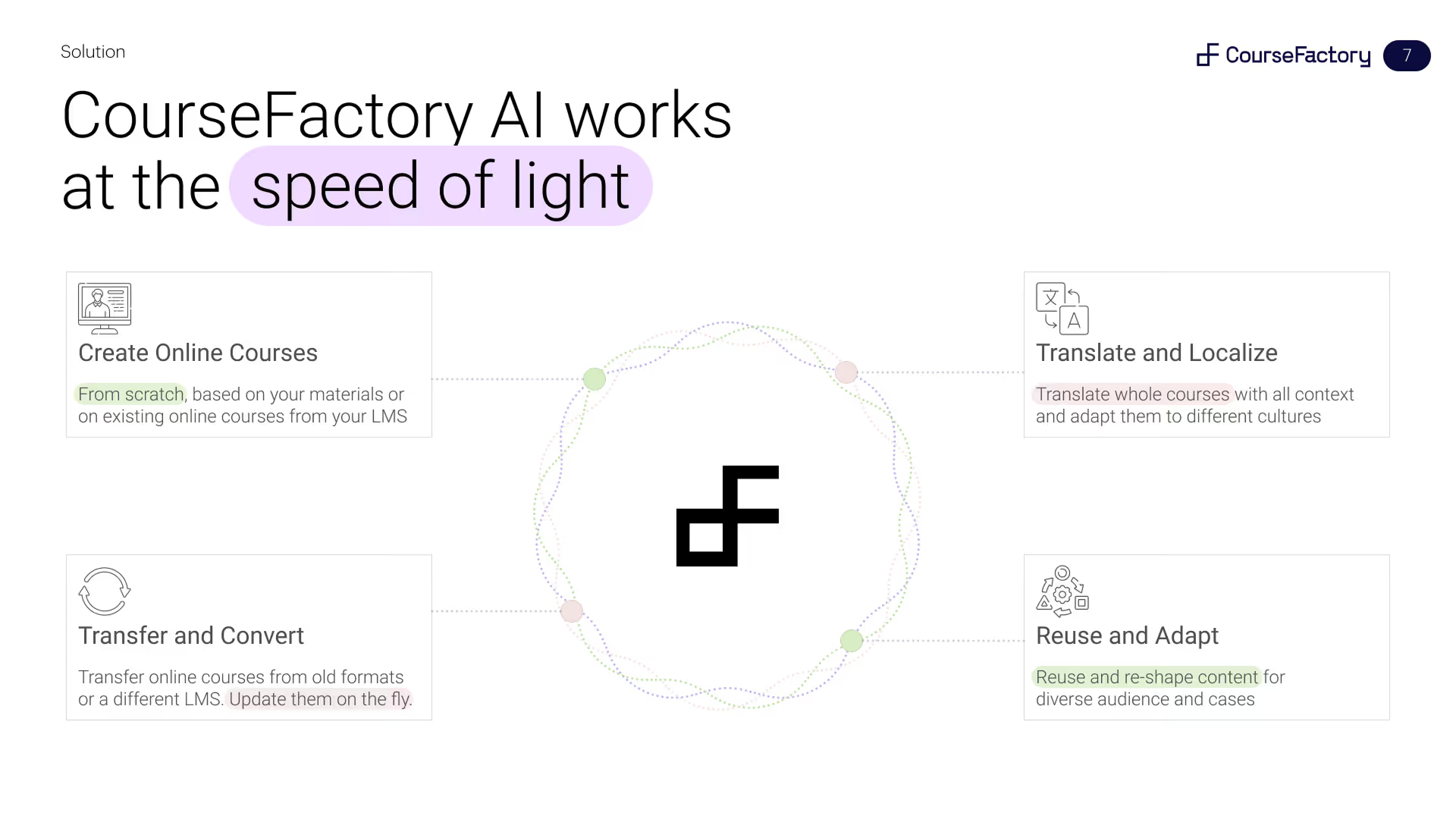
Here is an example template for a compelling solution slide of Hellosaurus’s pitch deck:
.avif)
Tips for a Killer Solution Slide in Pitch Deck
After sculpting the content of your killer solution slide, what about its visual allure?
The design isn't mere decoration; it's the sizzle to your steak. Now, let's dive into crafting the aesthetics, ensuring your slide isn't just smart but stunning.
Here's your guide to visual mastery!
Content Tips
Crafting that compelling solution slide is an art. Here's your distilled checklist to make it pop:
- Identify & Present: Clearly showcase the solution to your pinpointed problem.
- Visualize: Use mockups, demos, or graphics for instant clarity and appeal.
- Concise Overview: A snappy 1-2 sentence description, laying the foundation.
- Benefits & Value: Highlight key perks and unveil your unique value proposition.
Design and Visualization Tips
In the world of pitch decks, visuals speak louder than words. Navigate this realm masterfully with:
- High-Res & Tasteful: Employ sharp images and a clean design for a professional touch.
- Font & Palette: Opt for legible fonts and colors that complement, not complicate.
- Clarity Over Clutter: Text under 250 characters; prioritize benefits over technical jargon.
- Quality Imagery: Spotlight your product with pristine photos that resonate with context.
Questions to be Addressed
Your solution slide should be an open book with answers, not a riddle. Pose these key questions:
- Is your solution a precise answer to the identified issue?
- Is your solution something customers would go to great lengths to have?
- How will customers feel post-use? Satisfaction guaranteed?
- Why prefer your solution? What's your magic ingredient?
Conclusion
Crafting a strong solution slide is one of the highest-leverage things you can do in your pitch deck. It only works when it’s anchored to a clear problem and a deep understanding of your ICP. Investors don’t need excessive detail — they need to see that you understand the pain, and that your product removes that pain in a simple, undeniable way.
Keep your messaging tight, focus on the value you deliver, and make sure the connection between problem → solution feels obvious at a glance. When those two slides work together, the rest of your narrative becomes dramatically easier.
And if you want support refining that narrative, shaping your ICP’s pain, or articulating your solution with clarity, our Pitch Deck Writing Service can help you build a solution slide that actually convinces investors.
Make your solution impossible to ignore.

The Problem Slide is more than an opening statement — it’s the moment where investors must feel the pain your ICP experiences. Your only real goal here is to make the problem tangible, relatable, and undeniably costly. In B2B, this almost always comes down to two things: companies are either losing money or missing opportunities to make more of it. If your problem doesn’t connect to one of those two levers, it will feel weak.
A strong problem slide is never created in isolation. You need to craft it with your solution already in mind. The design, structure, and narrative should set up a visual and logical flow that makes the next slide — your solution — feel like the natural and inevitable answer. When the problem is expressed clearly, the solution becomes obvious.
We’ll break this down in detail in the article, including how to structure the message and how to design the slide so investors immediately understand what’s broken and why it matters. And if you want your problem and solution to connect seamlessly, the same principles we apply in our pitch deck design work can help you tighten the story and elevate the impact.
Problem Slide: What is it and Why is it Important?
The Problem Slide is the bedrock upon which your pitch deck is built. It's the beacon that guides investors through your startup's vision and purpose.
In essence, it's your thesis statement, the core of your narrative.
This unassuming slide lays bare the issue your startup is born to tackle. It paints a picture of a market in distress, yearning for the relief your startup promises.
Why the emphasis on it?
Because a well-articulated problem speaks volumes about your startup's understanding of the market and its preparedness to deliver a viable solution.
But remember, this isn't an insider's game. Your problem may not be universal, but your portrayal of it must be.
Your task?
Make it tangible, relatable, and pressing, for everyone. And here's the kicker - when the problem is weak or unclear, your pitch crumbles.
Ready to erect a solid foundation?
How to Present the Problem?
Presenting the problem isn't about laying bare an issue. It's akin to a magician's reveal - dramatic, surprising, yet inevitable.
Intrigued about the art of this problem presentation?
Here’re some important tips for you.
Define the Problem
Defining the problem is akin to painting a vivid portrait of a beast plaguing your target audience. It's about stripping away the vague and diving into the specific.
Who's suffering? How big is the beast? How frequently does it rear its head?
Your audience needs to see the problem, feel its repercussions, and comprehend its urgency.
It's storytelling time - a genuine tale from the trenches, getting your audience emotionally entwined with the narrative.
When you notice the investors' nods of agreement, that's your cue - they're feeling the problem. They're now part of your story.
Here is an example template:
.avif)
Validate the Problem
Your Problem Slide must not just sound a trumpet about a problem, it should also validate it.
But how do you present this validation?
It's akin to marshaling your witnesses to the stand. It's customer feedback, testimonials, case studies, and cold hard market data speaking up, attesting to the problem's existence.
It's about backing up your claims with measurable metrics - presenting numbers and dollar signs to show the pain points your customers face.
Here is a killer example problem slide, the visuals are enough to speak the volume of climate change damage to our eco system.
.avif)
Are they willing to pay to solve it?
A well-validated problem becomes real, palpable, and urgent. It's not just a shadow anymore - it's a tangible beast to be tamed.
Identify your Target Customer
Spotlight on your target customer, the protagonist of your startup story.
The Problem Slide isn't just about the problem; it's about who's facing it. It's time to dissect your audience and delve into their personalities, their wants, and their roadblocks.
Are they struggling office managers, frustrated parents, or overwhelmed teachers?
.avif)
You need to pin down these specifics using personas, surveys, interviews, or market research. Unearth their motivations and their current problem-solving methods.
The more vivid your character sketch, the more compelling your Problem Slide becomes.
After all, we don't just want to solve a problem, we want to help real people conquer their battles.
Provide Data and Facts
The language of numbers - concise, persuasive, and indisputable.
The Problem Slide yearns for facts and data. It's not enough to state a problem; we need to measure its extent, its depth.
.avif)
Remember, your Problem Slide is akin to a court case, and your data are your exhibits. From market reports to customer surveys, they should all point to the severity and breadth of your problem.
Is it as widespread as a forest fire? As pressing as a ticking time bomb? Investors value this solidity, this proof.
But remember, your Problem Slide is about the problem, not about the size of the market. That’s a tale for another slide.
Empathize With the Target Market
A persuasive problem slide is an exercise in empathy.
Walk in your target market's shoes, see their world through their eyes, and experience their pain. Your problem statement should echo this understanding.
It's not enough to just acknowledge the problem; you need to humanize it
.avif)
Share anecdotes, paint vivid pictures with your words, and make your investors feel the sting of the issue at hand. Ensure your story is relatable and emphasizes the struggles your market faces.
This way, you're not just presenting a problem; you're pulling heartstrings, making your startup's mission all the more irresistible.
Problem vs Status Quo
In a world awash with solutions, why does the problem your startup tackles still persist?
The answer lies in the gap between the problem and the status quo. Your problem slide should illustrate this abyss, emphasizing the inadequacies of existing solutions.
Not all solutions are created equal, and this is your moment to showcase why your brainchild has an edge over others.
.avif)
Give your investors a grandstand view of this chasm, and how your innovative solution aims to bridge it.
It's not about proving others wrong, it's about proving you're right and better equipped for the challenge.
How to Design a Captivating Problem Slide?
Now that we've unraveled the 'what', it's time to paint the 'how'.
In the world of pitch decks, appearances do matter. Designing your problem slide isn't just about information, it's about inspiration.
Let's dive into making your problem visually unforgettable.
The Content Should be?
Crafting a problem slide isn't rocket science, but it's a science nonetheless.
Here are four key ingredients for a stellar recipe:
- Deliver a crystal-clear, jargon-free explanation of the problem you're tackling.
- Spice things up with stats, showing just how prevalent and pressing the problem is.
- A concise, laser-sharp sentence outlining the problem you're solving - keep it simple, Sherlock!
- Highlight who's in the line of fire: the target users. For an extra sprinkle of relevance, consider listing key pain points.
Questions to Address in Problem Slide
When designing your problem slide, you must address these questions.
Imagine your audience asking these questions:
- What's the dragon you're fighting? Exactly what problem are you tackling?
- Is this dragon scary enough? Is the problem significant enough to warrant a solution?
- Where does the dragon live? Why does this problem persist in the world?
- Who has tried to slay it before? What are the current attempts at solutions?
Design Tips for Problem Slide
Designing the problem slide? Here are some nifty tips:
- Keep it short and sweet: Stick to <250 characters of crystal clear text.
- No rocket science: Replace complex jargon with 'Explain Like I'm Five' simplicity.
- High-res and simple: Use high-resolution graphics with a minimalist design.
- Readability rules: Choose clear, easily readable fonts and colors.
Conclusion
A strong problem slide is often the difference between investors leaning in or mentally checking out. When you clearly show what’s broken, who feels the pain, and how much it costs them, you’re not just describing a problem — you’re revealing the size of the opportunity. Keep your framing tight, root everything in money lost or value unrealized, and make sure the narrative naturally sets up the solution that follows.
Design plays a major role here too. The way you frame and visualize the problem should make the next slide — your solution — feel like the obvious answer. If you want help sharpening that narrative and creating a problem slide that lands instantly, our Pitch Deck Design Service can help you make it clear, visual, and impossible to ignore.
Make the problem undeniable — and investors will be ready for the solution.

Did you know investors spend more time on the financial slide than any other part of a pitch deck? It’s not just numbers on a page — it’s where they assess your traction, your judgment, and your understanding of how the business grows. But most founders make this slide far too busy. Tables that cram in data, unclear labels, and inconsistent visuals make it harder, not easier, for investors to trust the story.
A strong financial slide needs two things: clarity and coherence. Keep it visual. Use graphs instead of tables. Label everything in a way that’s instantly understandable. And above all, make sure it aligns with the rest of your narrative. Your past performance (financials) should logically connect to your future expectations (projections), and any surge in growth should tie directly to your go-to-market plan or the investment you’re asking for. This is how we approach financial slide design in our pitch deck design work — clear, simple, and consistent with the story.
In this article, we’ll break down how to present your financials in a way that feels credible, visually clean, and fully aligned with the rest of your pitch.
Financial Projection: What is it & Why is it Important?
The financial slide is one of the most crucial components of a pitch deck. It provides a detailed look into a company's financial health and future prospects. In essence, it showcases projected revenues, expenses, and other key metrics for the upcoming years, usually spanning three.

Why the fuss about it? Because it's not just numbers. It paints a picture of growth, stability, and potential. When investors flip through your pitch deck, they're on the lookout for this clarity.
Will you make profits? How's your growth chart looking? And trust me, a well-laid-out financial projection isn’t just some business homework; it’s the very compass guiding your enterprise's journey.
So, for those setting out to woo investors, remember: a sound financial projection isn't just nice to have—it's essential.
What to Include in the Financials Slide?
Crafting the perfect financial slide? It's all about the right ingredients. Let's break down the essentials to make your pitch deck shine.
While each pitch deck is tailored to its specific startup, there are key elements every standout financial slide needs to captivate investors. Here is our list of what a compelling financial slide must have:
1. Revenue & Expenses / P&L
The financial backbone of any startup pitch deck is business revenue details and expenses or the Profit and loss (P&L) overview. At its core, this document lays out a clear picture of the startup's financial health.
Here's the gist: Start with your revenue, the heart of your financial story. Deduct expenses like manufacturing costs, operational overhead, and staffing bills. What you're left with? That's either your gross profit or a potential loss.

Investors are laser-focused on these numbers. They crave insights into your earnings through operations and how these figures could skyrocket in the future. Because, let's face it, who doesn't want their investments in high-revenue ventures?
By showcasing your Income Statement, you’re giving investors a ticket to your business's financial roller coaster, assuring them of your journey's potential thrill.
2. 2-3 Key Performance Indicators (KPIs)
KPIs are the pulse of your startup. They're not just numbers; they’re the indicators that tell investors where the growth is happening.
Think of them as the vitals showing your startup's health. Whether it's the number of paid subscribers that fuels your revenue or daily active users that depict your product's engagement, these metrics are your startup's growth story in a nutshell.

It’s like telling investors, "Here’s how we measure our wins!" But remember, keep it simple. Overloading with metrics can blur your story.
Stick to what truly matters. Here are some important KPIs to Include:
- Number of Sales per Period
- Current Number of Paid Subscribers
- Active Users Count
- Monthly or Annual Recurring Revenue
- Customer Growth Rate
- Customer Lifetime Value
- Churn Rate
3. Headcount
Building a thriving business? It boils down to the people behind it. Investors eye that crucial headcount figure on your pitch deck's financial slide. They're eager to understand how many skilled hands you'll need, from management to customer support.
Here's the thing: As your sales shoot up, so should your team size. A stagnant headcount with surging revenue can raise eyebrows—unless you're a tech whiz championing automation.
And guess what? A growing headcount directly affects costs—from sales to operational expenses.

No matter how spacious your office, more sales typically mean more seats (and maybe even a new coffee machine!). After all, numbers don't just speak, they tell a story of ambition and growth.
4. Funding History
The next crucial element to include in the financial slide of a pitch deck is your startup's funding history.
Demonstrating past funding not only provides a transparent view of your financial journey but also acts as social proof, hinting that other savvy investors have already placed their bets on your potential.

Delve deeper with a cap table—a detailed breakdown highlighting shareholder equity, from common shares to convertible equity. It's more than just numbers; it's a testament to the faith and commitment previous investors have shown.
By highlighting your funding milestones, you reassure new investors that they're not the first to believe in your startup's promise. Remember, trust is built on transparency and past success.
5. Return on Investment (ROI)
The next pivotal component in the financial slide of a startup pitch deck is "ROI" or Return on Investment.
While investors are aware that financial projections, including ROI, might not always hit the mark, what matters is the logic behind your numbers.

Think about it: Investors are scouting for businesses that will amplify their portfolio's value. Your job? Convincingly communicate how your product or service is primed to deliver a substantial ROI.
Remember, venture capitalists have commitments to their investors too, aiming to provide lucrative returns. Yes, pinpointing an exact ROI can be challenging, but showcasing a well-thought-out rationale can bridge the trust gap. After all, it's about mutual growth and understanding risks.
Best Tips for Crafting a Winning Pitch Deck Financial Slide?
Crafting a compelling financial slide in your pitch deck can sway investors. Precision, visuals, and clarity make all the difference.
Here are some important tips for founders to amp up their presentation:
- Prioritize Accuracy: Ensure financial data is spot-on, leaving no room for doubt.
- Embrace Visuals: Utilize charts and graphs for better comprehension and engagement.
- Realistic Projections: Stay grounded. Overly optimistic figures can deter savvy investors.
- Showcase Time-bound Data: Highlight your financial journey over months or years, indicating growth and stability.
- Detailed Cash Flow: Offer a clear view with annual or monthly summaries, showcasing revenue and expenses.
- Clarify Assumptions: Be transparent about projections. How did you arrive at these numbers? Ensure they're reasonable.
- Highlight Profitability: Clearly indicate when you anticipate breaking even or turning a profit.
- Expense Breakdown: Enumerate top spending categories to provide investors with a clear spending roadmap.
- Design Matters: Keep it simple yet engaging. Prioritize readable fonts and colors and steer clear of clutter.
- Stay Concise: Keep core financials upfront and detailed assumptions or breakdowns in appendices.
With these tips, you're equipped to create a financial slide that not only informs but impresses!
Conclusion
A strong financial slide isn’t about overwhelming investors with numbers — it’s about giving them a clear, credible snapshot of where your business has been and where it’s going. Accuracy, coherence, and visual simplicity matter more than complexity. When investors can immediately understand your trajectory, your assumptions, and how your growth ties into the rest of your deck, they’re far more likely to trust your projections.
Use clean charts, clear labels, and visuals that highlight the essentials. Keep the narrative consistent with your go-to-market plan and your ask. When your financial slide reinforces the story you’ve already told, it becomes one of the strongest signals of reliability in your pitch.
And if you want help designing a financial slide that feels clear, cohesive, and investor-ready, our Pitch Deck Design Service can help you present your numbers with confidence.
Make your financials easy to read — and even easier to believe.

The Ask Slide is one of the most misunderstood parts of a pitch deck. Many founders treat it as a standalone request — a number on a slide — when in reality, it should read like the conclusion of your entire story. After walking investors through the problem, solution, market, traction, and opportunity, your ask should simply answer the question: How do you plan to get from where you are today to where you want to be tomorrow?
The capital you’re requesting isn’t random. It’s the bridge between your current position and your next set of milestones. And to write this slide convincingly, you need a clear plan for how you’ll use the money. Flexibility is fine, but vagueness isn’t. Investors want to see that your fundraising amount aligns with your strategy, your financial model, and the timeline of your execution.
This is why the Ask Slide is fundamentally a writing exercise, not a design one. It must be written with precision, clarity, and narrative logic — the same principles we apply in our pitch deck writing work to help founders articulate their plan in a way investors trust.
In this article, we’ll break down how to write an Ask Slide that feels like the natural, inevitable conclusion of your pitch — and not just a hopeful request.
Ask Slide: What is it and Why is it Important?
Picture the grand finale of your pitch deck: the Ask Slide. Nestled at the tail end, this slide isn't just about numbers; it's your startup's financial crescendo.
Think of it as a transparent window into your funding needs, telling investors exactly what they'll be a part of.
The Ask Slide is your navigator through the sea of uncertainty, guiding investors to grasp the tangible outcomes your funding will sculpt. It's a strategic dance between capital and ambition, showcasing the journey you're embarking upon.
This slide is your "why," your "what," and your "how much."
Without it, your pitch remains a puzzle missing a crucial piece. Time to unveil the power of the Ask Slide – where aspiration meets quantification.
Let's explore its significance, decode the digits, and master the art of financial storytelling.
What to Include in Pitch Deck Ask Slide
Nail the Ask Slide essentials – your funding game-changer. Ready to uncover the vital components of an attractive Ask Slide, that'll captivate investors?
Let's dive in.
How Much Do You Want to Raise?
The first thing that an Ask Slide should have is the pulse of your financial quest: How Much Do You Want to Raise?
Investors are intrigued by precision, so lay it out with finesse.
Be the maestro of clarity: We're seeking $1M to elevate our product and launch the beta version. Specificity signals preparation, guiding you to the next stage.
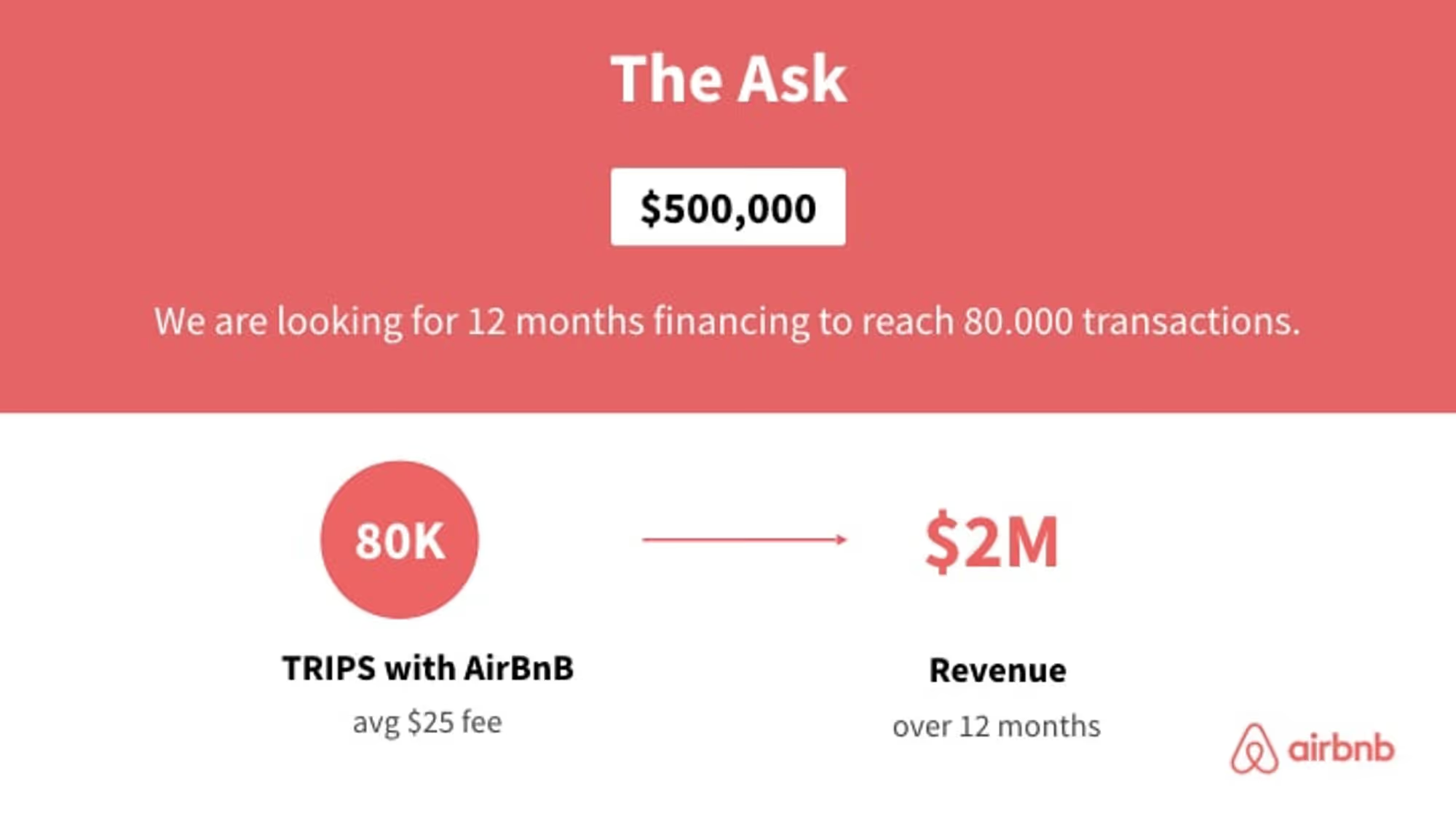
But remember, it's not just the ask, it's the equation of potential. Strike the balance between what you need and what you're offered, backed by the numbers dancing in your financial model.
Ready to dazzle with digits? Let's calculate your funding crescendo.
Use of Funds & Milestones
The second gem in your Ask Slide's crown: Use of Funds & Milestones. It's not just about asking; it's about showcasing your blueprint for brilliance.
Picture this: a clear map of where the funds will flow and the milestones they'll sculpt. Imagine a pie chart mapping the dollars and dreams invested wisely, a strategic symphony of allocation.
.avif)
You're not just asking; you're enlightening investors on your grand roadmap. It's the art of assurance – proving you've plotted your journey from here to milestones aplenty.
Get ready to wow with transparency and milestones that speak volumes.
Runaway
Now, let's talk runway – the financial lifeline that fuels your ascent. In the symphony of startup success, the 'Runway' is your rhythm, a heartbeat of fiscal stamina.
.avif)
This numerical melody articulates how long your funds will carry you toward the horizon of milestones.
Investors want assurance that you're not just sprinting but soaring. So, unveil your financial foresight.
Show them the runway that'll sustain your flight to triumph. Let's quantify your journey, ensuring you don't just take off – you soar to heights that investors can't resist.
Get ready to crunch numbers that resonate.
Type of Investment
And now, let's decode the investment essence – the very DNA of your Ask Slide. The Type of Investment isn't just a label; it's the heartbeat of your financial pact.
Are you offering equity, convertible notes, or a different concoction? Investors seek clarity in this financial dance.
So, unveil your investment offering with finesse. It's more than just numbers; it's the very structure of your partnership with backers.
Ready to define your investment symphony? Let's harmonize the notes, ensuring investors don't just listen – they resonate with your tune of growth.
Current Investors
Let's spotlight your startup's esteemed companions – the Current Investors. This section isn't just about showcasing names; it's about weaving a story of trust and progress.
Boast your past wins, revealing the funding victories that paved your journey. How much have you raised, and who believed in your vision?
It's not just about numbers; it's about momentum. Investors seek proof of progress and a testament to your credibility.
So, shine a light on your financial champions, painting a picture of growth through partnership.
Content and Design Tips
Crafting the perfect Ask Slide? It's all about clarity, conciseness, and compelling content.
Here are ten golden nuggets for you:
- Quantify the Outcome: Use numbers. They sing to investors. Show concrete goals and the cash needed to achieve them.
- Visualize with Care: Use high-resolution images, pie charts, or tables. A picture paints a thousand words.
- Understand Your Audience: Tailor your slide for specific investors. Know their interests and pain points.
- Narrate a Story: Highlight your unique value, where you are now, and where the funds will lead.
- Clarity is Key: Use a legible font and a simple design. Let the content shine.
- Keep it Crisp: State your ask, the objective, and the timeline in one precise sentence.
- Coherence Counts: Ensure your ask aligns with your overarching business strategy.
- End Strong: Include a clear call to action. Invite investors for a deeper dive into your startup.
- Feedback is Gold: Test your slide on friends or colleagues. Refine based on insights.
- Stay Concise: Focus on key aspects. Too much fluff? Trim it down. Less is more.
Conclusion
Your Ask Slide is not just a number — it’s the logical conclusion of your entire pitch. Investors need to understand what you’re raising, why you’re raising it, and how that capital moves you toward your next milestones. When the story is clear, the ask feels inevitable.
Keep your writing focused, transparent, and tied directly to your plan. Avoid filler. Show the connection between your strategy, your projections, and the funds you need to execute. A well-written Ask Slide signals control, confidence, and intention — the traits investors look for.
And if you want help articulating your plan, structuring your ask, or writing this section with more clarity and precision, our Pitch Deck Writing Service can help you craft an Ask Slide investors can trust.
Write it clearly, tie it to your strategy — and make your ask impossible to ignore.

The Market Size slide is one of the most misunderstood parts of a pitch deck. Founders often chase big numbers or generic industry reports, but investors don’t care about theoretical billions — they care about your market. And the most credible way to show that is through a simple, bottom-up approach: your business model (how much you charge) multiplied by the number of ICPs that fit your ideal customer profile.
This is the only method that tells investors what really matters: what the market looks like for you, not the entire world. A good market slide isn’t about finding the biggest possible number — it’s about presenting a logical, defensible calculation that reflects how your business actually works. That’s why this slide is fundamentally a writing exercise: choosing the right inputs, explaining how you arrived at them, and making the logic easy to follow, using the same principles we apply in our pitch deck writing work.
In this article, we’ll break down how to craft a market size slide that’s credible, aligned with your business model, and genuinely useful for investors — starting with its fundamentals and why bottom-up thinking always wins.
Market Size Slide: What it is and Why It is Important?
So, what is a Market Size slide and why is it more important than your morning coffee?
Essentially, it's your ticket to show the behemoth your startup could morph into - your Total Available Market (TAM).
You're thinking, "Great, but how?"
Get those numbers right. Back them with concrete research, and credible sources. You don't want your potential investors to cringe at incorrect data, right?
Is your market about to shift gears because of a new regulation or tech? Highlight it!
Growing demand? Flaunt it!
Remember, your TAM is your startup's ceiling, its ultimate potential. It's one of the top three things investors zero in on, right next to your founding team and your business idea.
Underscore the potential, and voila, you've got their attention!
Sizing the Market: Two Approaches
There are two ways to crack the code of your market size - the Top-Down approach and the Bottom-Up method. It's not just a dollar sign; it's the real customers you can reach who will pay for your product.
Tip for founders- Top-down sizing, though instructive, may not mirror your market's reality. Here's a secret nugget - favor the bottom-up approach for estimating your market size.
Let's dive in!
Top-Down Market Sizing Approach
Here's the first route - the Top-Down market sizing.
You begin at the peak, eyeing the entire market landscape. You take in the grand vista of all potential customers and revenue, a sight that might give you goosebumps.
But hold on, you need to zoom in. Slice it down to a portion that's genuinely within your grasp, your Serviceable Obtainable Market (SAM).
For instance, consider launching an AI-driven health-tracking app. With the Top-Down approach, you'll start from the entire digital health market, brimming with potential users and revenue.
Then narrow it down to the segment that's interested in AI technology and proactive about their health. Kind of like scouting a grand forest but earmarking the trees you can actually climb.
Bottom-Up Market Sizing Approach
The Bottom-Up Market Sizing is the most preferred approach in startup fundraising.
.avif)
Ever built a Lego tower? This approach is just like that. You begin with a single Lego block, your product, and strategize on scaling it.
The key questions here are - Where can your products be sold? At what price? What market share can you realistically capture?
This approach feels like a treasure hunt. Your loot? Your customers. Your clues?
So, how to do the bottom-up market sizing?
- Identify your specific customer.
- Gauge their population.
- Figure out how many you can realistically reach.
- At what price will they buy?
- Now the clincher: How many will buy from you?
This approach shows you've done your homework. You know your customer, your market, and your growth strategy.
The Bottom-Up approach isn’t just sizing, it's strategic planning. And, remember to keep it consistent throughout your pitch!
Isn’t that a smarter game plan?
How to Create an Eye-Catching Market Size Slide?
Alright, you've battled the market sizing beast.
Now let's shift gears and focus on how to exhibit your hard-earned findings in a captivating Market Size Slide.
After all, a brilliant masterpiece deserves an impressive frame, right?
Content
So, you're pondering the puzzle of the perfect pitch? Well, the market size slide in your deck should feature these essential elements:
- Numbers, and More Numbers - Your audience (investors) loves data. Use numbers to tell a compelling story about your market size.
- Market Traits - Got long sales cycles or specific regulations? Highlight them. It shows you understand your playground.
- Credible Sources - Back your claims with reputable sources. Nothing screams 'reliable' like a well-cited slide.
- Industry Analogies - Draw parallels from other sectors. It adds depth to your pitch and makes your concept relatable.
Targeted Question
So, you're gearing up to design your deck's market slide? Ensure it answers these crucial questions with clarity and precision:
- TAM: How colossal could this venture potentially become?
- Market Specifics: Diving into the specifics - revenue per customer, sales cycles, let's get detailed.
- Why Now?: Why is it an opportune moment to launch in this market?
- Market Growth: Is the market burgeoning or receding? Show the trajectory!
- Customer's Wallet: What's the price your customers are willing to pay? Let's hear the figure!
Design
Visuals matter!
Here are some design hacks for an appealing market slide:
- Readable Font: Opt for clear, large, and readable font styles.
- High-Res Images: Use only high-quality images, pixelation is a no-go!
- Simplicity: Embrace minimalism, remember less is more!
Conclusion
That's a wrap, founders!
.avif)
A strong Market Size slide doesn’t rely on impressive industry numbers — it relies on clarity. When you use a bottom-up approach, you show investors that you understand your business model, your ICP, and the real size of the opportunity for you, not for the entire market. That level of precision is what builds trust.
Keep your calculations simple, your assumptions transparent, and your explanation easy to follow. Avoid inflated figures, avoid vague TAMs, and focus on a narrative that ties directly into the rest of your pitch. When your market size slide is logical and grounded, it strengthens every slide that comes after it.
And if you want help choosing the right inputs, structuring the narrative, or presenting your market in a way investors can immediately believe, our Pitch Deck Writing Service can help you craft a bottom-up story that’s clear, defensible, and investor-ready.

When founders think about the competition slide, they often default to listing features or placing logos on a quadrant. But investors care about something much simpler and far more important. When they look at this slide, they want to understand two things immediately:
- Why you’re the no-brainer choice for your ICP — meaning you solve their problem better than anyone else.
- Why your advantage is hard to copy — the edge that gives you long-term defensibility.
Most teams focus on product features, but features alone don’t convince investors. What matters is how those features translate into a better solution for a clearly defined ICP. The competition slide isn’t about comparing checkboxes — it’s about showing why your approach solves the problem in a way others can’t easily replicate.
In this article, we’ll break down how to structure your competition slide, what investors actually look for, and how to communicate your edge clearly — using the same principles we rely on in our pitch deck writing work to help founders articulate their advantages with precision.
Competition Slide: What it is and Why it is Important?
What is a competition slide, you ask?
Picture it as the chessboard of your pitch deck, a strategic layout that shows you're not stepping into the market blindfolded.
Especially during the advanced stages of fundraising, when the stakes are high and the gloves are off, the competition slide is the must-add one for your deck.
Think about it. No competition equates to no market - a chilling thought, isn't it?
But the reasoning is simple. If there's demand, innovators rush in, looking to turn that demand into dollar bills. If they're conspicuously absent, it's either tumbleweeds or your blind spot.
Don't shy away from competition. Embrace it.

Show your investors that you've got the lay of the land, that you've clocked your competitors and identified the gaps you intend to bridge.
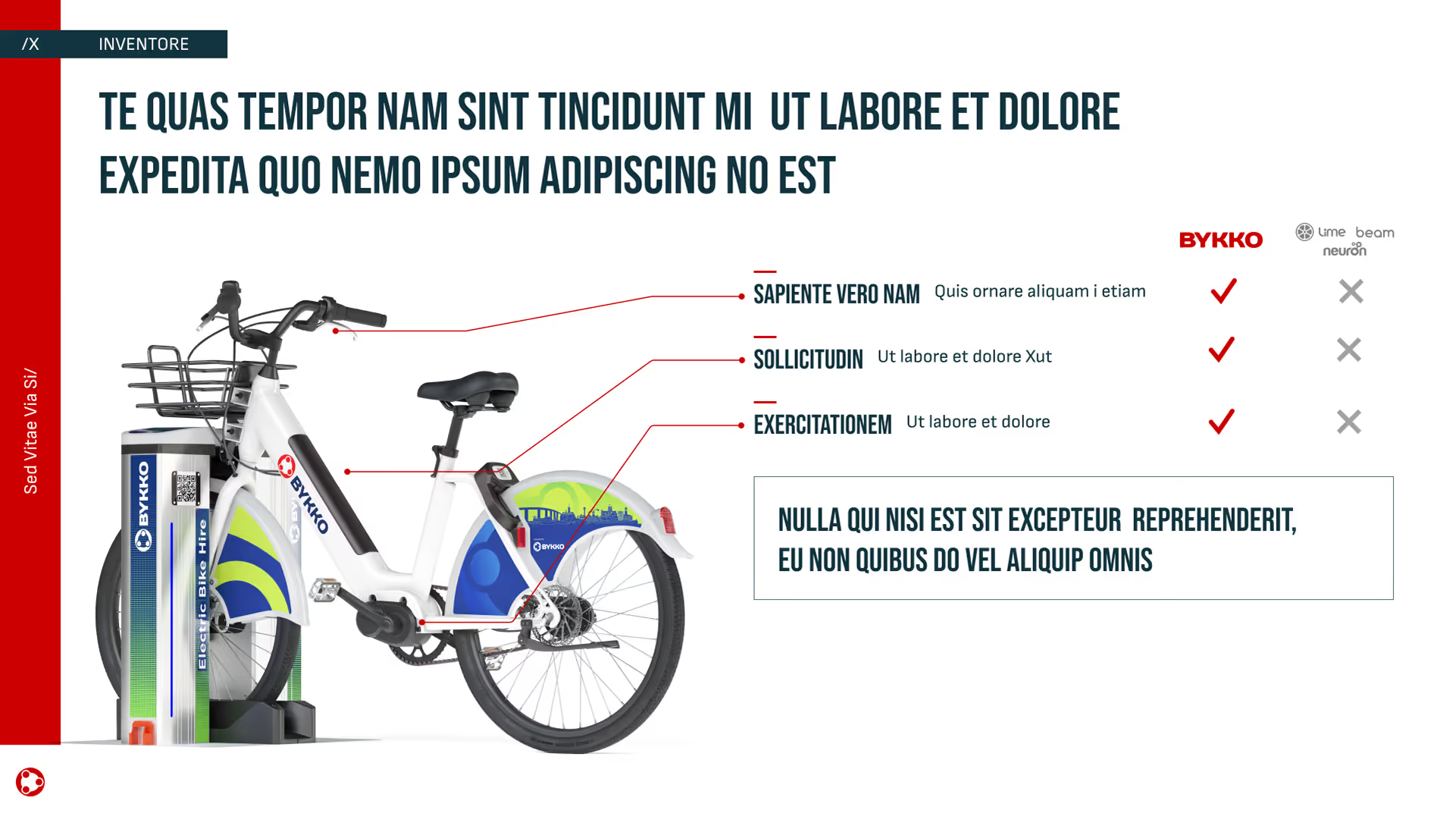
Here is an example of a competitor analysis slide in a pitch deck:
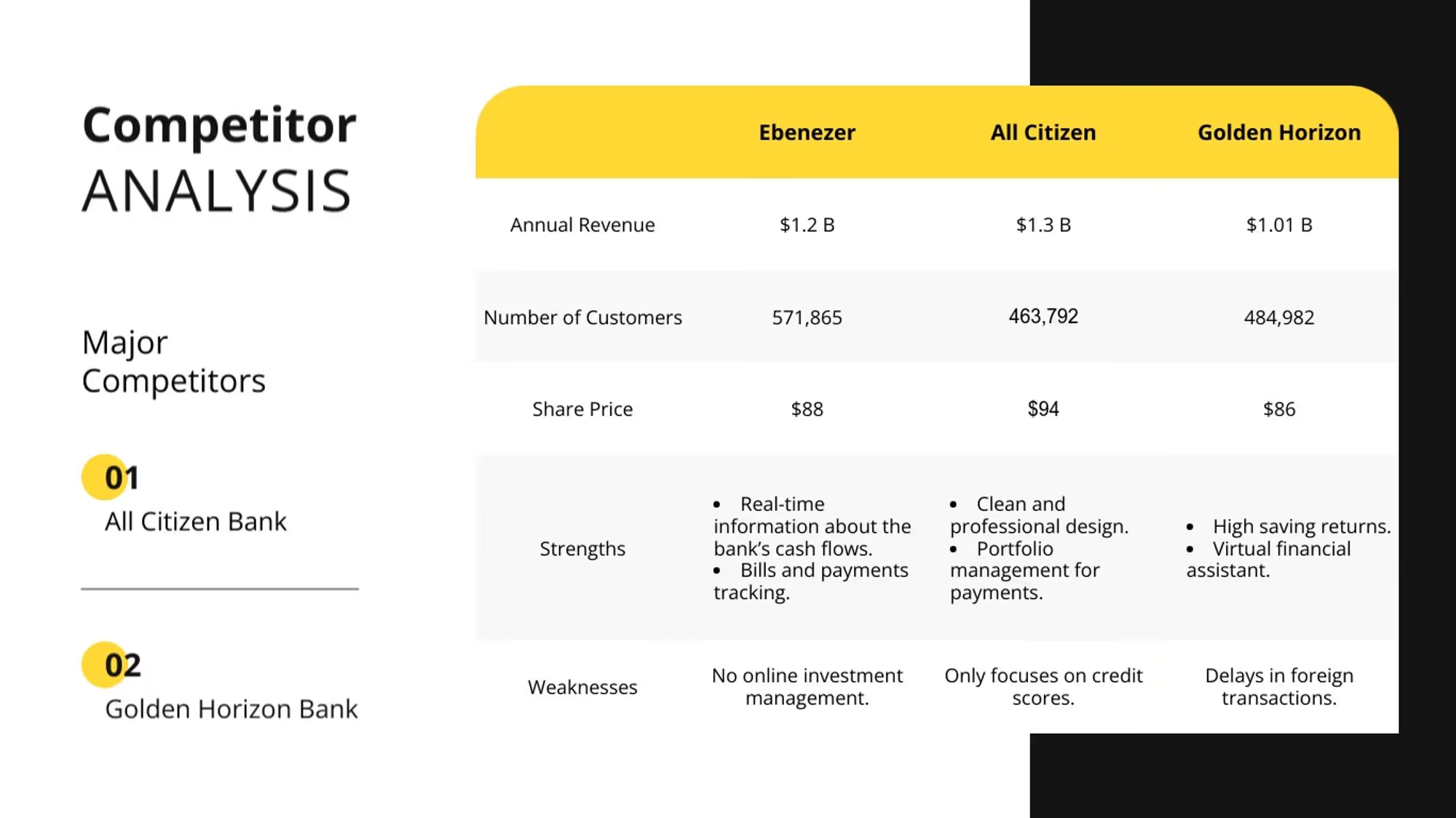
This isn't just savvy business - it's survival.
How to Do Your Competitors Analysis?
Ever peeked over the fence to see if your neighbor's grass is greener? Competitor analysis is a lot like that but with higher stakes.
Ready to dive deep and dissect the competition?
Research Your Target Market and Trends
What's your first move on the competitor analysis chessboard? Surprisingly, it's not about your competitors just yet. It's about your market, your domain, your battleground.
Start with a bird's eye view, then zoom in. You'd be surprised how many pioneers fail to Google their own concept!
Doing your homework isn't optional, it's survival.
.avif)
You could dive into DIY research, hire freelancers, or purchase professional market reports. The key is to get out there and mix it up with your target customers.
Figure out what they crave, what they'd pay for.
Look beyond the surface. See the size, the segments, and the trends.
Is your market expanding, or retracting like a snail in salt? Your findings, sprinkled across your market slide, will show investors that you know your stuff.
Identify and Evaluate Your Competition
Now that you've scrutinized your battleground, it's time to size up your adversaries.
Who's challenging you directly with a similar offering? Who's vying for the same customers with a different product? And who's eyeing your customers with a substitute?
Peek beneath the hood of their operations. A thorough scrub of the "four Ps" - Product, Price, Place, and Promotion is vital.
.avif)
Taste their product, analyze their pricing strategy, and scout their geographical reach. What marketing voodoo are they casting to enchant their customers?
Go a step further. Discover their unique selling proposition, their reputation, and their human capital. Who are they teaming up with?
Knowing your enemy is half the battle won. Don't just scrape the surface, dig deep. The golden nuggets you uncover will sharpen your pitch and give you a leg up in this relentless race.
Highlight Unique Values
Think of a ruby among stones. Why does it get picked first? It's unique, isn't it?
Similarly, your startup must resonate with an unmistakable uniqueness. Investors don't swoon over features; they invest in value.
What's your standout attribute?
Is it unbeatable customer service, an unrivaled user experience, or an innovative distribution strategy? Perhaps it's a breakthrough pricing model?
Your competitive analysis should be like a treasure hunt, unearthing your startup's unique attributes that'll dazzle potential investors.
Make sure to illuminate these gems in your pitch. After all, it's your unique values that will not only set you apart in the crowded marketplace but also magnetize the funding you need.
Uniqueness is your startup's secret weapon. How are you wielding it?
Keep It Customer-Oriented
Ever heard the phrase, "The customer is king"? Your pitch deck should shout it!
At the heart of every thriving business is a laser focus on customer needs. After all, isn't their delight your true north?
Explain your choices, paint the vision of future enhancements, and showcase how every feature, every stride, is a testament to putting the customer first.
Similarly, find those advantageous spots where your competitors are lacking and your solution is attracting more customers.
Winning in a saturated market isn't about having the flashiest product; it's about proving you're tuned in to the ever-evolving chorus of customer demands.
When investors see your undying commitment to customer-centricity, they'll be more inclined to believe in your journey toward long-term triumph.
Remember, happy customers, happy business!
Determine Your Strategic Advantage
So, you've got the lay of the competitive land. Now, it's time for the million-dollar question - "What's your edge?"
This isn't a kiddie pool race; it's a strategic game of chess where you need to identify and leverage your strengths.
Could it be a unique selling point that sends your target market swooning? Or maybe you've spotted a competitor's Achilles heel, ripe for the picking.
But remember, don't let the competition set your entire playbook. And while pitching to investors, avoid the braggadocio of "we have what they don't".
Instead, subtly weave your strategic advantage into your narrative.
It's not about boasting; it's about smart storytelling.
How to Create A Compelling Competition Slide in Deck?
Now that you're armed with competitor analysis know-how, let's delve into the crafting of an irresistible competition slide.
It's time to transform that data into a deck masterpiece.
What Should be the Content?
Let's talk about the meat of your competition slide - the content.
- Mapping the Rival Landscape: Identify and present both your direct and indirect competitors.
- Unveiling your Magic: Showcase your Unique Selling Propositions (USPs) that set you apart.
- Spotlight on Distinction: Highlight how your startup uniquely solves a problem.
- Foreseeing Potential Roadblocks: Identify possible threats that could pose challenges down the road.
This information paints a compelling picture of your market position and strategic plans.
Questions to Address in Competition Slide
When crafting your competition slide, you need to answer some critical questions.
- Mapping the Battlefield: Identify who is competing in your niche.
- Potential Rivals: Consider who could possibly enter your domain in the future.
- Ace in the Sleeve: Explain what gives you an edge over the competition.
- Unique Charms: Highlight your unique selling points that appeal to your target audience.
- Customer Guardians: Identify who might lure your customers away, and how.
These questions help investors gauge your market understanding and strategic thinking.
What Should be the Design?
Last but not least, the visual appeal of your competition slide can amplify your message. Here are some design tips for your competition slide:
- Readability Reigns: Opt for fonts that are easy to read at a glance.
- Quality Imagery: High-resolution images reinforce a professional, polished presentation.
- Simplicity Sells: Maintain a clean and uncluttered design to keep focus on your message.
- Visualize Value: Graphs and maps powerfully communicate your market position.
Your slide's design should elegantly convey your competitive edge and market positioning.
Final Thoughts
A strong competition slide doesn’t just show who you’re up against — it clarifies why you’re the obvious choice. Investors want to see a customer-oriented view of the market, clear differentiators, and a defensible edge. The more directly you tie your advantages to your ICP’s actual problems, the stronger your case becomes.
Keep your narrative tight, avoid feature-dumping, and focus on the few elements that genuinely set you apart. When your competition slide communicates these points clearly, it strengthens every other part of your pitch.
If you want help shaping this narrative and articulating your edge with precision, our Pitch Deck Writing Service can help you craft a competition slide that investors immediately understand.
Show the landscape — and make your advantage unmistakable.