Pitch Deck Knowledge Hub
Your central resource for mastering pitch decks — structure, slides, storytelling, and best practices.



Our reading
recommendation
to raise your next round
There is a lot that goes into creating an impactful pitch deck that’s why we’ve gathered a team of experts
Raising funds is no small feat for a startup. It's a journey that begins with something small yet powerful: the elevator pitch. Think of it as your first step in connecting with investors. This isn't just any introduction; it's a quick, compelling snapshot of your business. In less than a minute, it should spark curiosity and lay the groundwork for what's to come.
Why is it crucial? Before you dive into the detailed pitch deck in formal meetings, this short pitch opens the door, offering a glimpse into the potential of your startup. It's simple, yet its impact can be immense.
How does this quick introduction hold such power in the fundraising saga? In this guide, we will explore everything related to the startup elevator pitch.
What is a Startup Elevator Pitch and How it Works?
You're in an elevator with a potential investor and have only 30 seconds to share your startup idea. This is the essence of an elevator pitch. It's a quick, engaging summary of your business concept, designed to catch interest and leave the listener eager to know more.
Your goal isn't to cover every detail but to ignite curiosity. In this brief moment, you deliver a punchy introduction to your startup, relying solely on your words and enthusiasm, not on slides or extensive data.
The startup elevator pitch is all about making that first impression count and opening the door to further conversations. Now, let's explore the key components of this pitch and how they come together.

How the Elevator Pitch Works for Startup Founders:
- Preparation: Founders prepare a concise summary, highlighting the startup's core idea and its unique value.
- Opportunity Identification: They stay alert for chances to pitch, whether at events, meetings, or even casual encounters.
- Delivery: In a brief interaction, the pitch is delivered confidently and engagingly, tailored to the listener's interests.
- Engagement: The pitch aims to spark interest, leading to questions or a request for a more detailed discussion.
- Follow-Up: If the pitch resonates, it opens the door for further conversations, meetings, and possibly investment discussions.
Why Elevator Pitch is Important for Startups?
An elevator pitch is more than just a quick talk; it's a startup's first step toward success. Let’s explore why it’s so crucial.
- First Impressions Matter: It creates a strong first impression, crucial in the business world. A good pitch can open doors to further conversations and opportunities.
- Clarity of Concept: It forces you to clarify your business idea. Being able to explain your startup concisely shows you understand your own business well.
- Networking Tool: Elevator pitches are perfect for networking. They help you quickly share your vision with potential partners, investors, or customers in any setting.
- Opportunity Ready: You never know when an opportunity might arise. Having a pitch ready means you're always prepared to present your idea effectively.
- Builds Confidence: Regularly pitching your startup builds confidence. This confidence is key when you're discussing your business with potential stakeholders.
- Invites Engagement: A compelling pitch invites questions and engagement. It's not just about telling your story; it's about starting a conversation.

How To Create a Successful Startup Elevator Pitch?
In the contemporary startup world where time is everything, a well-crafted elevator pitch is vital for startups. It's not just a pitch; it's a powerful tool to make a lasting impression in mere seconds.
The following are the key points for founders looking to create a killer elevator pitch:
- Identify Your Goal: Begin by clarifying your pitch's purpose. Whether it’s to intrigue potential clients, showcase a product, or describe your work, knowing your goal shapes your message. A clear aim makes your pitch focused and impactful.
- Explain What You Do: Describe your startup’s role. Focus on the problems you solve and how you benefit people. Adding a fact or figure can make your explanation more powerful. Remember, your enthusiasm is as important as your words.
- Communicate Your USP: Your Unique Selling Proposition sets you apart. After explaining your startup, highlight what makes it special. This could be an innovative approach, exceptional service, or a novel product. Your USP is your pitch’s heartbeat.
- Engage With a Question: Involve your audience with an open-ended question. This turns your pitch into a two-way conversation, making it more engaging. Be ready to answer any questions in return. This interaction can make your pitch memorable.
- Put It All Together: Combine all elements of your pitch. Keep it under 30 seconds to maintain interest. Your pitch should be concise yet complete, covering all critical aspects without overwhelming your listener.
- Practice before Pitching: Frequent practice makes your pitch natural and confident. Pay attention to your tone and body language. Practicing in front of others can help refine your pitch, making it sound more like a conversation than a sales spiel.
The easiest way to craft a strong elevator pitch is to first write the full version of your pitch without worrying about length. Once everything is clearly laid out, you can condense it into a sharp, one-minute message. This is the same approach we use in our pitch deck writing service, where we expand your narrative fully before refining it into a concise, high-impact version.
Elevator Pitch vs. Pitch Deck: What are the Key Differences?
Elevator pitches and pitch decks are two key tools in a startup's journey, each with its own role. It is brief and verbal, designed to captivate attention and convey your message quickly, typically within 30 to 60 seconds. In contrast, a pitch deck is a detailed presentation offering in-depth information and context about your business.
Let’s explore how they differ and why each is important:
1. Purpose:
- Elevator Pitch: A quick teaser to pique interest, perfect for brief encounters and sparking curiosity.
- Pitch Deck: A comprehensive guide detailing your business idea, ideal for in-depth understanding in formal meetings.
2. Usage:
- Elevator Pitch: Ideal for casual, spontaneous situations like networking, offering a quick business snapshot.
- Pitch Deck: Used in formal settings like investor meetings, providing a detailed business overview.
3. Length:
- Elevator Pitch: Very short, about 30 seconds to 2 minutes, focusing on key business highlights.
- Pitch Deck: Typically a longer, slide-based presentation, offering a deep dive into your business.
4. Audience Focus:
- Elevator Pitch: Broad appeal, designed to intrigue anyone, regardless of their industry knowledge.
- Pitch Deck: Tailored for an engaged audience already interested in your business details.
5. Creation Process:
- Elevator Pitch: Centers on condensing your business essence into a few impactful sentences.
- Pitch Deck: Involves detailed planning, research, and visual design to present comprehensive information.
Startup Elevator Pitch Best Structure
Creating a standout elevator pitch for your startup is like crafting a mini-story. It's about catching interest fast and leaving a lasting impression.

Let's break down the best structure for the startup elevator pitch:
- The Intro Hook: Start with a striking sentence that paints an ideal scenario for the listener. This opening should immediately grab their attention and set the stage for your pitch.
- Describe Your Product: Briefly explain what your startup offers. Focus on the benefits rather than just the features. Tell the listener what they're missing without your product or service.
- Indicate the Target Market: Show your understanding of the market impact. Use market research insights to demonstrate knowledge and relevance. For example, discuss how market trends align with your product.
- Position in the Marketplace: Explain the current market situation and how your startup stands out. Highlight what makes your proposal unique and how it differentiates from competitors.
- Call to Action: End with a prompt for further discussion. Suggest an interview or a call to delve deeper into your idea. This step is crucial to move towards a more detailed conversation.
Final Thoughts
Your elevator pitch is your startup's snapshot, a brief glimpse into the big dream you're chasing. It's more than just words; it's the heartbeat of your idea, conveyed in mere seconds. This little pitch can take your big idea and make it shine for the world to see. It's about sparking interest, kindling conversations, and creating connections.
As you venture into the startup fundraising process, keep your pitch polished and at the ready. It's the small but mighty tool in your entrepreneurial toolkit, the first step on the path to turning your vision into reality.
Need help turning your full narrative into an investor-ready deck? Explore our Pitch Deck Writing Service.

Ever been to a magic show? The magician pulls a rabbit out of an empty hat, the crowd gasps, and the applause erupts. That’s the reaction every founder dreams of when they unveil their pitch deck to a room of investors. But the truth? Not every pitch is magic.
According to DocSend, the average investor spends just 3 minutes and 44 seconds on a deck. Brutal, right? In that tiny window, red flags matter — the subtle signals that whisper, “This startup might not be worth the gamble.” Every startup carries risk, but many of the mistakes founders make are avoidable.
And before you even start spotting green flags or avoiding red ones, there’s one element that determines whether investors can judge your deck at all: your headlines. If your headlines aren’t written clearly, concisely, and with intent, investors can’t interpret the information beneath them — no matter how good your metrics are. Strong, simple, investor-ready headlines are one of the most essential parts of great pitch deck writing.
Get that right, and investors can finally see the story you’re trying to tell. Get it wrong, and even your best slide becomes invisible.
So, with that foundation in place, let’s dive into the biggest red flags that turn potential fireworks into damp squibs — and how to avoid them.
Most Common Red Flags in Startup Pitch Decks
Let's cut to the chase. In the heart-thumping world of startup pitches, red flags are the dreaded, deadly 'no-nos'. They're the errors and oversights that make investors swiftly swipe left.
Here lie the most prevalent blunders in startup pitch decks that make investors think twice:
Unrealistic Financial Projections
Picture a carnival. You see a Ferris wheel promising a city view, but it also claims to take you to the moon. Exciting, yet implausible.
That’s how unrealistic financial projections in a startup pitch deck feel to investors.
Sure, founders want to portray stellar growth, but investors know the startup ride’s twists and turns. They're looking for grounded projections, showing a clear path to profitability.
In the words of venture capitalist Fred Wilson, "Financial projections are a shot in the dark. But they need to be grounded in some reality, and that reality is how you make money."
So, display growth, but ensure it’s tethered to reality. Share your business model, and show that you've done your market size homework. Because, guess what? They will.
Vague Problem Statement
Imagine setting off on a journey without a destination in mind. You're strolling along, but where are you going? What's the point?
That's precisely the scenario when a pitch deck features a vague problem statement.
It's akin to being at sea, navigating the choppy startup waters without a compass, leaving investors perplexed about where you're headed.
Remember, your problem statement is the North Star that illuminates your startup's path. If it's not clear or too broad, investors will have a hard time fathoming your startup's raison d'être, its value proposition. They'll be left scratching their heads, wondering, "What's the real problem here?"
A compelling problem statement is specific, concise, and defines the problem your startup is addressing without ambiguity.
As Guy Kawasaki, the chief evangelist of Canva and former Apple employee, says, "If you can't define your problem statement in ten words or less, you don't have a focus for your model."
So, ensure you set a clear destination. Give your investors not just a journey, but a purpose to embark on it with you. Are you ready to set your North Star?
Ignoring the Competition
Picture this: You're a gladiator in the grand Colosseum, ready for battle, but you've got no clue who your opponent is. Does that make for a winning strategy? Certainly not.
This is the same scenario when a startup overlooks competition in their pitch deck.
It might seem counterintuitive, but having well-funded competitors is, in fact, a plus. It validates that other investors are keen on the space you're exploring, signaling a potential for future funding. However, ignoring them in your pitch deck is like going into battle blindfolded.
As seasoned entrepreneur and investor Marc Andreessen says, "The only unforgivable sin in business is to be boring; the second is to be unaware of your competition." So, let's avoid that second sin, shall we?
Highlight your competitors, but also showcase your unique strategy or competitive advantage. Let your potential investors know you've got the winning strategy, that you're the gladiator they should bet on.
Ready to take on the arena?
Missing Traction
Consider the pitch deck as your startup's stage, and traction - it's the dazzling star performer. It steals the limelight, brings credibility, and most importantly, keeps the audience - the investors - captivated.
In the grand opera of entrepreneurship, traction is not just another melody; it's the symphony that can make or break your pitch.
It's the tangible proof that your concept is more than just a dreamy idea; it's a reality that's already stirring the market.
Remember, investors are more than just financiers; they are risk assessors. They need evidence that their capital is not going to fall into a void, but it's seeding a venture that has already shown promise. That promise is your traction.
As Paul Graham, co-founder of Y Combinator, puts it, "Startups = Growth. If you have no traction, you have no startup."
Neglecting to highlight your traction is akin to burying your treasure; it may be there, but if investors can't see it, they won't value it.
In essence, traction is the linchpin of your pitch deck, the undeniable proof that your startup has momentum. It's the driving force that can nudge investors from interest to investment.
So, does your pitch deck showcase your star performer?
Inadequate Business Model Description
Your startup pitch deck with an inadequate business model description is a red flag waving high and mighty in front of investors.
Investors are not just investing in a product or a service; they are investing in a journey - your business journey.
They want to understand the route you'll take, the revenue streams you'll tap into, your pricing strategy, and the way you plan to scale.
Hence, your pitch deck must clearly illustrate how your business model tackles a problem effectively and how it will monetize the solution.
Remember, a rocket's flight plan is vital for a successful journey. Similarly, your business model description is crucial for a successful pitch.
So, have you charted your course meticulously? Is your pitch deck ready for take-off?
Poor Market Research
A pitch deck without clear, targeted market research is like a surfer stepping into the ocean without understanding the waves - they're both likely to wipe out.
Your revolutionary idea might be the surfboard, the vessel to ride the entrepreneurial waves, but comprehensive knowledge of the market - its size, your target audience, and the competition - is your understanding of the ocean's rhythm.
Investors, akin to experienced surfers, grasp the importance of this understanding, this market mapping. So, your investigation of the market landscape needs to be thoroughly mentioned in your deck.
Remember, your market research isn't just a tool, it's your surfboard leash, your safety line in the vast, unpredictable ocean of entrepreneurship.
It assures investors you're not just riding the waves, but mastering them. So, ready to surf?
Ineffective Valuation of Startup
A startup's valuation is not just about assigning a price to your business. It's an art that involves assessing the financial, market, and even emotional value of your startup.
It’s the bridge that can connect the entrepreneur’s vision with the investor’s expectations.
As the renowned venture capitalist and PayPal co-founder Peter Thiel once said, "You are not a lottery ticket. You have to persuade yourself that you're not just the product of various undirected, random events."
Your startup valuation should echo this sentiment. It should convince investors that their investment is not akin to buying a lottery ticket but a calculated, promising venture.
So, don't let your pitch deck become a shiny car with an elusive price tag. Paint a compelling, reasonable valuation that reflects your startup's true worth and potential.
Too Much Information (TMI)
In the investor-startup world, a pitch deck loaded with excessive information is akin to an overstuffed suitcase - it's heavy, cumbersome, and likely to burst open at the wrong time.
Consider your deck a concise, persuasive sales document. Its sole objective is to secure you a meeting with potential investors. It's not the time or place to delve into the minute details of every business operation.
A well-structured deck should have no more than 10 to 15 slides, each communicating a single, compelling idea with clarity and impact.
Renowned investor and LinkedIn co-founder, Reid Hoffman, has stated, "The key is not to prioritize what's on your schedule, but to schedule your priorities."
Each slide of your pitch deck must be that priority, a succinctly presented, vital aspect of your startup.
So, remember, you're not penning an autobiography; you're crafting a persuasive teaser. Keep it short, sharp, and impactful. Your pitch deck isn't the destination, it's the compelling trailer that makes investors want to see more.
Lack of a Clear Ask
Asking for funding without specifying the amount needed is like going to a restaurant and ordering "food".
When it comes to your pitch deck, the "Funds Needed" slide is that order, and it needs to be precise.
The 'Ask' in a pitch deck isn't a passing remark. It's the crux of why you're presenting to potential investors in the first place.
It's a clear statement of how much funding you require and what you intend to do with it. Without this, investors may be left with an unsavory taste of confusion and ambiguity.
Providing a clear ask doesn't just demonstrate your financial intelligence; it also gives your potential investors options. It allows them to weigh their willingness and capacity to invest.
So, make your order clear. Let your investors know exactly what you're asking for, how it's going to help your business grow, and why they should be a part of this exciting journey.
After all, isn't it better to savor the meal you really wanted?
Lack of Narrative Structure
Indeed, storytelling lies at the heart of compelling pitch decks. It's one thing to possess a groundbreaking business idea, and it's another entirely to narrate it convincingly to potential investors.
Your pitch deck isn't merely a collection of disparate facts and figures. Instead, it's a gripping narrative, a saga of your startup that keeps investors engrossed from the beginning to the end.
A pitch deck without a well-crafted narrative is akin to a ship drifting aimlessly in the open sea. It may boast all the makings of a robust vessel, but without direction, its journey becomes futile.
Your pitch deck is the stage to translate those midnight worries into a captivating narrative. It interweaves your business idea, market research, and financial projections into a story that's uniquely yours.
A compelling narrative seamlessly binds all the elements of your pitch deck, carrying your startup from the realm of abstract ideas to the tangible land of investment.
So, are you prepared to narrate your tale?
Conclusion
Now that we've set sail through the turbulent waters of pitch deck pitfalls, it's time to anchor our insights.
The truth is, mastering the art of crafting a persuasive pitch deck is akin to creating a hit song - it requires the right mix of elements, a catchy chorus (your key message), and a rhythm that keeps your audience tapping their feet (or in this case, nodding their heads in agreement).
You might have the next big startup idea - the proverbial unicorn - but if your pitch deck is riddled with red flags, your startup's flight might be grounded before it even takes off.
So, ensure your financial projections aren't a wild stab in the dark, your problem statement isn't a vague puzzle, and your understanding of the competition isn't just a passing mention.
Remember, the most compelling deck doesn't just show the 'what' of your business, it reveals the 'why'.
It's the well-woven narrative, the sweet spot between too little and too much information, and the clear 'Ask' that grabs the investors by their collar and makes them sit up.
In the end, your pitch deck is not just a collection of slides; it's your business's first impression. As they say, you never get a second chance to make a first impression, so make it count.
Let your pitch deck be the golden ticket to your startup's grand premiere!
Here is our complete guide for crafting a compelling pitch deck that boosts your chances of raising funds.
👉 Want expert help crafting a clear, powerful narrative investors won’t overlook? Explore our Pitch Deck Writing Services.

When founders talk about pitch decks, they often search for a “secret structure” or a magical slide order that guarantees investor attention. But the truth is much simpler: your pitch deck structure depends on what your company does, the strength of your story, and how you sequence your slides to make that story clear.
There’s no universal template that works for every startup. What actually matters is the logic behind your narrative. The slides you include are important, but the order in which you present them is even more critical. A great pitch deck doesn’t follow someone else’s formula — it follows your story’s natural flow.
And this is where good writing becomes essential. Your headlines should build the narrative step-by-step, guiding investors through the pitch even if they only read the top line of each slide — the same approach we use in our pitch deck writing work.
If someone can understand your entire pitch deck just by scanning your headlines, your structure is working.
In this article, we’ll break down the fundamental slides to include, how to sequence them effectively, and how strong headlines can turn your structure into a compelling investor-ready narrative.
1. Introduction Slide: First Impressions Count
Welcome to the stage, the gateway to your business world - the introduction slide. It’s rightly said that you never get a second chance to make a first impression.
Your opening act needs to be a crisp, clear snapshot of your business idea - think of it like a tantalizing movie trailer.
The ideal introduction captivates your audience, tantalizing them with the potential impact of your idea and the profits it promises to yield.

Behold the captivating opening of Bloomful’s exemplary template! Its enticing allure can leave potential investors yearning for more.
Be sure to craft a compelling value proposition that underlines the unique benefits your concept offers. So make that introduction slide as shiny as a golden ticket!
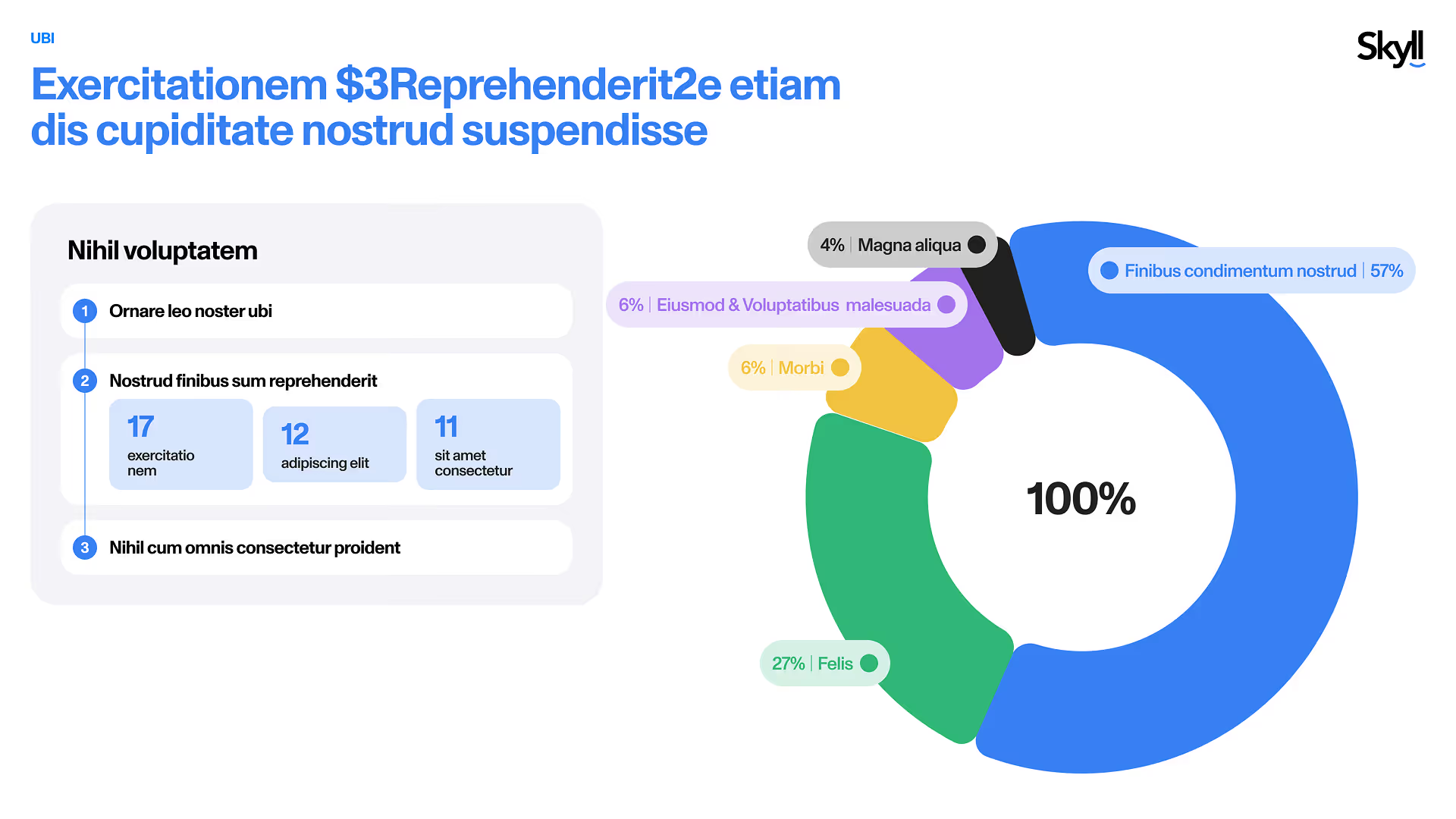
2. Problem Slide: Unraveling the Knot
Every successful business starts with a problem that’s yearning for a solution. Identify a specific issue that your target market grapples with, and demonstrate how your offering can solve that problem like no other alternative in sight.

Observe this compelling example, where both the content and background image eloquently depict the pressing issue of climate change.
Use storytelling to make this slide relatable - remember, the more tangible the problem, the more intrigued your potential investors will be to discover your solution.
And don't forget, the urgency and significance of the problem should ring loud and clear in your pitch.
3. The Moment of Truth: Why Now?
Why is this problem demanding attention right now?
What has changed or surfaced to make this issue unavoidable?
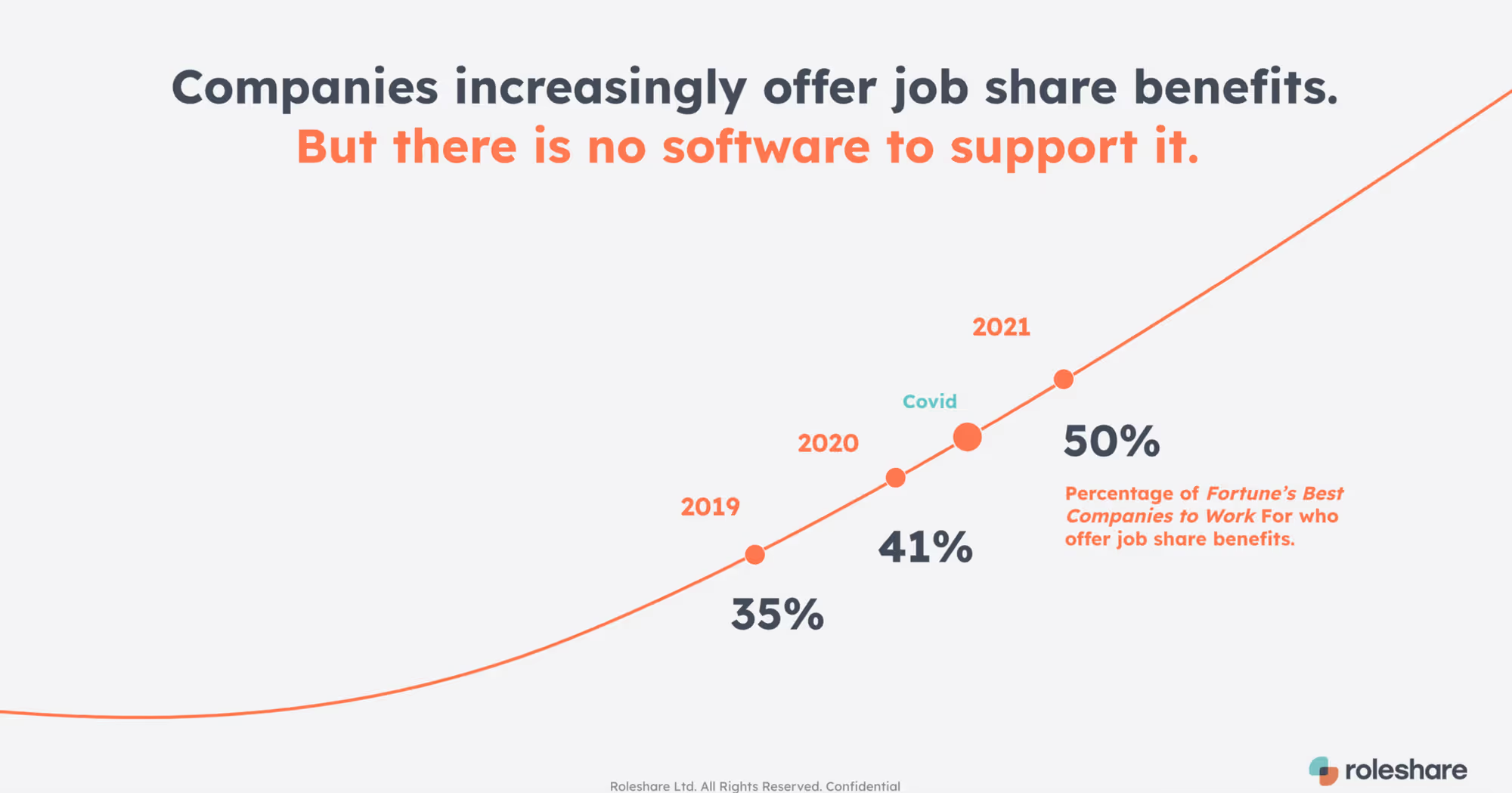
Witness the "Why Now" factor in this example template, it is meticulously weaving together real-time statistics to ignite a sense of urgency.
Give your audience the reasons they need to realize the immediacy of the problem.
4. The Bridge from Problem to Promise: Solution!
Once you've established the problem, it's crucial to lead your audience seamlessly into your solution - this is where your narrative gets compelling.
This is the moment where you make your audience say, "Ah, that's how they're going to solve it!"
In this section, you present your golden solution - the unique concept or product that sets your venture apart. Your solution should be clearly articulated and tightly linked to the problem you identified earlier.
Remember, design and content must be harmonious; they should echo each other, telling the same story in different languages - visuals and words.
Think of your solution as the answer to a riddle, a bridge that connects a pain point to its resolution. It should not only provide a tangible answer to the problem but also shine a light on its unique characteristics and competitive advantages.
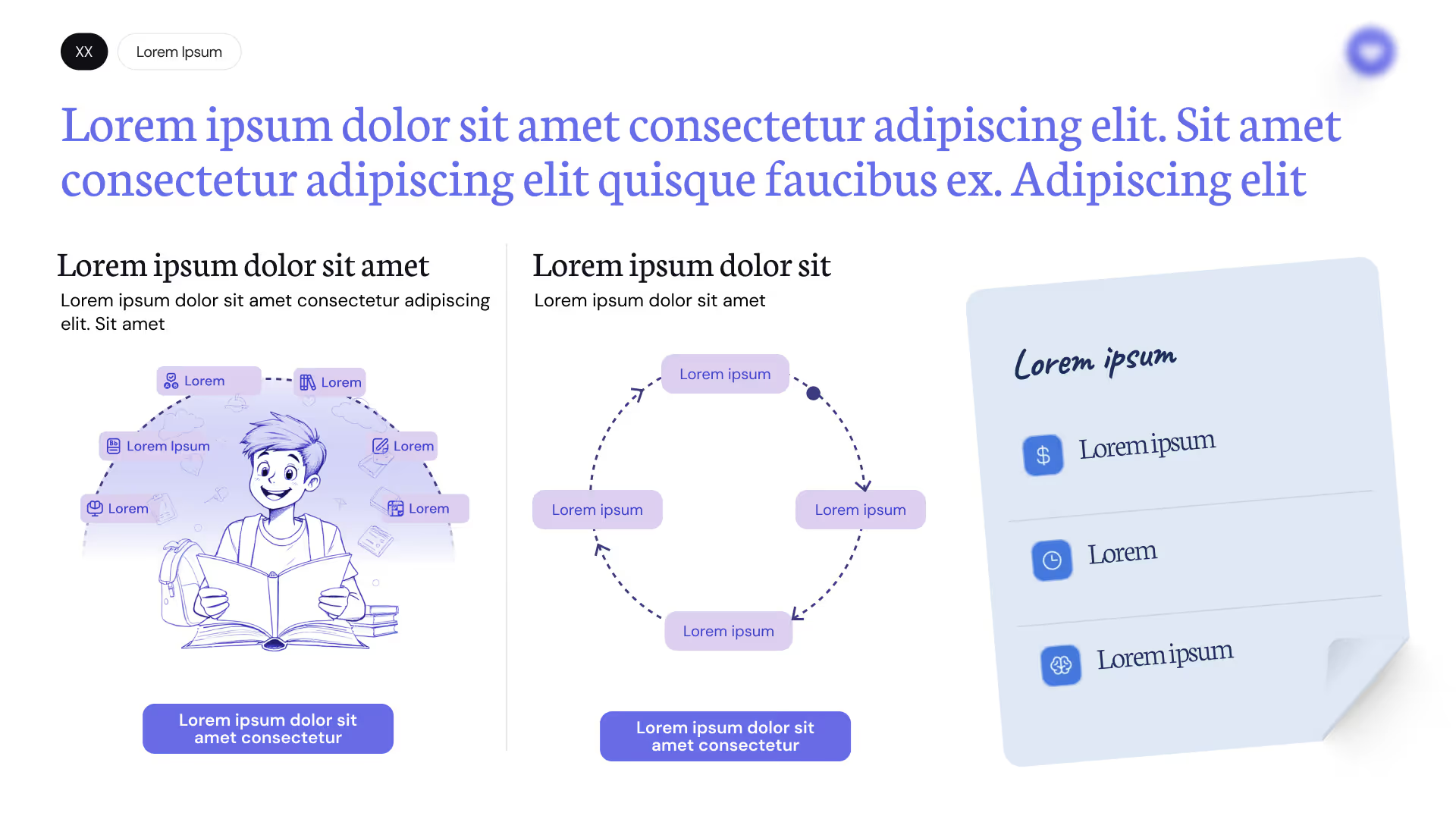
Here is a perfect example of the solution slide, meticulously tailored for an early childhood development program. Its remarkable attention to detail is sure to captivate and inspire.
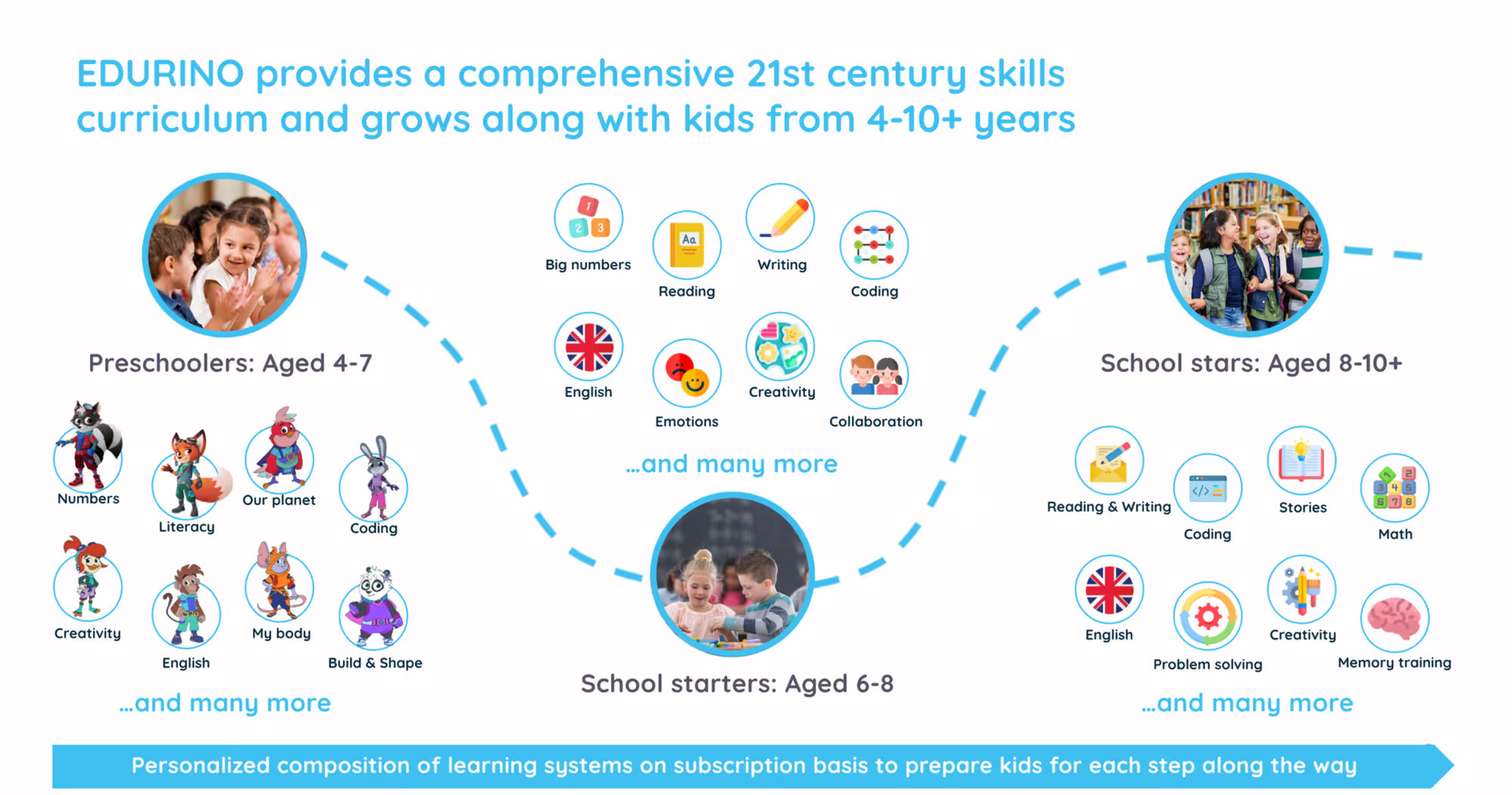
In this part of your pitch, make sure you illuminate what makes your solution special. Is it faster? More cost-effective? More comprehensive? Do you have a unique technology or approach? Does it offer a better user experience? By highlighting these aspects, you can make a stronger case for why investors should choose to back your solution over others in the market.
To sum up, when presenting your solution, remember this golden rule - it must be an obvious answer to the problem, presented clearly and compellingly, with its unique advantages in the spotlight.
5. Show and Tell: Product
Now comes the star of your show - your product!
This slide should spotlight the key features, functionality, and value that your product or idea brings to the market.
Whether it's a physical product (shown in quality pictures) or an online tool (showcased with illustrative screenshots), the product should tell a compelling story of its ability to address the problem outlined earlier.
Here is an example of a product slide that impeccably combines striking visuals with a meticulous description.

Remember, your product should leave the investors imagining its immense potential and impact.
6. The Battlefield: Market
In this arena, you're going to delve into your product or idea's potential within the expansive market landscape.
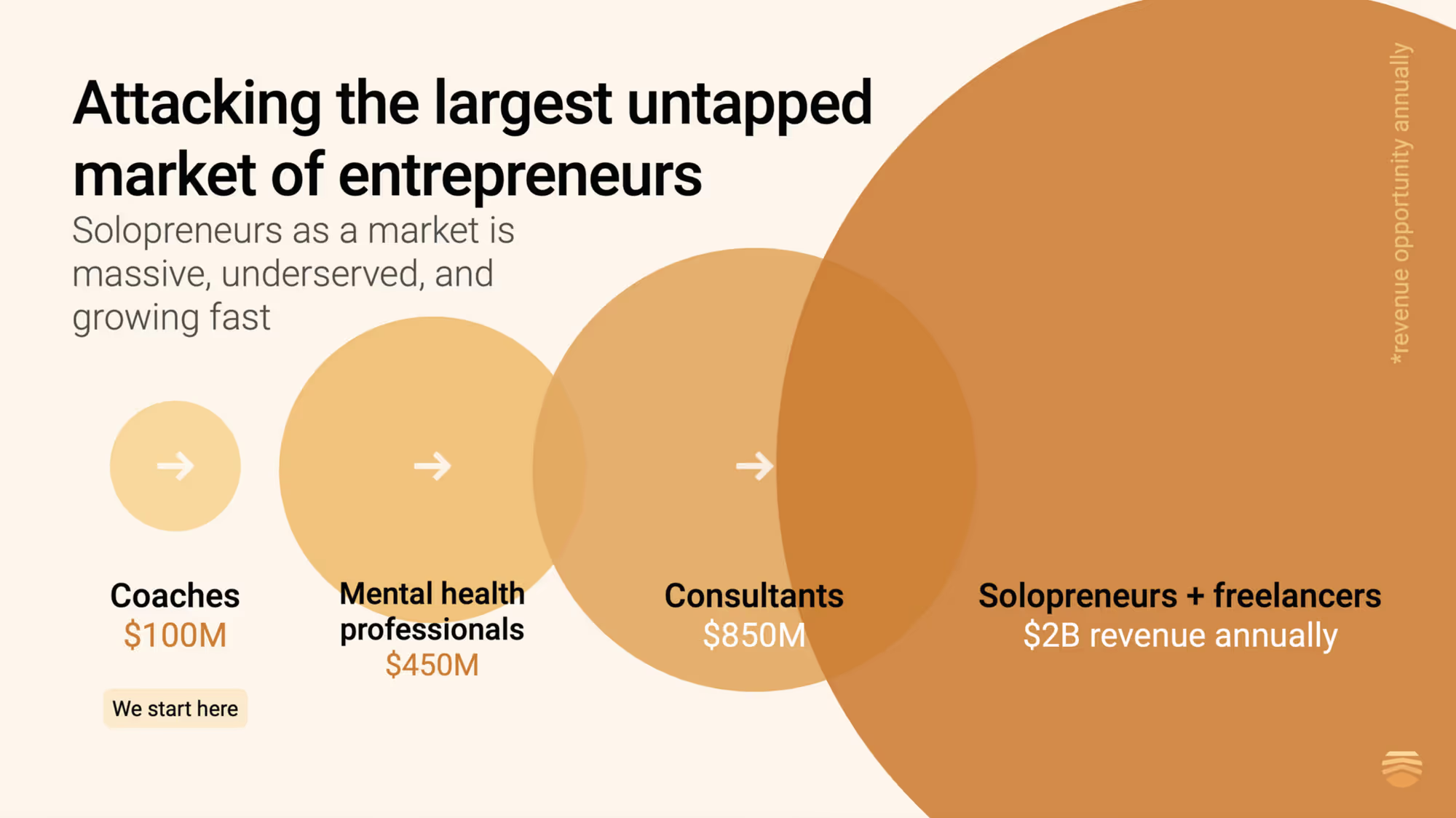
Here is an example template that intricately outlines the market position, fortified with compelling statistics.
To determine the size of your market and assess how well your product fits into it, you can employ either a top-down or a bottom-up approach.
Each method offers a unique perspective on the potential scale of your opportunity, and both are critical when presenting your business case to potential investors.
1. Top-Down Approach
In a top-down analysis, you start with the total size of the market and then narrow it down to the specific segment that your product or service targets.
Let's imagine you've created a revolutionary new type of running shoe. You might start by looking at the total global market for athletic shoes, which is a multi-billion dollar industry.
Then, you'd narrow down to the market for running shoes specifically.
Finally, you'd estimate the segment of that market that you could realistically capture, based on factors like your business's capacity, marketing strategy, and unique selling points.
While this approach can give you a broad view, it's often criticized for being overly optimistic. It assumes that a portion of the market will automatically gravitate toward your product or service, which isn't always the case.
2. Bottom-Up Approach
A bottom-up analysis, on the other hand, starts with your direct interactions with customers and then extrapolates to the larger market.
Sticking with the running shoe example, you might start by considering how many shoes you expect to sell in your first year based on your production capacity, price point, and marketing plan. Then, you'd look at how you expect to grow year over year, considering factors like market trends, customer feedback, and planned business developments.
By aggregating these figures, you can estimate the overall market size. This method is often seen as more realistic because it's based on tangible factors and direct interactions with the market. However, it may underestimate the total market potential, especially if there are adjacent markets or customer segments you haven't considered.
When presenting the potential of your product or idea within the market, both top-down and bottom-up approaches provide valuable insight.
The top-down approach gives an overview of the entire market landscape and shows where your product or service fits into it.
The bottom-up approach, however, provides a more realistic estimate based on your business's unique situation and growth prospects. Ideally, you would use both approaches to paint a complete picture of your market opportunity.
7. Friends and Foes: Competition
Operating in a market also means acknowledging the existence of competition. No product or service exists in isolation. There are always other players - big and small, direct and indirect - competing for the same customers and resources.
Recognizing your competition is not a sign of weakness. In fact, it's a testament to your thorough research, strategic thinking, and readiness to take on the challenge. This section of your pitch deck should delve into who your competitors are, what they do well, and where they fall short.
But it's not enough to just list your competitors. You need to showcase your comparative advantage - what makes your product or service stand out in the crowd? Maybe your solution is more cost-effective, or perhaps it's more comprehensive. Perhaps your approach is innovative, or your team has a unique blend of skills. Whatever it is, make sure you highlight this 'gap' you are filling in the marketplace.
Here is an example meticulously researched and curated competition slide that provides valuable insights.
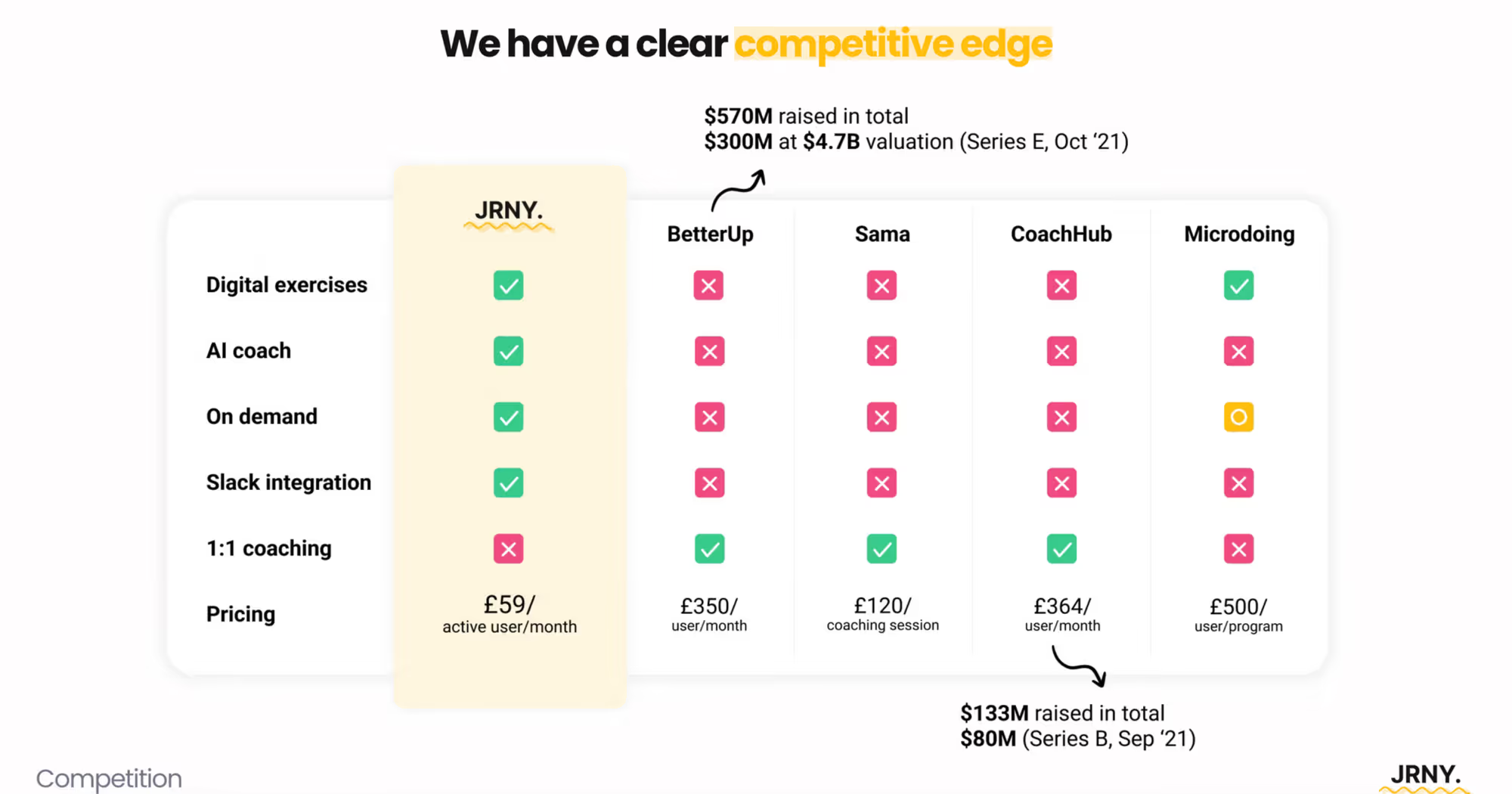
By providing a well-researched, data-backed view of the competitive landscape, you prove to investors that you're not entering the battlefield blind. You're fully equipped, ready to compete, and poised to win.
Remember, by acknowledging and understanding your competition, you demonstrate to investors that you've thoroughly researched your industry and identified a unique opportunity - a gap only you can fill. This is the kind of diligence and strategic thinking investors look for.
8. Go-to-Market Strategy: Conquering the Market
This is where you lay out your battle plan for conquering the market and winning over customers like champions.
First things first, you need to know your target audience inside and out. Who are these fine folks? What keeps them up at night? Understanding their pain points is your ticket to tailoring your approach and delivering the solution they've been dreaming of.
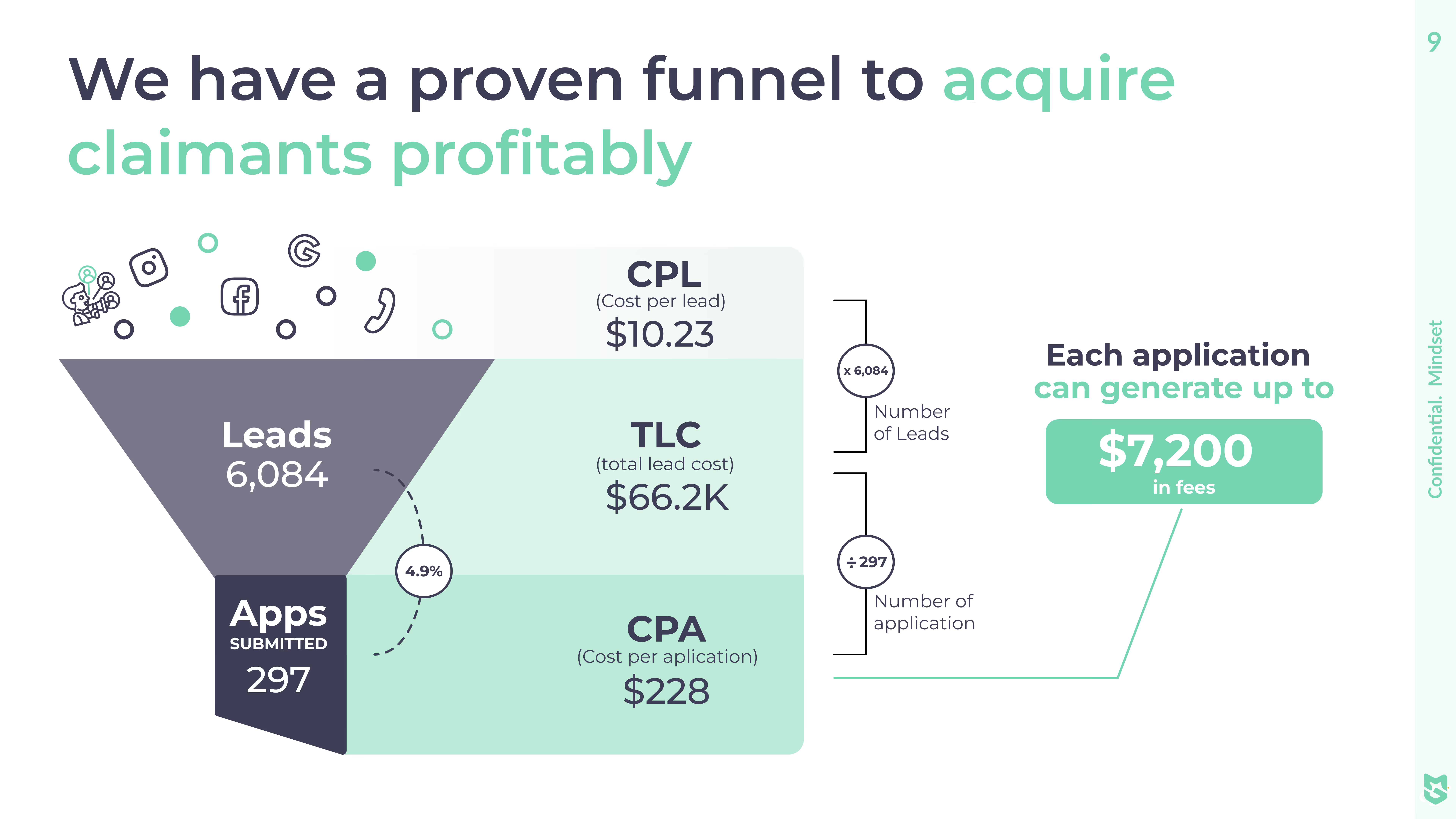
Here is a perfect example of a GTM strategy slide. Witness the growth plan through clear phases.
Now, let's talk tactics.
How are you going to grab their attention and make them fall head over heels for your product or service? Will you unleash a digital advertising blitz, create killer content, or dominate social media like a boss? It's time to reveal the channels that will give you the biggest bang for your buck.
But hold on, distribution is also a key player in this game.
How are you going to get your fantastic offering into the hands of eager customers? Will you forge strategic partnerships, embrace the online realm, or make a statement with good old-fashioned brick-and-mortar stores? Let's spill the beans on your distribution strategy.
Now, here's the real deal: what makes you shine brighter than your competitors? What's your secret sauce? Whether it's a killer pricing model, an unforgettable customer experience, or mind-blowing innovations, let's make it crystal clear why customers will choose you over the rest.
Oh, and don't forget to show off your timeline.
You've got a plan, people! Key milestones, measurable goals, and a roadmap to success. This shows your investors that you mean business and know how to get things done.
So, with your go-to-market strategy locked and loaded, you're ready to charge into battle. You understand your target audience, you've got your unique selling points, and you're armed with a solid plan.
9. Showing Progress: Traction
When it comes to showcasing the traction your startup has achieved, there are several technical methods you can employ.
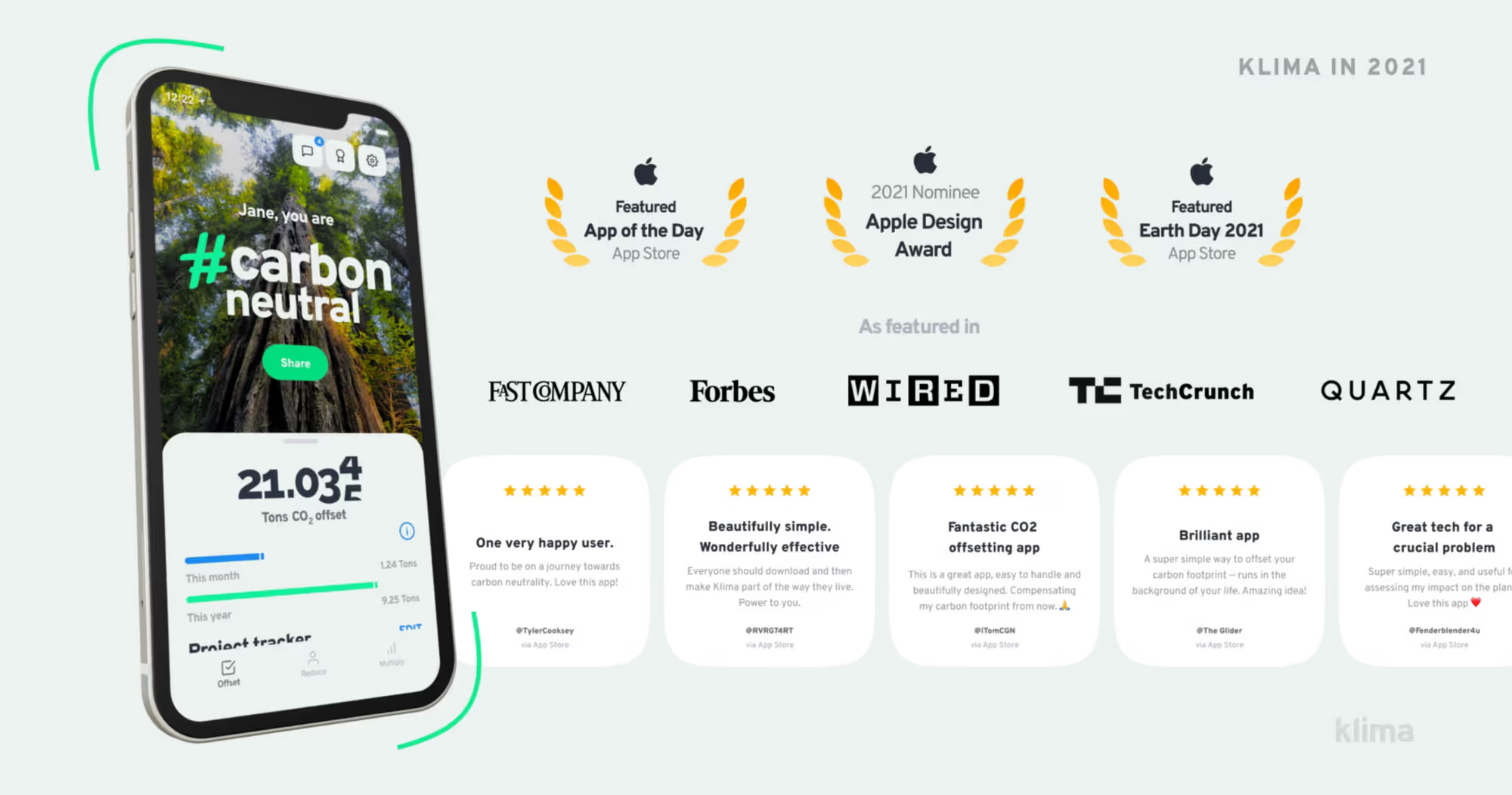
Witness this remarkable example template, showcasing the traction slide with an irresistible blend of charm and wit.
Remember, the goal is to provide tangible, measurable evidence of your business's progress and growth. Here are a few ways to demonstrate traction effectively:
- Revenue and Sales Figures: There's no better way to demonstrate traction than through your revenue and sales figures. If your startup is already generating income, it's a clear indication that there's a market for your product or service. Be prepared to share details on your sales volume, revenue growth, and the profitability of your business.
- Customer Growth: Another strong indicator of traction is the growth of your customer base. You could showcase this through a graph illustrating the increase in the number of customers or users over time. You can also use cohort analysis to demonstrate how engagement levels have increased among different user groups.
- Key Performance Indicators (KPIs): KPIs are a great way to demonstrate traction because they provide quantifiable measures of your startup's performance. Depending on your business, KPIs might include user engagement metrics, customer acquisition cost, lifetime value of a customer, churn rate, or monthly active users.
- Partnerships and Collaborations: If your startup has secured strategic partnerships or collaborations, it's a good sign of traction. This might include distribution partnerships, joint ventures, or collaborations with influential figures in your industry.
- Media Coverage: Positive media coverage and press mentions can also serve as an indicator of traction. This shows that your startup is generating buzz and is being recognized within your industry.
- Awards and Recognitions: If your startup or its products/services have won awards or recognitions, it's a clear sign that you're doing something right. These recognitions contribute to your credibility and indicate your potential for success.
- Product Development Milestones: If you're a product-based business, demonstrating key development milestones can indicate traction. These might include prototypes completed, patent applications filed, or successful product testing results.
10. The Driving Force: Team

Witness the awe-inspiring team slide in this example, meticulously crafted to unveil the essence of the exceptional team members.
Behind every successful business or idea is a dedicated and competent team. Investors want to know who's behind the wheel, and if they're capable enough to steer the ship. Your team slide should do more than list names and titles - it should highlight their impact and demonstrate their ability to execute your vision.
11. Raising the Capital: Fundraising
Finally, the most important part for both you and your potential investors - the fundraising slide.
Discuss the funds you've raised so far and how much you're looking to raise next.
Here is an example template for the fundraising slide of your deck.
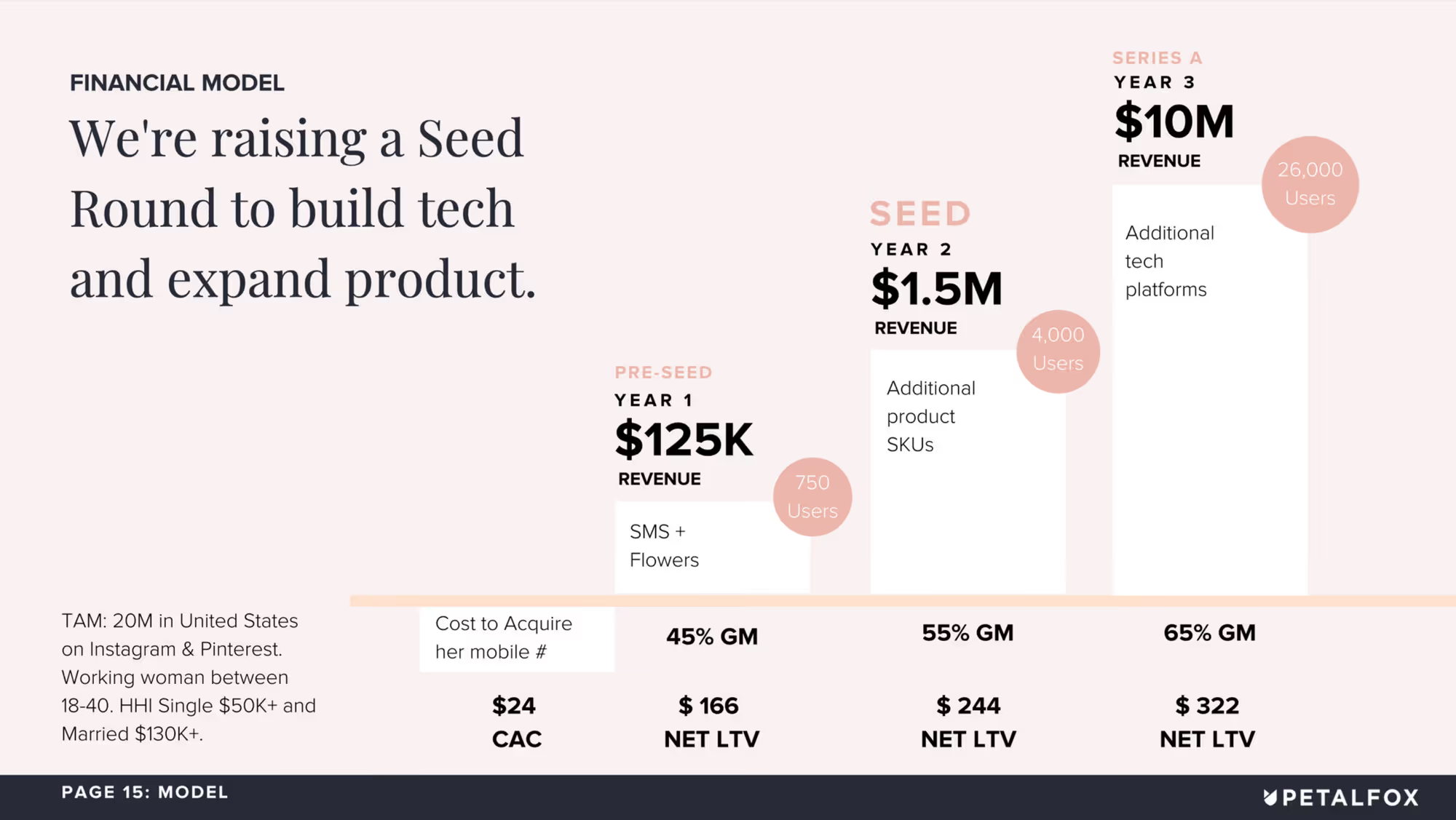
Paint a realistic picture of your business's projected growth over the next two to four years.
How Rigid Should be this Pitch Deck Structure?
When crafting a compelling pitch deck, there are certain slides that should always have a place in your presentation. These slides serve as the backbone of your pitch, providing essential information to captivate investors and demonstrate the potential of your business. The following slides are crucial and should be included in every pitch deck:
- Introduction Slide: The introduction slide sets the stage for your pitch and introduces your business to the investors. It should grab attention and create intrigue, highlighting the unique value proposition of your venture and leaving a lasting impression.
- Problem Slide: The problem slide identifies a specific issue or pain point that your target market faces. It establishes the need for your solution by clearly articulating the problem, making it relatable and compelling for investors. This slide serves as the foundation for showcasing the relevance and significance of your business idea.
- Why Now Slide: The why now slide emphasizes the timing and urgency of your solution. It explains why the problem you're addressing needs immediate attention and why the market is ripe for disruption. By highlighting recent trends, industry shifts, or emerging technologies, you can demonstrate that the timing is perfect for your business to thrive.
- Solution Slide: The solution slide unveils your unique concept or product that solves the identified problem. It should clearly articulate your value proposition and explain how your solution stands out from competitors. This slide should highlight the key features, benefits, and competitive advantages of your offering, leaving investors convinced of its potential impact.
- Ask Slide: The ask slide is where you specify the investment you're seeking and how you plan to utilize the funds. It's essential to show investors how their expertise or past investments align with your business goals, emphasizing the value they can bring beyond financial support. This slide helps investors understand how they fit into the picture and adds a sense of partnership and shared success.
While other slides in your pitch deck may vary depending on your business and audience, these five slides should always be included to provide a solid foundation for your pitch. They lay the groundwork for investors to understand the problem, see the potential of your solution, and envision the value they can bring by partnering with you.
Conclusion: Crafting Your Perfect Pitch with Our Expertise
Crafting an effective pitch deck goes far beyond choosing the right slides. The real difference comes from how clearly your story is written and how logically the narrative flows from one headline to the next. Strong writing is what allows investors to understand your deck quickly, and remember it after the meeting.
If you want to sharpen the clarity, structure, and narrative of your deck, our Pitch Deck Writing Service can help you turn your ideas into a tight, investor-ready storyline that stands out.
A well-structured pitch deck doesn’t just support your fundraising, it elevates it. So if you’re ready to bring your message to a higher level and present a story investors can’t ignore, we’d be happy to help.
Let’s make your pitch impossible to overlook.
%20%2BExamples.jpg)
When you sit down to create a pitch deck, it’s easy to get lost in templates, examples, and slides. But at its core, a pitch deck is simply this: a structured argument for why someone should trust you with their money. Before thinking about design or formatting, put yourself in the investor’s position. If you were handing your own hard-earned money to a stranger, what would you need to know?
You’d want to see who else is solving the problem. You’d want to know if the company already has traction. You’d want evidence they understand their customer, their market, and how the business will grow. These aren’t “nice to have” slides — they’re the basic checks anyone would make before investing in anything. When founders forget this, their pitch becomes a list of slides instead of a coherent, persuasive story.
A great pitch deck isn’t built by guessing. It’s built by answering the same questions you would ask before putting your own savings into a startup. And crafting those answers clearly is fundamentally a writing exercise, using the same principles we apply in our pitch deck writing work.
In this guide, we’ll break down each slide from that first-principle perspective — not just what to include, but why it matters and how to communicate it so investors instantly understand the story you’re telling.
What is a Pitch Deck?
Picture this: you have an incredible business idea that can change the game, but you need the right tool to propel it forward – that's where the pitch deck comes in.
A pitch deck is like a gateway, a brief presentation that unlocks opportunities with potential investors, customers, or partners. It's the key to making your vision crystal clear and igniting interest in what you have to offer.
This powerful visual aid condenses your business's essence into a persuasive story, leaving a lasting impression on your audience.
Forget mundane presentations; your pitch deck is your chance to stand out and shine. Your pitch deck should be as unique as your idea, leaving investors eager to engage with you.
So, let's dissect the art of creating compelling pitch decks and get you one step closer to funding success!
How to Create a Pitch Deck?
Beyond its common association with securing funding, a meticulously crafted pitch deck becomes a strategic enabler, empowering brands to scale and conquer their growth objectives.
Let's dive into the essential elements that'll make your pitch deck a standout success.
Introduction (Elevator Pitch)
In the fast-paced world of startup fundraising, the first impression is everything.
Nail your Introduction – a powerful 2-3 line teaser that instantly captivates potential investors.
.avif)
Within a mere 30 seconds, paint a vivid picture of your startup's brilliance, leaving them hungry for more. This slide is your golden ticket to pique curiosity and set the stage for the rest of your pitch.
Here's a captivating template for your intro slide for a SaaS B2B startup.
.avif)
Remember, a compelling elevator pitch can make all the difference between success and silence.
Let's craft yours to perfection!
What is the Problem You Are Solving?
In the vast sea of startups, the key to making a splash lies in solving a problem that truly matters.
The next slide should address the problem you are solving. This part is your chance to define the pain point your startup addresses and why it's a game-changer.
.avif)
This problem should be big, urgent, and captivating enough to grab investors' attention from the get-go.
Paint a vivid picture, immerse them in your customers' shoes, and weave a relatable story that tugs at their hearts.
Here's an example of a compelling problem slide of a therapist startup deck:
.avif)
Remember, the more real and pressing the problem, the more compelling your business becomes.
Urgency of the Problem: Why Now?
In the world of business, timing is everything, and the - Why Now - slide sets the clock ticking in your favor.
.avif)
Showcasing the unmet needs of users, current market trends, and the competitive landscape, this slide paints a compelling picture of the golden opportunity before you.
Back up your claims with data, evidence, and proof, revealing why this moment is the perfect storm to launch your solution.
Here is an example template for you - why now - slide:
.avif)
Investors will be intrigued to know why this problem hasn't been addressed yet and why your startup is the game-changer they've been waiting for.
What is Your Solution?
Presenting the heart of your pitch deck: Your Solution.
This is where your startup's magic comes to life, offering a brilliant answer to the problem at hand.
.avif)
Showcase your product (MVP) or service and reveal why it's the game-changing solution the market craves.
Focus on the benefits it brings, not just its features, and use captivating visuals and storytelling to illustrate its power.
Remember, your solution should be desirable, viable, and feasible, leaving investors eager to be part of your transformative journey.
Here is an inspirational solution slide example template:
.avif)
Let's shine the spotlight on your unique offering and demonstrate why it's the perfect remedy for today's challenges.
Product-Market Fit
Time to unveil the proof of Product-Market Fit – the moment your solution aligns perfectly with a hungry market.
Showcase your product in all its glory; a live demo or a captivating video can work wonders.
.avif)
Let visuals speak volumes as you highlight key features.
Product-market fit means having users who not only buy but also rave about your offering, propelling growth and profitability.
This slide is your ticket to demonstrate that your solution is tailor-made for the market's cravings. Here is an example:
.avif)
Let's reveal the powerful match between your product and its eager audience, paving the way for exponential success.
Market Size and Opportunity
The Market Size and Opportunity slide is where you paint a vibrant picture of your ideal customers and the vast potential that lies ahead.
.avif)
Show investors the scale of the problem you're tackling and how your company positions itself in the market.
Unveil the total addressable market (TAM), the serviceable available market (SAM), and the serviceable obtainable market (SOM).
But remember, specificity is key; aim for a reachable market, not an overly inflated one.
Use compelling visuals like pie charts or timelines to showcase market trends, proving it's the perfect moment for your business to shine.
Here is an example of a market size slide of an early startup:
.avif)
Let's illustrate the boundless opportunities that await, compelling investors to jump aboard your journey to success!
What is the Competition?
In the fierce battleground of business, competition is inevitable.
Next should be the competition slide. It is your chance to showcase your distinct edge in the market.
Describe how you stand tall amidst rivals, armed with unique advantages and a secret sauce that sets you apart.
What makes you the irresistible choice for customers? Highlight your key differentiators and reveal why your offering outshines the rest.
.avif)
In this captivating dance of competitors, show investors why your startup is the undisputed solution amid the prevalent competition.
Show the Traction
Showcasing traction is the pinnacle of credibility in your pitch deck. It's where you transform potential into reality with hard-hitting startup analytics.
Numbers don't lie, and investors crave proof of your visible progress.
.avif)
Flaunt your monthly active users, early adopter waitlist, or successful sales – tangible signs that your startup is gaining momentum.
As you craft this slide, remember, the longer the data, the more dynamics it reveals. Think of it as a movie trailer, leaving investors eager to watch the whole story.
Here is an example template for traction slide in your deck:
.avif)
Also, you can add reviews and testimonials to amplify your triumphs.
So, founders, create a data-driven scene that leaves investors in awe, convinced that your startup is a force to be reckoned with.
Introduce Your Team
In a winning pitch deck, the spotlight shines on your dream team – the driving force behind your startup's success.
This slide is where you introduce the key players who make magic happen.
.avif)
Highlight their exceptional expertise, unique successes at previous ventures, and why they are the perfect fit to build and grow your company.
Investors want to know why you and your team are the champions who will triumph in this challenging arena.
Even if some positions are yet to be filled, identify the critical roles you seek and explain how they will fuel the company's growth.
.avif)
It's time to showcase the A-team that will conquer the market!
Financial Projections Overview
The financial projections overview is the backbone of your pitch deck, validating the viability of your business idea.
.avif)
This slide provides a snapshot of your revenue model, showcasing how you plan to monetize and hit financial milestones.
Use clear charts to display sales forecasts, customer numbers, expenses, and profits over the next three years.
Investors want to see realistic growth projections, so back up your numbers with solid assumptions.
Look at this example of a financial model slide in a seed round deck:
.avif)
Show them that you understand your expense drivers and demonstrate how your existing traction supports your optimistic projections.
Numbers don't lie, and a compelling financial overview can make all the difference in securing those crucial investments.
How Much Do You Want to Raise?
Alright, it's the moment of truth - the part where you ask for the quantity of funds required!
In your pitch deck, be specific about how much funding you're seeking to take your business to new heights.
.avif)
But remember, it's not just about throwing figures out there; you need a rock-solid plan explaining how that money will be utilized to fuel growth and achieve your business goals.
Transparency is key, so show potential investors exactly how their investment will propel your success. And if you've already got some backers on board, share the good news and explain why they believe in your vision.
Best Tips for a Perfect Deck Creation
Crafting a captivating pitch deck is an art and here are the important tips to keep in mind before crafting one:
- Use Storytelling: Weave a narrative that engages investors emotionally and intellectually, leaving a lasting impression.
- Less Is More: Keep it concise, focusing on key points that showcase your business's potential.
- Visualize: Use eye-catching graphics and charts to present data in a compelling way.
- Updated Data: Provide current, relevant information to build credibility and trust.
- Focus on Benefits, Not Features: Highlight how your solution solves real problems and benefits users.
- Show, Don’t Tell: Demonstrate your product's value through demos or examples.
- Craft Compelling Pitch Deck Copy: Use persuasive language to convey your vision effectively.
- Keep Your Pitch Simple: Avoid jargon and complexities; make it easy to understand.
- Don’t Overstate the Market Opportunity: Be realistic about your market size and growth potential.
- Ask for the Money: Clearly state the funding you need and how it will drive success.
- Practice Your Presentation: Rehearse confidently to deliver a flawless pitch.
Conclusion
A strong pitch deck doesn’t guarantee funding, but it does guarantee a real conversation. When your story is clear, your claims are supported by data, and each slide answers a question an investor actually asks, you immediately stand out from the noise. That’s the goal — not to impress with volume, but to communicate with precision.
Your pitch deck should reflect how you think: structured, intentional, and focused on the value you create. Keep your writing concise, highlight only what matters, and make sure every slide reinforces the same narrative. When the copy is strong and the logic is tight, investors can understand your company in minutes — which is exactly what you want.
And if you want help sharpening that narrative, tightening your messaging, or crafting headlines that carry the weight of your story, our Pitch Deck Writing Service can help you build a deck that earns investor attention.
Write it clearly. Support it with logic. And let your pitch open the right doors.
.jpg)
Are you preparing for an important investor meeting and wondering how to present your pitch deck in the most effective way? One of the biggest mistakes founders make is using the same deck they normally send to investors. When you’re pitching live, your slides need to be lighter, clearer, and visually structured to support your story — not overwhelm it. A well-designed deck can make this dramatically easier, especially if you follow the same principles we use in our pitch deck design work.
Investors have limited attention, and rejection is far more common than acceptance. That’s why simplicity, visual clarity, and a focused storyline matter so much during a live presentation. Your goal is not to show everything — it’s to guide investors through the core of your narrative while keeping them engaged.
In this blog, we’ll walk through how to present your pitch deck in a way that captures attention, holds interest, and gives your startup the best chance of getting a “yes.”
If you want the anchor text phrased differently, I can adjust it in 5 seconds.
Investor Meeting and Pitch Deck Presentation
The journey to an investor meeting is tough for founders. First, you reach out by emailing elevator pitches to many potential investors. Then, if they like your idea, they may respond. That's when it's time to present your startup pitch deck. How you present it to investors can make or break your chances.
Make every second count in your presentation. You'll have 15-20 minutes to make an impression, followed by answering challenging questions. In about 10-15 slides, you need to communicate who you are, what you do, and your vision. It’s more than just slides; it’s your business's blueprint for success.

When raising funds for your startup, the pitch deck is your key tool. Think of it as a short, powerful summary of your business. Your deck must be simple yet striking.
A great pitch deck has a clear story, easy-to-understand points, and eye-catching visuals, and shows your business growing. It’s about making both you and investors see a bright future together.
How to Present Your Startup Pitch Deck?
Startup fundraising is a long journey for founders. After reaching out to investors, creating your pitch deck, and emailing multiple potential backers, you reach a crucial stage. The investor meeting and presenting your pitch deck can make or break the deal.
Many early-stage founders struggle at this point. They're unsure how to effectively present their pitch deck. Presenting your pitch deck is an art.
Here are some essential tips for early founders. These will help you prepare for the big day of fundraising, allowing you to tell your startup's story through your pitch deck and presentation skills.
1. Preparing for the Pitch Deck Presentation
Before stepping into the meeting room with investors, thorough preparation is essential for founders. Doing your research, finding the right investors, preparing a killer pitch deck, and understanding your audience deeply are key steps before the big meeting.
This groundwork sets the stage for a successful presentation. Your pitch deck should be clear, concise, and engaging. It's not just about the slides; it's about connecting with the investors and sharing your vision compellingly.
Remember, you're not just presenting a business plan; you're telling a story that could shape the future of your startup.
Tips for the Preparation Phase:
- Understand Your Investors: Learn about investors' past investments and interests. Tailoring your pitch makes it more relevant to them.
- Clarity and Simplicity: Make sure your pitch deck is easy to follow. Use simple language and focus on key points.
- Practice Your Pitch: Rehearse your presentation to ensure smooth delivery. Confidence comes with practice.
- Prepare for Questions: Anticipate what investors might ask. Know your business details inside out.
- Financial Plan: Include a clear financial plan. Investors want to know how their money will be used and the potential returns.
- Tell Your Story: Share your startup's origin and mission. A compelling story makes your business memorable.
- Showcase Your Team: Highlight your team's skills and dedication. Investors invest in people, not just ideas.
- Know Your Numbers: Be fluent with your startup's financials. Understanding and explaining your numbers shows credibility and preparedness.

2. Setting the Tone: Introductory Hook
Starting your pitch deck presentation the right way is crucial. It's about making a strong first impression. Begin with something that grabs attention instantly.
Introduce yourself and your startup. Then, hook your audience right away. Share a problem your startup solves, making it personal and relatable.
Your opening should reflect your vision, not just current offerings. Tailor it to your audience, and make it resonate. Remember, your opening is like a movie trailer: it should leave them wanting more.
Tips for Opening Your Pitch Deck Presentation:
- Strong Start: Open your presentation with an impactful statement that quickly shows your startup's value.
- Personal Introduction: Start with your name and company. It’s polite and helps the audience connect with you.
- Emotional Hook: Within the first minute, engage the audience emotionally with your vision or a compelling problem.
- Focus on the Problem: Begin by highlighting the problem your startup solves, making it specific and relatable.
- Tailor to Your Audience: Customize the start of your pitch to the interests and sectors of your investors.
- Use a Personal Story: Opening with a personal anecdote can make your pitch more engaging and memorable.
- Crisp Summary Slide: Start with a slide that summarizes your business idea clearly and intriguingly.
3. Storytelling Through Your Deck Slides
Around 80% of fundraising is your ability to tell a story. Narrating a captivating story through your pitch deck is key to successful fundraising meetings with potential investors.
As a founder, your mission is to share a compelling narrative about why your company is essential. It's more than just presenting facts; it's about taking your audience on an exciting journey.
Share your passion and the origin story of your business. Make your presentation memorable by connecting with your audience on a personal level.
Remember, your story should be clear, authentic, and backed by data. Use visuals and clear language to make your pitch both engaging and memorable.
Tips for Storytelling Through Your Pitch Deck:
- Start with the Problem: Begin your story by highlighting a relatable problem that your startup solves.
- Personal Connection: Share personal experiences that connect emotionally with your vision and mission.
- Engaging Narration: Make your business's origin story interesting and inspiring. This helps create a memorable connection.
- Data-Backed Story: Combine your narrative with solid data to make it more convincing and credible.
- Visual Engagement: Use visuals effectively in your slides to enhance and support your storytelling.
- Memorable Opening and Closing: Ensure your story has a strong start and a powerful conclusion to leave a lasting impact.
- Relatable Anecdotes: Include stories about customer success or company milestones that audiences can relate to.
- Authentic Voice: Be sincere and genuine in your storytelling. Authenticity resonates with listeners.
4. Body Language and Verbal Communication
Investor meetings and pitch deck presentations are as much about body language and verbal communication as they are about the content.
How you present yourself and your ideas plays a huge role in convincing investors. Your body language can show confidence and passion, while your words can clearly and effectively communicate your vision.
Avoid reading from slides or staring at the projector screen; instead, look forward and connect with your audience. Your confidence, enthusiasm, and clarity are key to making a persuasive presentation.
Remember, it's not just what you say, but how you say it. The right gestures and tone can make your pitch more persuasive and memorable. Let's look at how to use these tools effectively.
Tips for Body Language and Verbal Communication:
- Maintain Eye Contact: Eye contact shows confidence and engages the audience. Don’t just read from slides; connect with your listeners.
- Use Confident Posture: Stand straight and use open gestures. Good posture conveys confidence and control.
- Clear and Concise Speech: Speak clearly and avoid rushing. Clarity in speech makes your message more understandable.
- Practice Tone Variation: Use different tones to emphasize key points. Monotone speeches can be less engaging.
- Use Gestures Effectively: Hand gestures can emphasize points but use them sparingly to avoid distraction.
- Control Facial Expressions: Your expressions should match your message. Smile and show enthusiasm where appropriate.
- Pause for Emphasis: Use pauses to let important points sink in. This also gives you a moment to breathe.
- Avoid Filler Words: Try to eliminate "um," "ah," and similar fillers. They can distract from your message.
- Be Genuine: Authenticity resonates with people. Be yourself and let your passion for the project show.
5. Concluding the Presentation
Ending your pitch deck presentation strongly is as important as starting it well. As Guy Kawasaki suggests, keep it within 20-25 minutes and end with impact.
Your final moments can change everything. Remember, your audience will likely retain only one to three key points. Use the end to reinforce these crucial messages.
Clearly state what you need from the investors. This could be your most powerful moment. Make it count by leaving a lasting impression, and avoid ending with just a 'Questions?' slide. Instead, summarize your pitch's strengths and make a clear call to action.
Tips for Concluding the Pitch Deck Presentation:
- Strong Recap: Quickly summarize the main points, reinforcing your pitch's unique strengths.
- Clear Call to Action: Clearly state what you are asking from the investors, whether it's funding, guidance, or a partnership.
- Refer Back to Start: Tie your conclusion to your opening, creating a full-circle narrative for your audience.
- Express Gratitude: Thank investors for their time and consideration, showing appreciation and professionalism.
- Encourage Questions: Invite queries while ensuring you don't just end with a generic 'Questions?' slide.
- Use the Last Slide Wisely: Make your final slide meaningful, not just a placeholder. It's viewed the longest.
- End with Confidence: Conclude with a confident tone, leaving a lasting, positive impression of your startup.
- Seek Feedback: After the presentation, ask for feedback. This shows openness to improvement and respect for the investors' opinions.
- Avoid Rushing: Don't hurry through your conclusion. Give it the same importance as the opening.
- Be Memorable: End with something memorable, whether it's a surprising fact, a vision statement, or a touch of humor.
6. Presentation Time Management
Managing time wisely is key in pitch deck presentations. Stick to the 20 to 25-minute rule and manage the meeting time wisely. This leaves plenty of time for questions and discussions, crucial in investor meetings.
Dragging your presentation too long can lose investors' interest. If you have an hour-long meeting, a concise presentation allows more time for addressing queries and concerns.
Remember, investors value clarity and brevity. Even complex ideas should be conveyed succinctly. Time management isn't just a practice; it's a strategy that speaks volumes about your respect for the audience's time and your ability to communicate effectively.
Points for Time Management:
- Stick to Schedule: Respect the allocated time for your pitch. Overrunning shows a lack of preparation and respect.
- Concise Presentation: Keep your presentation short and engaging. Long, drawn-out pitches can lose the audience's interest.
- Practice Brevity: Even complex ideas should be summarized. Clarity and brevity are highly valued.
- Leave Time for Q&A: Schedule your pitch to allow ample time for questions and discussions afterward.
- Avoid Overloading Slides: Keep slides simple. Overloaded slides can prolong the presentation unnecessarily.
- Focus on Key Points: Emphasize only the most important aspects of your business to maintain a tight timeline.
- Rehearse for Timing: Practice your pitch to get the timing right. This ensures you cover all points within the allotted time.
- Respect Audience's Time: Timely presentations show respect for your audience's schedule and enhance their engagement.
- Use a Timer During Practice: Practicing with a timer helps you get a feel for the pacing and length of your presentation.
- Be Flexible: Be prepared to adjust your presentation length based on the audience's engagement and feedback.
7. Handle Questions with Confidence
After your presentation, be ready for a range of questions from investors. They might ask about your product, team, business plan, competitors, or financials. It's crucial to prepare for tough questions and practice responding confidently.
Know your startup and pitch deck details thoroughly to avoid repeatedly referring to slides. Clear, honest answers show your understanding and readiness. Being evasive or defensive can raise red flags.
Handling the Q&A session well is as important as the presentation itself. This is your chance to reinforce investor confidence in your venture

Tips for Handling Q&A in Presentations:
- Prepare for Common Questions: Anticipate and practice answers to frequently asked questions about your startup.
- Know Your Data: Be familiar with all relevant stats and data to answer questions without relying on slides.
- Stay Calm and Confident: Maintain a composed demeanor, even when faced with challenging questions.
- Be Honest and Transparent: If you don't know an answer, admit it and offer to follow up later.
- Practice Concise Responses: Keep answers clear and to the point. Avoid rambling or going off-topic.
- Listen Carefully: Listen to each question attentively before responding, to ensure your answer is relevant and accurate.
- Control the Conversation: Politely steer the conversation back to key points if it goes off-track.
- Manage Interruptions: Address interruptions gracefully and return to your main points swiftly.
- Show Enthusiasm: Answer with enthusiasm to convey your passion and commitment to your startup.
- End on a Strong Note: Conclude the Q&A session by reiterating your key message or unique value proposition.
8. Post-Presentation Engagement
After your investor meeting, following up is key. This step keeps the dialogue open, even if the immediate investment isn't confirmed.
Thank investors for their time, answer any lingering questions, and share a detailed version of your pitch deck. Regular updates and communication show your dedication without being pushy.
Remember, networking can lead to valuable opportunities beyond the current pitch. It’s important to maintain these connections, keep track of interactions, and stay informed about the investors' activities.
A thoughtful follow-up can nurture these relationships and potentially lead to investment in the future.
Tips for Effective Follow-Up:
- Send a Thank-You Note: Quickly thank investors for post-meeting, referencing specific feedback or insights shared during the discussion.
- Keep Communication Open: Regularly update investors on your progress, even if they didn't commit immediately.
- Track Interactions: Note who attended the meeting, their interests, concerns, and desired evidence for success.
- Use Social Media: Connect with investors on platforms like LinkedIn and Twitter to stay updated on their interests.
- Reference Past Feedback: When reaching milestones, remind investors of their past advice and how you've implemented it.
- Network Beyond the Pitch: Use these interactions for broader networking, which can lead to other valuable opportunities.
- Stay Informed About Investors: Keep abreast of investors' activities and interests through tools like Google Alerts.
- Add Investors to Mailing List: Include investors in your company’s email updates to keep them engaged with your progress.
Common Pitch Deck Presentation Mistakes to Avoid
In pitch deck presentations, avoiding common mistakes is crucial. Early founders often stumble over certain pitfalls. Being aware of these can greatly improve your pitch's effectiveness:
- Overcomplicating the Deck: Keep your slides simple. Too much information or complexity can overwhelm and confuse the audience.
- Ignoring Storytelling: A dry, data-heavy presentation without a compelling story can fail to engage investors emotionally.
- Lack of Preparation: Not practicing enough leads to a less confident and coherent presentation. Rehearse thoroughly.
- Ignoring Audience Engagement: Failing to make eye contact or connect with the audience reduces the impact of your pitch.
- Too Much Focus on Product: Over-emphasizing the product without addressing market needs, business models, or team expertise is a common error.
- Skipping the Financials: Not including clear financial data and projections can make investors question your business's viability.
- Being Defensive: Reacting defensively to questions can signal insecurity. Accept feedback positively and provide clear answers.
- No Clear Call to Action: Concluding without a specific ask or next steps can leave investors unsure of your intentions.
- Underestimating the Competition: Failing to acknowledge or understand your competition can make your strategy appear naive.
- Neglecting the Team Slide: Not highlighting the team's experience and skills can undermine confidence in your startup’s execution capability.
The Perfect Pitch Deck Structure
A well-structured startup pitch deck is key to presenting your startup effectively. It guides investors through your business story logically and engagingly.
Here’s how to structure it right:
- Title/Introduction: Start with a clear and compelling title slide. Introduce your company name and what you do.
- Problem/Opportunity: Describe the problem or market opportunity you’re addressing. Make it relatable and understandable.
- Solution: Explain how your product or service solves the identified problem or capitalizes on the opportunity.
- Product: Showcase your product or service. Highlight its features, benefits, and what sets it apart.
- Business Model: Outline how your company makes money. Clearly explain your revenue streams and pricing strategy.
- Go-To-Market (GTM) Strategy: Describe how you plan to attract and retain customers. Include marketing and sales strategies.
- Competition: Identify your main competitors and explain how your solution is different or better.
- Team: Highlight your team’s expertise and experience. Show why they’re the right people to lead this venture.
- Financials: Provide clear financial projections and key metrics. Include current revenue, if applicable.
- Why Now/Urgency: Explain why this is the right time for your solution. Stress the urgency and market readiness.

Final Thoughts
Presenting a startup pitch deck is a vital step in your entrepreneurial journey. It’s about telling a compelling story, connecting with investors, and showcasing your startup’s potential in a clear and engaging way. Every detail matters — especially the quality of your slides.
Each step, from crafting your narrative to the final investor meeting, plays a crucial role in your success. And if you want to walk into that room with a deck that looks world-class, communicates instantly, and removes any doubts investors might have, our Pitch Deck Design Service will get you there.
With these tips — and a deck that’s designed to be impossible to ignore — you’re far better equipped to deliver a winning pitch and turn your startup dreams into reality.

In startup fundraising, frameworks like Guy Kawasaki’s 10/20/30 rule are often treated as gospel. The truth is simpler: it’s a helpful starting point, but it’s not a perfect blueprint for every pitch deck. Kawasaki’s structure is designed primarily for presenting, not for sending, and it doesn’t include several slides that investors now expect — like a market slide, a roadmap, or a clear financial narrative.
So if your deck doesn’t fit neatly into his 10-slide format, don’t sweat it. Most strong decks won’t. A great pitch deck isn’t about following a rulebook — it’s about communicating your story clearly, answering the questions investors actually have, and building a flow that makes sense for your business. That requires thoughtful writing, not strict adherence to a template, using the same principles we apply in our pitch deck writing work.
In this guide, we’ll break down Kawasaki’s famous 10/20/30 formula — what works, what doesn’t, and how to adapt the parts that matter into a pitch deck that fits your company, not someone else’s constraints.
Who is Guy Kawasaki and Why is he Relevant for Pitch Decks?
Known as a venture capitalist and marketing evangelist of many popular tech brands, Guy Kawasaki stands out in the startup scene and is renowned for his influential books, The Art of the Start 2.0 and The Art of Social Media.
His 10-20-30 rule for presentations is simple yet revolutionary, designed to engage investors and partners alike. Here's what Kawasaki says about his approach to presentations:

With roots as an advisor to the Motorola business unit of Google and Apple's former chief evangelist, he's now sharing his genius at Canva. His knack for captivating an audience is legendary, especially in Silicon Valley.
Guy Kawasaki is not just a theorist; his field-tested methods make him a trusted voice for entrepreneurs aiming to make their mark. That's why, when Guy talks pitch decks, it pays to listen.
Guy Kawasaki's Magic 10/20/30 Rule for Startup Pitch Decks
Guy Kawasaki's presentation rule of 10/20/30 is a streamlined approach to crafting pitch decks that resonate. It's about presenting your vision within ten slides, sharing it in twenty minutes, and ensuring clarity with a minimum thirty-point font, making your pitch memorable and effective.:
- 10 Slides: Enough to explain, only a few to bore.
- 20 Minutes: Short to keep interest, long enough to tell.
- 30-Point Font: Big enough for all to see clearly.
Slides Limit - 10 Slides
Within a mere ten slides, your pitch presentation needs to encapsulate the essence of your business. It’s not just about limiting information but about crystallizing it. This constraint compels you to distill your message to its purest form, ensuring that each slide packs a punch.
By the time slide ten rolls around, your audience should have a clear understanding of your business without feeling overwhelmed.
Pitching Time - 20 Minutes
Twenty minutes isn't just a cap; it's a strategic frame to ensure your message hits home fast. This brevity respects your audience's time and allows for a dialogue rather than a monologue.
It’s about efficiency—delivering your message before attention wanes. It also builds in a buffer for life’s little unpredictabilities, like late arrivals or tech troubles, ensuring your pitch isn't rushed.
Font Size - 30 Points
A 30-point font ensures clarity for every viewer, catering to those with less-than-perfect eyesight, which can be common among seasoned investors. This size avoids visual strain and keeps your slides accessible and digestible.
With larger text, there's no squinting in the back row, just a room fully tuned into your pitch. It’s about being considerate to your audience, making sure they’re aligned with you every step of the way.
Guy Kawasaki Pitch Deck Structure
In Kawasaki's pitch deck structural rule, each of the ten slides is a building block, carefully designed to construct your business narrative and engage investors with precision and purpose.

Now, let's explore this foundational framework:
Slide 1 - Title/Introduction
Your first slide is the handshake of your presentation. It's simple: your company’s name, a tagline that snaps like a flag in the wind, and your contact details. Make it professional and clear. This isn't just a slide; it's the front door to your business, opening conversations with potential investors.
Keep it updated because this is how they'll reach you. A clean, uncluttered title slide sets the tone for the story you’re about to unfold. It's your first chance to stick in the minds of your audience, so make it count.
Slide 2 - Problem/Opportunity
The second slide tackles the big 'why' of your business: the problem you're solving. Here's where you lay out the challenges your customers face, the ones your company will tackle head-on. It’s about highlighting the need for a solution.
Use clear facts or a story that sticks, making the problem as real for investors as it is for your customers. This isn’t just about stats; it’s about connecting on a human level. Get the investors to feel the pinch of the problem, and you’ve got their attention. Remember, your business isn’t just offering a product—it’s offering a solution.
Slide 3 - Solution
Slide three is all about the 'how.' After spotlighting the problem, you show how your business is the key to solving it. This is where you shine, explaining your product or service in a snappy sentence. Think of it as your primary slogan—like how Airbnb is a home away from home for travelers, yours could be just as memorable. Keep it super simple.
Maybe you're the Uber for dog walking or the Netflix for learning. This slide is your hook; make it count. Tell investors straight up why you're worth their time and money without any extra fluff.
Slide 4 - Product
The fourth slide is where your product steps into the spotlight. It's time to unveil the features and benefits that make your offer irresistible. This is the part where you reveal what makes your product or service a game-changer.
Forget about piling on the text; this is show-and-tell. Diagrams, images, and even a quick demo or video can do the talking. Share the unique perks and the magic that only your team can deliver. Make it a story they'll remember, backed with solid facts that prove you're not just another 'me too' product.

Slide 5 - Business Model
Slide five gets down to business – the money business. How will your company earn cash? This slide is all about your plan to make profits and reach customers. It’s where you spell out your revenue sources, pricing model, and how you'll sell your product.
Keep it straightforward: show investors the path your business will take to fill its pockets. Use clear visuals like charts or diagrams to detail your strategies and projections. This isn’t just about making money; it’s about proving your business can thrive and grow.
Slide 6 - GTM
Slide six should map out how you'll win over your customers. It's your master plan for marketing and sales, showing investors exactly how you'll catch the eye of your target market and keep them coming back. This is about understanding your customers deeply and tailoring your approach to fit them like a glove.
Will you use social media, ads, or something else? This slide should lay out the journey you plan for your product to take from its launch pad directly to the hearts and hands of your customers, all without spending a fortune.
Slide 7 - Competition
Slide seven zooms out to show the big picture: your rivals. It's crucial to prove you know who you're up against. Here, you’ll map out the competitive landscape and showcase what sets you apart. This isn’t just listing other players; it’s a display of your strategic edge.
Use visuals to plot where you stand among the crowd and spell out how you turn competitors’ weaknesses into your strengths. It's your chance to shine a light on why your business isn't just another option, but a choice for customers.
Slide 8 - Team
Slide eight should be about your team—the brains behind the operation. It's more than just names and titles; it's about the people who bring their skills, experiences, and unique strengths to the table every day. Show off your team's expertise and the collective power they bring to your vision.
Here, you let investors know who's steering the ship and why they're not only capable but the best for the journey ahead. It's about trust; when investors see a committed and skilled crew, they're more likely to come aboard because most of them invest in the brains behind a killer idea or product.
Slide 9 - FInancials
Slide nine is where numbers tell the story. It's all about your financial forecast: the sales, costs, and the all-important break-even point. This is where you lay out the roadmap of your financial journey, with realistic projections and the metrics that matter. Think about customer numbers, sales conversions, and growth.
Keep it honest, keep it real, and let the facts speak for themselves. This isn’t just about what you’ll earn but how and when. It’s your chance to show that your vision is not just a dream; it’s a viable, future success story.
Slide 10 - Why Now/Urgency
Slide ten is your closing argument—it's about the 'why now.' It's here you ignite a sense of urgency, outlining why the moment is ripe for investment. Share your current triumphs and how you plan to evolve and expand.
Be clear on the investment you’re seeking and exactly how it’ll propel growth. This slide isn’t just a summary; it's the final nudge for action, showing the future is bright, but the time to act is now. It's your call to arms, inviting investors to be part of your journey at this crucial point.
Final Thoughts
Kawasaki’s 10/20/30 rule is a useful reference, but it’s important to treat it as a framework — not a rigid formula. The real goal of your pitch deck is simple: communicate your story clearly, answer the questions investors care about, and make it easy for them to understand why your company deserves a deeper conversation. If that requires more than ten slides, use more than ten slides. If your story needs different sections, adapt it.
What matters is clarity, structure, and logic. When your writing is sharp and the narrative flows naturally, investors don’t think about the number of slides — they think about the opportunity in front of them.
And if you want help shaping that narrative, refining your messaging, or adapting frameworks like Kawasaki’s into something that fits your business, our Pitch Deck Writing Service can help you build a deck that feels tailored, professional, and investor-ready.
Use frameworks as inspiration — but tell the story your company actually needs.