Why does Second-time Founders Raise 2x Faster?
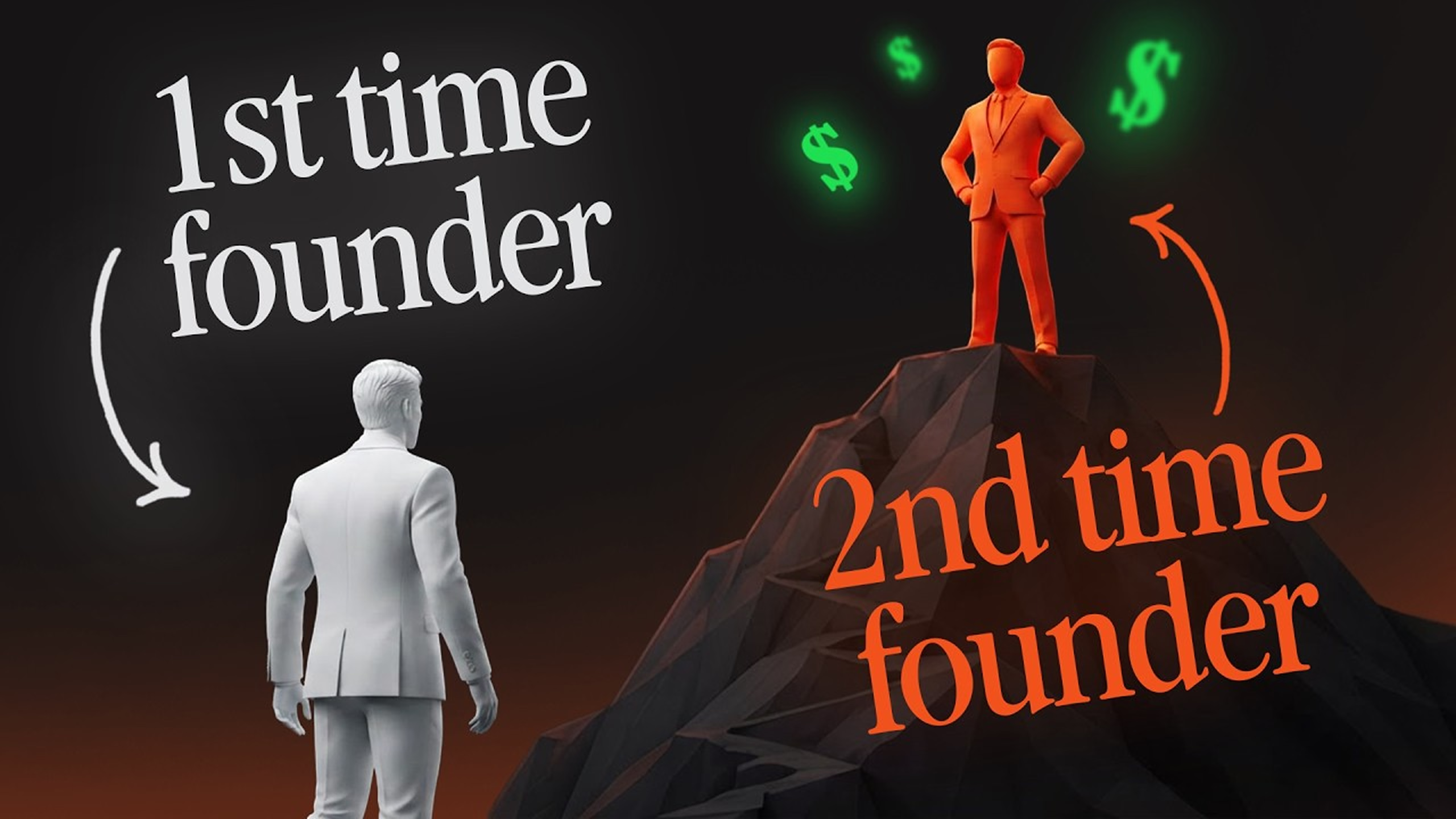
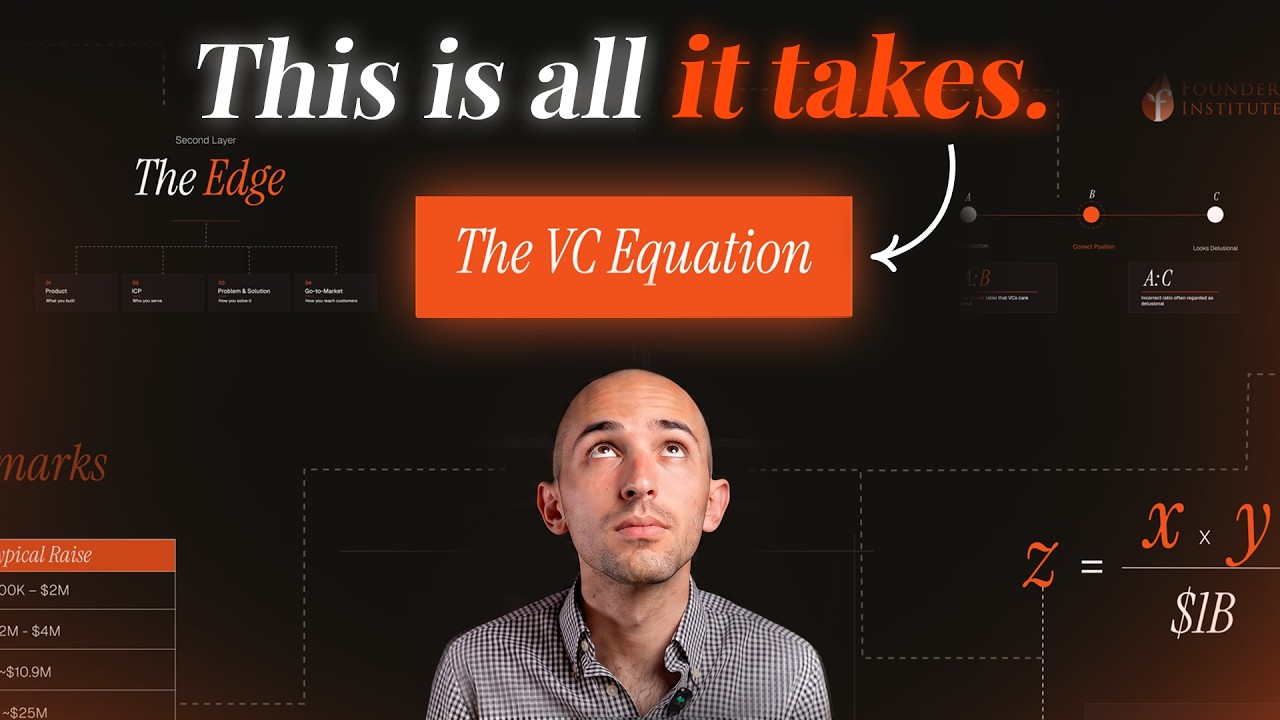
A second-time founder raised twice as fast than first-time founder. They understand every single lever that they can use to speed up their fundraising beyond just traction. So in this video I'll show you two principle to accelerate your fundraising.
Principle that I have learned from Adam Newman the ex-founder of WeWork who after losing 47 billion still managed to raise 350 million from A16Z one of the most famous investment firm in the world. So to understand the first principle, you have to understand the perspective of the VC. You have to put yourself in their shoes.
Imagine you're just about to give a lot of money to someone for a very complicated task. And remember, most startups never make it because there are so many opportunities for founders to give up. It's extremely hard. You don't know where you're going and I know you have those feelings yourself. And so what is the most sure way to make sure that someone will not give up? Continuous obsession.
A VC wants to make sure that the topic you're working on is not something you just thought about yesterday. They want to know there's a history behind it, a reason why you're working on the topic and why the topic matters so much to you. And for Adam Neumann, he was raised by a single mom. It was pretty hard. But what saved him is that he was living in a community. In his early life, he really felt the support and the benefit of living in a community.
And it became his life mission to share what brought him so much to the world and that's why he created WeWork to replicate this community environment in the working environment and even after it didn't work he saw another opportunity to apply it to residential building he didn't stop and this is why now he's building again in community and how do I know that because he keep repeating it he makes sure everybody's understand that And this is why now he's building again in community. How do I know that?
Because he keeps repeating it. He makes sure everybody understands that he has a why. That community is his life mission. WeWork was one way to do it, and he learned from it. And now he's building the next thing. So that's his story. He manufactured a logical and emotional story to show that he stuck to it.
He stuck to this idea of community and that since he stuck to it until now, there's a big chance he will keep sticking to it in the future. And that's what you need to do too. You need to build your story. Even if you don't have a billion dollar company history to put in your story, you have your own block. And so you have to look back in your past and look for those blocks and see how they align to create your own unique story.
And to make sure that through your own story, we can see continuous obsession. So my question to you is, what is your story? What have you done in the past that connects to what you're doing today? Why are you actually working on what you're working? And then how well this is put in your deck. Can a VC look at your pitch deck and be like, damn, I understand why this person working on the startup and I'm sure that because of their experience, they will never stop working on it.
But this is also the hardest piece to put in your pitch deck. How do you put it in a subtle way, but yet make it clear enough? And this is where I see most founder failing, the implementation part. So just down below in the first link, I put a form where you can submit your pitch deck and everybody that submit their pitch deck, I will review it and let you know where do you stand and how well do you manage to tell your story and impact the VC in that way.
It's completely free. Now, assuming that you have a personal story that makes VC believe you will stick to it, that will make your raise much faster because it will diminish the amount of rejection that you'll get. But there's one thing that massively delays most rounds until founders realize it, often too late, that they need to fix it.
Just last Friday, I had the perfect example. A founder booked a consultation with me and told me about his project. He had great traction, decent team, and to be honest, nice motivation. But just after 2 minutes, I knew that he would get rejected by 99% of VCs. I just had to ask him two very simple questions.
How many ICP are there in your market? And how much are you charging them per year? And then you just multiply those two number and they give you the total addressable market. And when we did the math with him, we arrived to $500 million. And that's the big problem. It's impossible to build a company valued at a billion dollar. If your total addressable market is only 500 million.
And that's the thing repeat founder understand. Well, they do a very specific effort to work on a massive market and show how big the market is. Look at this masterclass from Adam Neumann. Real estate is so large, just for people to understand that we're talking about a 250 trillion dollar asset class.
But to try to put it in numbers, a normal building, these multifamily buildings, is 200200 million a building. You buy 10, you're at 2 billion. In 100, you're at 20 billion. And 100 is not a big number. It's just, you could sit, we're in downtown Miami, you could stand on our roof and point to 100 buildings that could be floor buildings. And there's five different neighborhoods like that in South Florida and that's just one area.
Then you could go to New York and you could start going all over the planet. This is exactly how you have to break it down. Break it down into simple pieces to show how big your market is and how it would be impossible not to build a billion dollar company in such a big industry. Now those are the building blocks and you have to reuse them in your fundraising material, in your pitch deck, but also in your 60 second pitch.
Anytime you meet someone, is it a VC, a potential partner, an employee, you should be able to, boom, tell them about who you are and convince them that what you do matter. And if you don't have one right now, I created a video here that you could click where I explain exactly how to write a perfect 60 second pitch.
You might also like: