The Step 99% of Founders Miss Before Seed
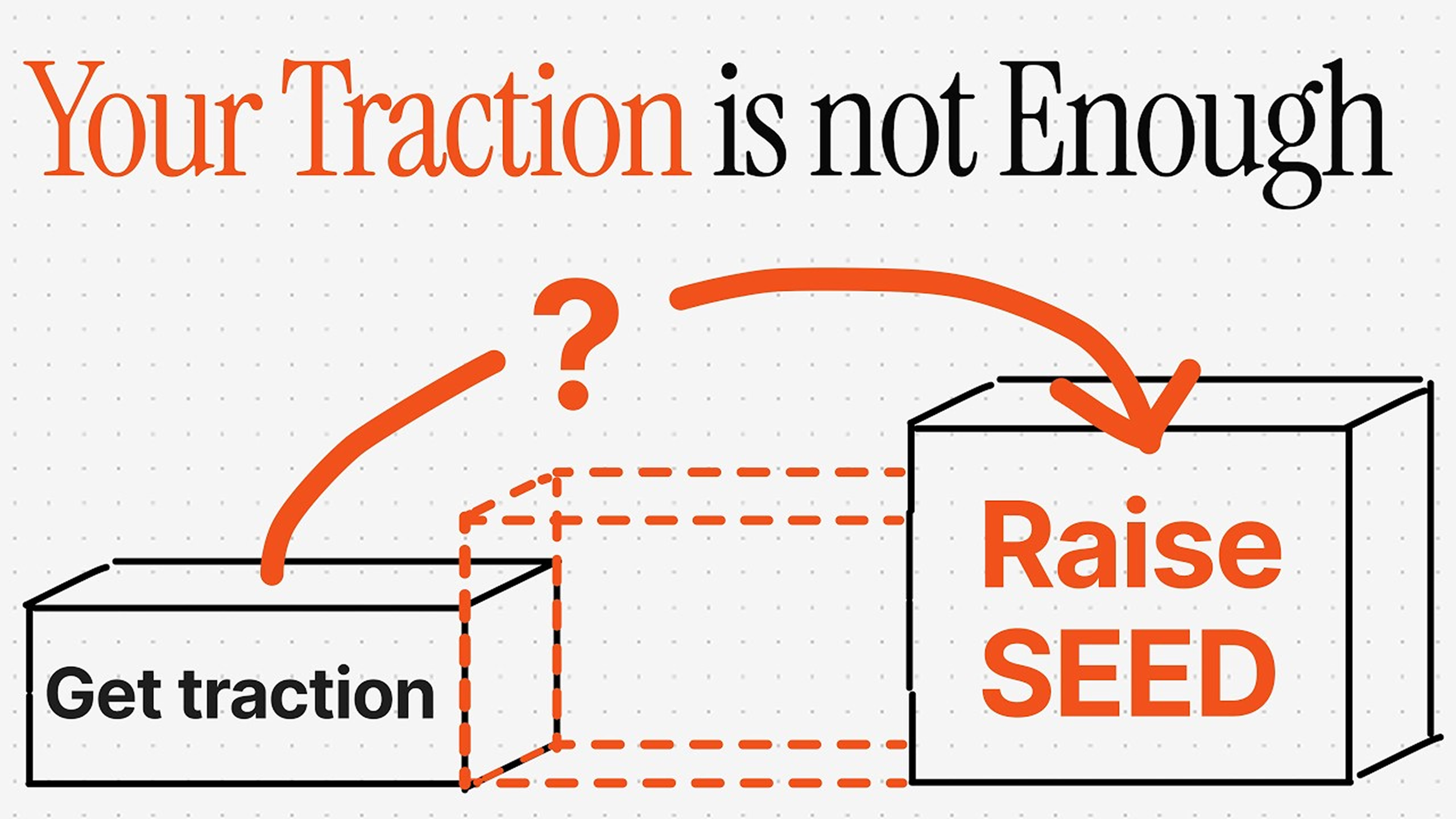
Hey, so if you're clicking on this video, it's because you have traction and you're trying to raise, still you're not managing to raise. And that feels so frustrating because everybody told you that you'll be able to raise once you have traction, yet you have traction and you're still not raising. Well, you're not alone. I helped over 50 founders raise over $130 million, and this is a problem that I see very much often.
And so what it is, right? From my perspective, i feel like most founders try to use traction as an achievement where it should be used as a tool but some founders do understand that they need to use it as a tool but most of the time they use it as dual to destroy their house instead of building one so in this video i'm going to show you how not to destroy your chance to raise with your traction and how to actually use attraction to increase your chance to raise so let traction and how to actually use your traction to
increase your chance to raise. So let's start with the most dangerous keyword that founder use that they use this word to think that hey investor will feel better if I if I said this about my startup but this is quite the opposite and this word is de-risking and if you use that word of investor say oh look I've used my traction and and i have traction and and just make my startup uh this de-risk my startup are you interested to invest right well most founders wouldn't really say it like that but that's the same idea and the bottom
line and it doesn't work it does the opposite of you think it's a track but it repulse and let me just explain you why it is and what you should and then i'll show you what you should do instead and that is for the specific case i haven't mentioned it earlier but we're here we're focusing on if you're trying to raise a seed round right and this is true for seed round then for earlier round it might be a bit different for later round it might might be it will be a bit different right but it is very fucking true for seed rounds
so for a seed round you're trying to raise money from so you'll try to raise from vc uh from vcs right and yes uh you might have a few angel here and there but if you want to raise a seed there's a good chance that you'll need there's a gigantic chance you'll need to go to VCs right and so to understand why the risking is really not appealing to VCs let's try to understand what's behind behind the VC right because the VC is not you know it's a venture capital but really it you should call it you know what it is a venture capital fund, right? And much like startup,
fund get money from somewhere, right? Like they fundraise. And I know because I made many decks for funds and you'd be surprised about what's inside of them that cue you on how to make your own pitch deck and your own fundraising storytelling. And so, where does the money come from? Right? Well, the money comes from a word that you probably have heard, which is LPs, right? A fancy word to say a bunch of people that have money and don't want to have more money.
Right? And so when an LP is considering investing in a fund, he has expectations. The same type of expectation that you have if you invest in stocks. Well I'm writing a lot but I'm making a lot of grammar mistakes so please bear with me if that happens because it will happen. So LPs and then you have real estate and each of them will make their promise.
And each of them have subcategory. You have stocks but you can invest in crypto. Crypto is not really a stock but you get my point. And so crypto make a very different promise from, you know, from S&P 500. Real estate, you can have real estate as, you know, a vacation rental in Dubai. And you can have, I live in Switzerland, you can have a chalet and you can buy your own chalet in Switzerland or a building in Los Angeles, right? But the bottom line is that each of the investments make a promise.
And so what does the VC fund make as a promise and once you understand that you understand again how to pitch your own startup to a fund so he can pitch his fund to an LP and so here's what the VC fund said to the LP he says hey look there's an industry right there's an industry, right? There's an industry, a sector, blah, blah, blah, where you have a lot of small companies that are going to revolutionize an industry, right? And we believe we'll be able to find one.
Yet finding one is really hard, right? Because at the early stages, everything can happen. And so if you're trying to invest yourself in a startup, because LPs can be angel, just again, think about people having money and some angel could invest in a fund. And so here they could invest in a startup, right? But if you invest directly in a startup, that's really risky, right? Because one startup could go big or small, right? And so, and this is where it gets interesting, is that if you, I'm trying not to lose your hair,
but when the fund, when the LP, when the fund trying to get some money from the LP, he says like, hey, there's a lot of startups. And so we'll invest in a lot of startup in the hope. And they say we will find one that one that really work. So basically, the structure of their fund already have embedded de-risking right because they invest in very risky thing in the hope that one will be very high so if you pitch to vcs you need to show yourself as you know as a big bet? And to say that you have revenue is like,
oh, we de-risk ourselves. And here what you say is like, hey, we'll have the worst case scenario, we'll become a medium business, right? But VCs, they don't care about having a medium business, right? They want to have a really big one to return the whole fund and a medium here won't make an impact.
Whereas here, the LP, if he's investing in one startup, he'll be interested to have something that is de-risked because he might be de-risking on his own by investing in a lot of startups. And that's the second thing is that, the second promise is that it takes a lot of time to find a startup. And that's why if you're an LP and you want to invest in innovation, it's more interesting to pass through a fund because they do the work of scouting, researching, evaluating for you.
And that's the service that they offer, right? That's the service that they offer, right? So now that you understand that, if you don't use your traction as the risking and saying like, hey, look, I've done that revenue and it make my business, you know, worst case scenario, we're still a business, because now you understand that VC don't care about great business, they care about business that can fucking get super big, right? And so how do you actually use your traction the correct way and and the key to understanding that is understand what is the
number one graph that vc look at all the time this is and what are we looking at here uh here you're looking at different rounds and different values in each each round and what the VC want is to invest a seed VC they want to invest obviously here at the low valuation and they hope that one day you'll arrive you know beyond CRSD right and so what does that mean in It means that when a VC invests that seed, what it cares about is, yes, what you have done, but more importantly, how are you going to use what you have done in the past to reach the next milestone?
Because the biggest risk for a VC that invests in you at that round is that you'll not go to the next round. And so how do you make a VC believe that you're going not go to the next round and so how do you make a VC believe that you're going to get go to the next round well let's look at some other graph because there's quite a path there's quite a there's a framework this pattern that VC look at and at this graph right and what what are we looking at this graph basically is the time you go from one round to
another and here is like the time you go from seed to series a so there's about you know three years and and if you if you report it to the previous graph we were looking at it's basically the time between those right and so when you're gonna when you're gonna raise your your seed round your seed round should be a pitch for how, a part should be not only that, but a big part should be how you're gonna reach the next milestone, right? And so here, you need to pitch that within three years, boom, you'll get max between two years and three years,
you'll reach your Series A. And so how do you do that? How can you, again, back to the main question, how do you use your traction to do that? And basically, as I said before, there's some benchmark, right? So right now you are in pre-seed, right? So you should have something that looks like that traction.
This comes from the Vandler Institute. The program isn't what it is, but they have a lot of data, and this is quite reliable. And so you should have, you know, right now, pre-seed, you're trying to raise your seed, you should have this traction. And then when you'll be trying to raise your seed as A, you need to have that traction.
And so basically the game becomes, How do you get a revenue from what you have today and you basically triple, quadruple your revenue in three years? That is the game that you're playing, right? And that is your current attraction, right? What you accomplished today and this is what you'll need to accomplish tomorrow.
And now this is where you're gonna use attraction right because you're gonna be able to say because we did this we'll be able to do that right but then there's four and this is really how you should use your traction and let me let me give you an example I have a client right now that is killing it with with cold calling like he grew, I don't know, 400K in revenue in just one year just using cold call.
And now he's looking to raise the seed round, right? And so you cannot say like, hey, look, we've done cold call and it worked great. And if we keep doing it that way, it will be nice. No, you need to say like hey we're doing call calls and now we are going to hire someone to have 10 years of experience in cocoa to even improve what we've been doing growing our team so we can get there and the point here is is to say because we've because because we we did that we will be able to to do that, right? So if you want to have a successful fundraising, you need to pitch that you will go to the next round. That's the objective of your pitch deck.
Not really to say like, hey, look at what we have done. No, it's to say we have done this, so we can do that, right? And that is increasing the revenue. We will increase the revenue, and this is why you should give me money now there's four questions that pops when you say we will make more revenue and i often see founder fail answering those questions and then fail to fundraise so in the next video i'll speak about that in the meantime if you have any questions please drop them in the comment i'll be happy to answer and yeah that's it thank you for watching
You might also like: