The Laws that make or break founders
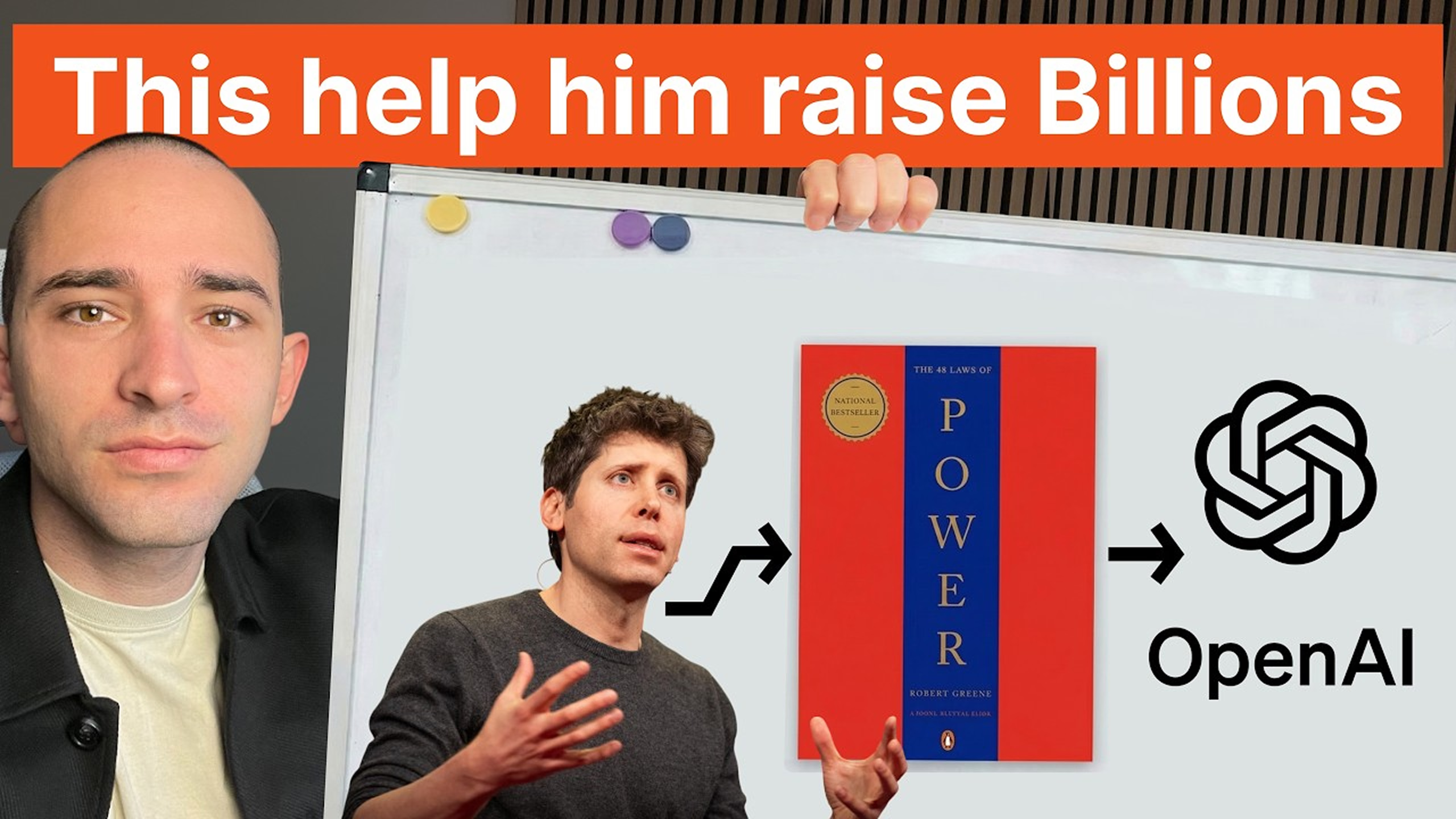
The 48 Laws of Power. I'm sure if you click on this video, you've heard of the book. But how does that apply if you are a startup founder? How can you use those rules to achieve success? And in the game of startups, like it or not, fundraising is what really determines your level of success. There's things that help you fundraising.
Those are fundamental that help you fundraising. But at the end of the day, if you're not fundraising, you are not going to become a successful startup. You can bootstrap. Happy to debate that in the comments. I'm a bootstrap company, but that's another topic. And so here I'm going to explain to you what are the two rules that I've been seeing successful founders using.
Am I going gonna teach you how to raise 2 billion? Probably not, 2 billion is even more, some have been raised much more than 2 billion, right? However, I do have experience where we've helped raise over 160 million, had over 100 VC conversations, so I understand what they're looking for, and I've been four years in the game. And so what are those what are the rules actually there's really two rules right very simple how to attract pieces and i'll show you how sam altman does it and then how to window handle objections through smart technique and not arguing anyway that's the goal of the video let's dive in so the first thing
is how to attract vcs and here i see i see two major problems um that people do it's like they they do a mistake and then most companies advise them most advisors advising on a shitty solution to solve the problem they did in the first place right a company like antler you'll see give you know to my opinion she shitty shitty advice anyway let's dive in so the first thing is that most tech sell the product yes what you do is important right but the what you do is not the why they invest right until? And so here, sometimes you'll see people say,
yeah, you have to sell your vision, right? What about your vision? And the problem is that if you go online and literally tap on the first link that explain you what's the vision, you'll find this article from Antler that says, vision statement explain why company exist. It's the company's single dream where North Star to unify and inspire every employees.
And ideally, others take older too to fo and and they put as an example sony is to fill the world with emotion through the power of creativity and so here i can assure you one thing is that if you take that statement to to use as a framework for you to create yours, you're a hyper fuck. That's not going to work.
Right. Because VC, they don't invest into your dreams. They invest into a particular feeling, right. To an emotion. They look at you like, whoa, crazy shit. Right. And what makes them feel like the feeling of crazy shit. If you dive in, you explore a little. What you'll find is that the feeling of crazy shit if you dive in you explore a little what you'll find is that the feeling of having on sorry the feeling of having been on the right side of a shift before everyone else see it coming what is in here
what's what's what's what's behind that is the low 32 is play to people fantasies what are the fantasies? And here, to take the example of Simon Antman, Simon Antman didn't say, hey, we're going to build an AI tech, but that answers your questions, right? No. He says that we're entering a world where intelligence will become a commodity, a world where intelligence will become a commodity, where all knowledge worker will not do anything anymore. We're going to become the petrol of the knowledge working industry, the infrastructure
for every intelligent work created. I just came up with that. But the point is that that's the vision. In here what I did is I explained how the future is going to be. What I'm seeing. What is the future that I'm seeing. So what is your big vision? And no matter what you're building, what is the world that you see beyond the product? Imagine that you're that you're building, you know, Tesla.
It's like Tesla example. It's like, oh, we built electric car. No, your vision is every car will be electric in the future. We'll be able to capture more energy of the sun and everybody will be on electric. And by the way, we build electric cars, right? Like is sell the world that you see, right? And so where is the, what that you see, right? And so, where is the...
What's your ambition, right? Where do you see the world going? And this is what you need to sell. And you sell this, this big vision, and you need to conveniently say, By the way, we're the bridge to that future. Now, once you have that attention, you have that attraction, you need to use low nine to handle objection because yes, sorry, not everyone's gonna fall in love with what you do directly, right? And so here, you'll need to know how to handle objection.
And this is where I see the biggest mistake happen because investor will eventually say, hey, I'm not sure the market is really that big, or I'm not sure your go-to market strategy is really that strong, or I don't know X about X. You will have doubters. And this is where I see the most common mistake is founder defect because they're smart.
You're smart. You know what you're doing. You have a big vision, so yeah, you define your vision, you explain the methodology, you cite Gartner reports, and you show you have advisors. But the thing is, arguing creates resistance, right? And if you think you won, then you lost.
Let me give you an an example I had a chance to interview you sent Kanji which was the first investor of deliver for you Americans that don't necessarily know deliver it's a billion dollar company that do delivery like uber eat right you buried and when I when I spoke with him they he told me the defender of the story of defenders where basically the founder came to him and we're like, Hey, like here, here's our plan.
Here's what we do. We want to do. Right. And he said, he said like, and this is a smart guy, right? Um, he said, Hey, no, you're, you're faint. And I'm summarizing here, but there's like, Hey, no, it's, it's nice, but it's not big enough. Right. I'm not interested in what they did. Did they argue him? Like, Oh, you know, if you're saying you're, you're, you're within you wrong, look at our market research and something like that.
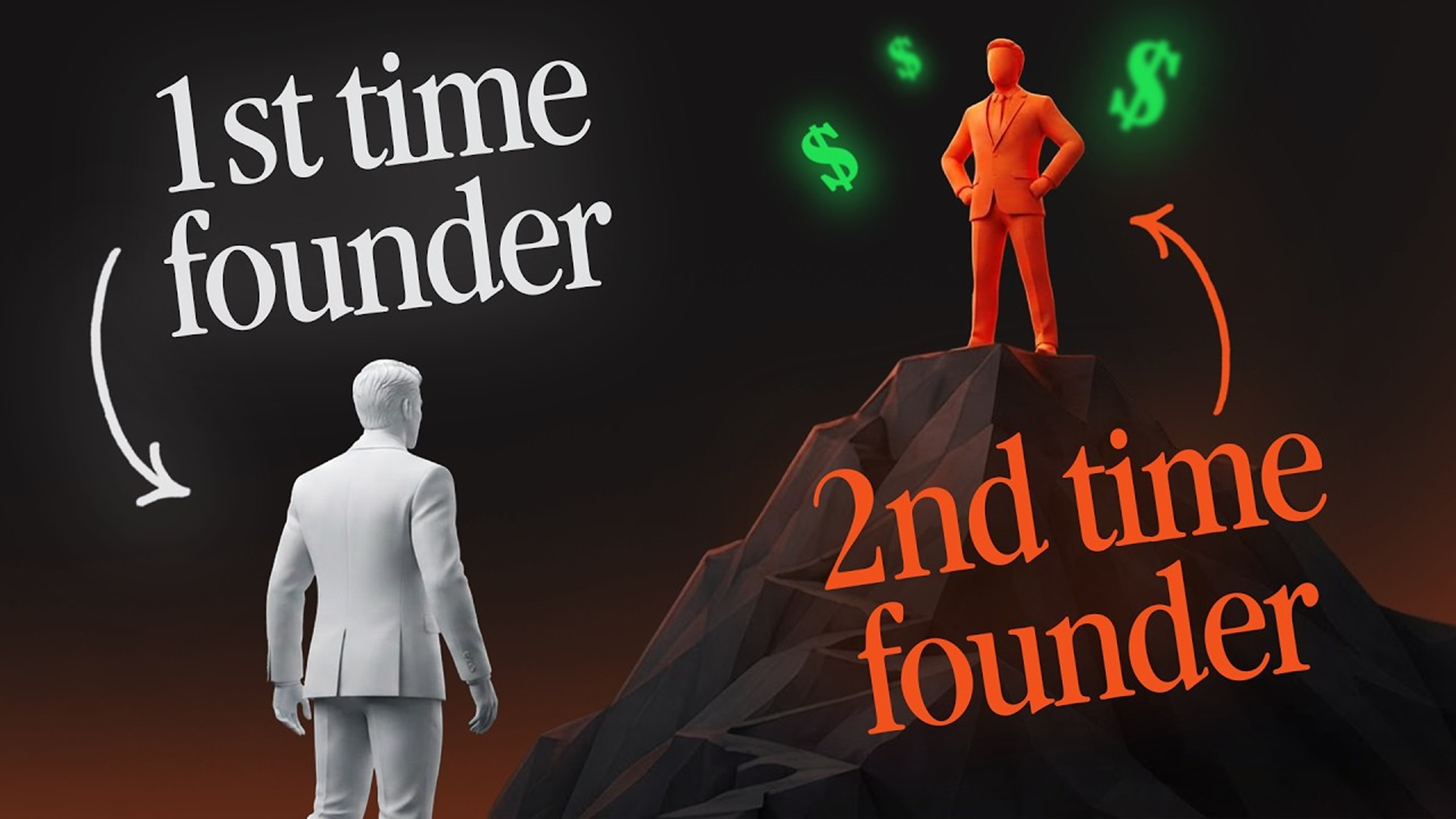
We're like, Oh, okay. Okay. And they came to him to raise a big round. And so what they did magic, they raised a small round. Like they, they went to angel investor, they, they, they bootstrap, they did the thing, right. they proved that they could and then they came back to him like hey look here's my proof and my proof my proof is better than anything and this is the low nine Wayne through action never through argument and and here the action is to get traction at any cost and my point here is a new client of ours just told me like,
he just got 40 pilot using LinkedIn. Like if you don't think you can get pilots interest, easily without cost, you're not looking deep enough. You need to build first and raise after get the proof. Right. And don't try to defend, explain, and try to win VCs if you don't have the proof. You have to do the thing.
If you want to learn more about how to actually get traction, I'll cover that on my next video. Anyway, that's it. Thank you very much.
You might also like: