How to Prepare for the First VC Meeting
Get ready for your first VC meeting with confidence. Learn essential strategies and insights to make a strong impression and secure funding

Entering the world of venture capital can feel like a maze. Investors are human, driven by instincts, not formulas. Every meeting is a chance to spark interest and intrigue.
But how do you prepare? VC meetings vary, yet preparation is non-negotiable. Without it, funding dreams may crumble.
In this guide, discover the path to mastering your first VC encounter. From nailing your pitch to deciphering unspoken cues, get ready to seize opportunities. Your VC journey starts now.
Find the Right Venture Capitalists
Before preparing for the first faceoff with venture capitalists, it's important to locate the right match.
You need a map to navigate through potential investors. These are the Venture Capitalists (VCs) who believe in your startup's goals.
But how do you track them down? Let's explore a few avenues:
- Cold Emailing: Sending direct, engaging emails.
- Events and Conferences: Meeting them at industry gatherings.
- Online Platforms: Finding VC firms on websites.
- Personal Network: Connecting with people you know.
- Referrals: Getting introduced by mutual contacts.
Here is our complete guide for finding the right venture capitalists for your startup funds.
Preparation Tips for First Meeting with VCs
Once you've pinpointed the right VCs, it's time to gear up for those crucial meetings. Fundraising involves a journey of meetings and interactions, unique to each founder and investor.
However, certain key essentials remain constant. Founders need to prepare themselves before facing VCs in the boardroom.
Here is the list of important tips for founders to conquer the meeting day and leave a lasting impression on their potential investors:
1. Research is Your Friend
Before entering the realm of venture capitalists, arm yourself with a potent weapon: research. In this high-stakes game, knowing your potential investors inside out is your ace.
Dig into their backgrounds, track records, and investment philosophies. Familiarize yourself with their success stories and learnings.
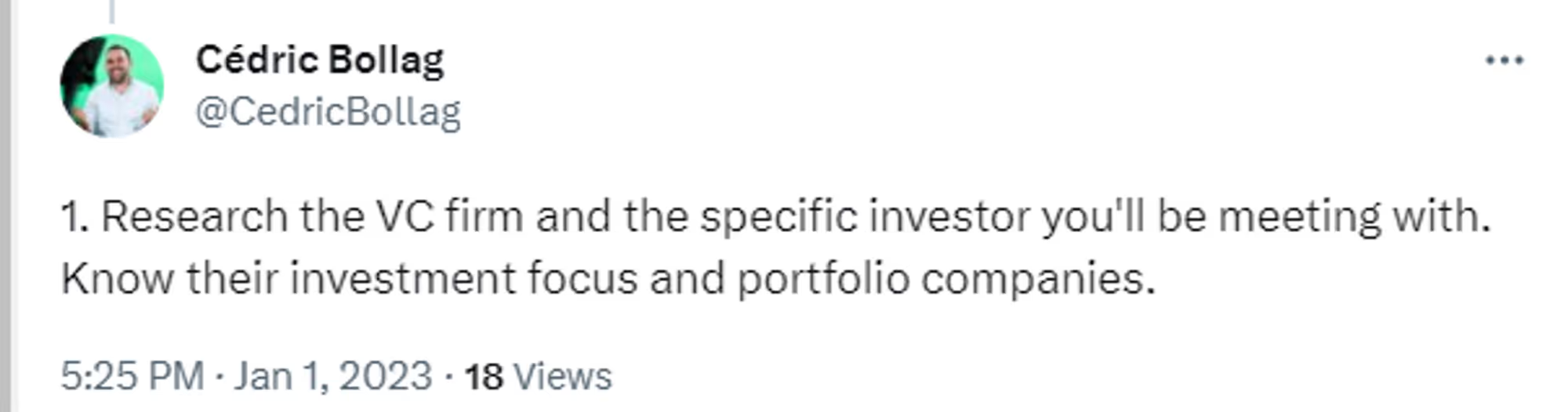
Understanding their preferences and history helps you tailor your approach and resonate with their interests. This preparation isn't just due diligence; it's the foundation of a compelling connection.
When you walk into that meeting room armed with insights, you're not just pitching; you're building a bridge between your vision and their aspirations.
Your investment in research pays dividends in the language of rapport and understanding.
2. Prepare a Killer Pitch Deck
Creating a captivating pitch deck is your key to leaving a mark on venture capitalists. It's not just a presentation; it's your startup's narrative brought to life.
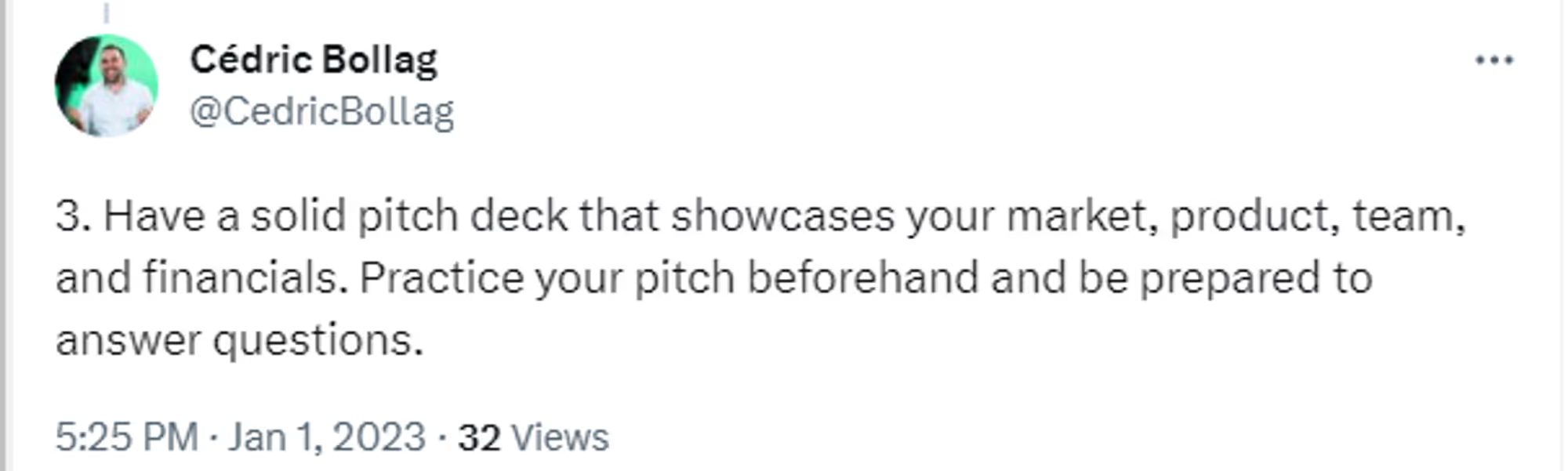
Your deck offers a glimpse into your world – an opportunity to captivate VCs with a story infused with data and catered to their interests.
Here's what a killer pitch deck must have:
- Team: Introduce your capable and passionate team members.
- Problem: Clearly define the issue your startup aims to solve.
- Solution: Present your innovative solution that sets you apart.
- Market: Highlight the size and potential of your target market.
- Traction: Showcase progress, milestones, and growth achieved so far.
3. Find a Connection
Before stepping into the world of investors, a friendly face can work wonders. A common connection serves as a golden ticket. Search your network for potential introductions. However, tread carefully; authenticity matters more than quantity.
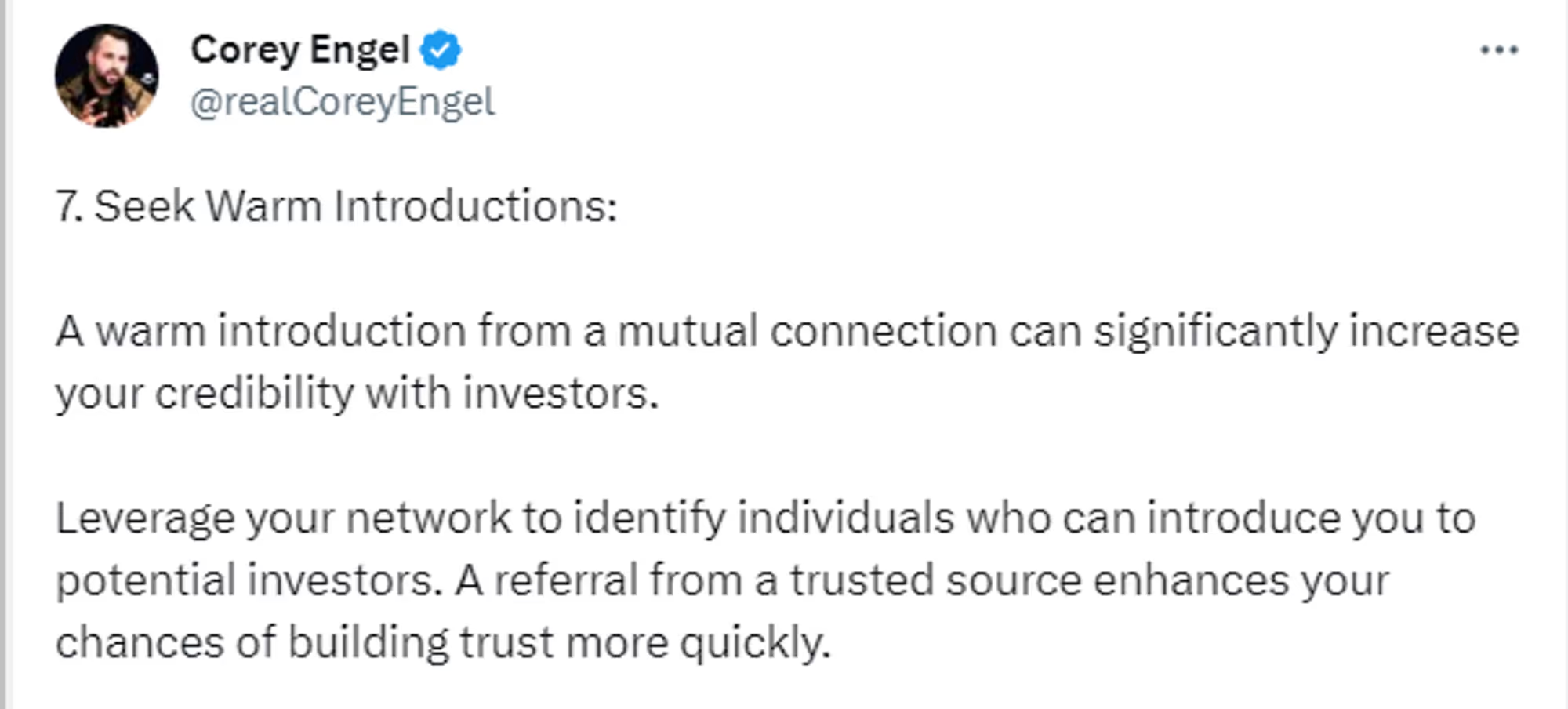
Leverage tools like LinkedIn, but ensure connections are meaningful and can facilitate introductions. Referrals from respected sources, be it portfolio company CEOs, investors, or trusted contacts, offer a shortcut to credibility.
A shared acquaintance transforms you from a stranger to a welcomed guest. It's the art of familiarity, a bridge that softens your entrance and lays the foundation for a more productive exchange.
4. Understand the Investor's Focus
Understanding an investor's focus is like unlocking a secret code to successful meetings. Venture capitalists operate in specialized domains, seeking profitable ventures in specific sectors.
Grasping their investment criteria equips you with insights that transcend the conventional pitch. Even if your startup doesn't fit its bull's-eye, it's wise to establish a connection.

This isn't just about now; it's planting the seeds of a relationship that can blossom as your business grows. Knowing their sector preferences and investment stages allows you to tailor your approach and establish common ground.
Embracing their world paints you as a knowledgeable collaborator, not just another hopeful entrepreneur. It's the art of bridging gaps and projecting confidence.
5. Discover the Difference
Discovering the nuances that set you apart is a secret weapon in fundraising. Every VC firm is distinct, and uncovering these distinctions is your strategic edge.
Start with their portfolio – past and present. Identify their investment choices and reach out to those they've partnered with. Understanding their uniqueness enables you to ask tailored questions that showcase your research and genuine interest.
This not only flatters them but also yields essential insights. Likewise, recognize your startup's unique value proposition. What makes you stand out amidst the sea of entrepreneurs?
This dual discovery process elevates your pitch beyond the ordinary. It's the art of spotting differences that fuel connections and make your venture memorable in the VC landscape.
6. Approach with an Objective
Approaching venture capitalists demands purposeful intent. Define your objectives before entering any meeting. Whether it's a quarterly follow-up or setting the stage for a comprehensive pitch, knowing what you seek ensures your time is well-spent.
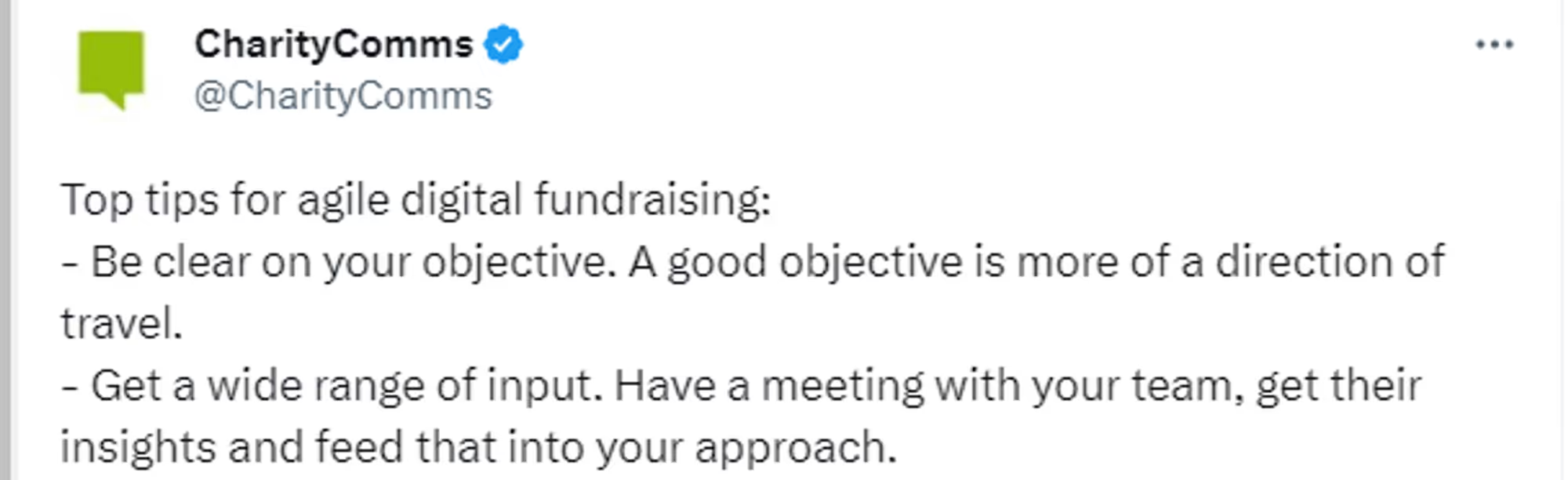
Each interaction, however small, propels your company forward. Flip the script – you're not merely at the mercy of VCs. Seize the opportunity to glean feedback and refine your business model.
Challenge their insights to bolster your venture, irrespective of fundraising plans. Your meetings should never leave you empty-handed. Preparation breeds productive discussions, ensuring you set and achieve meaningful objectives.
Showcase your clarity of purpose, laying the groundwork for a mutually beneficial partnership.
7. Financials Command
Commanding your company's financials is vital when facing venture capitalists. You should confidently explain critical aspects like burn rate, runway, and valuation – these numbers shape your business story.
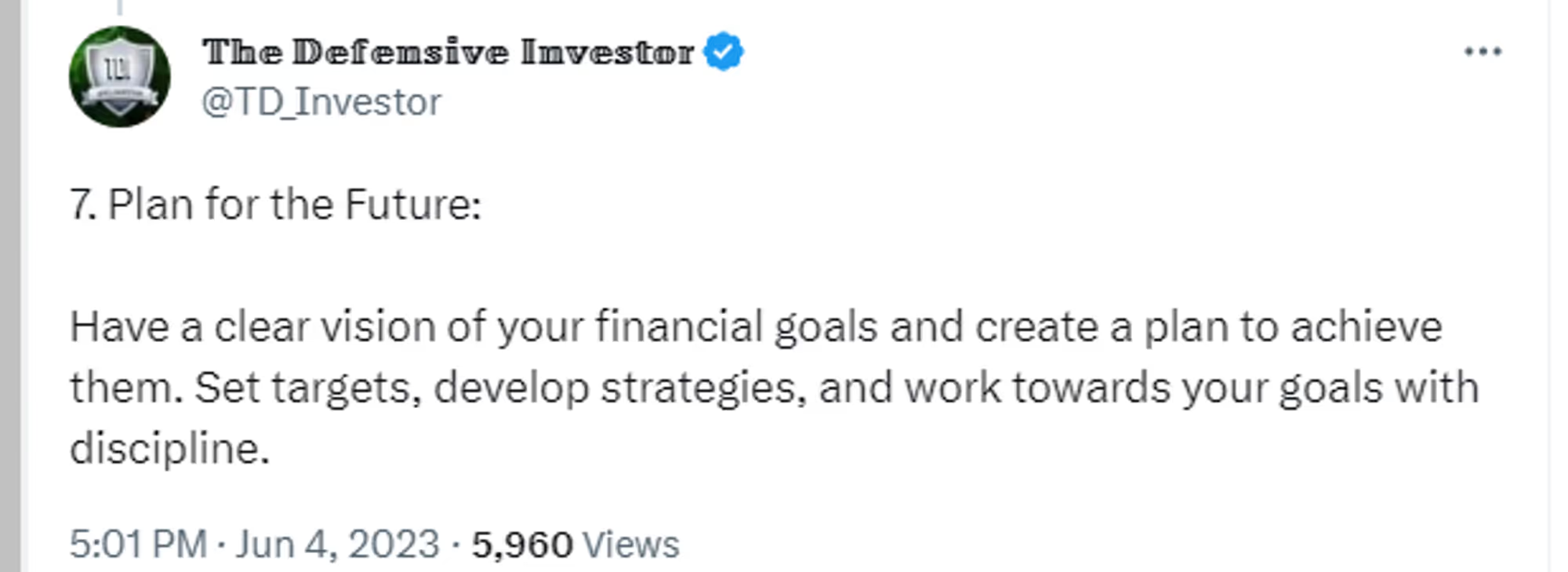
Understand details such as financial statements, equity distribution, capitalization tables, and projections. Transparently convey why venture capital is your choice and your funding requirements.
By having these financial insights at your fingertips, you demonstrate preparedness and show that you're a founder who truly knows their business, ready to drive success.
8. Furnish Your Communication Skills
Last but not least, in the world of venture capital, your communication skills take the spotlight. Beyond goals and numbers, your ability to connect and express yourself matters greatly.

Investors don't just invest in startups – they invest in people. Your personality, clarity, and confidence are as vital as your business knowledge. During a pitch, it's not just about sharing facts; it's about showcasing your passion and vision.
Your story is what sticks, and how you share it can make all the difference. Improve your communication skills to create a lasting impact. Your words should paint a clear picture and leave a strong impression.
Ultimately, your talent for conveying your startup's potential can turn interest into investment.
Pre-Meeting Essentials for Startup Founders
Before diving into fundraising, founders need to understand important elements beyond the basics.
Here's a list of key steps to get ready for VC meetings:
- Anticipate Tough Questions: Foresee challenging queries and practice concise, confident responses to demonstrate your expertise.
- Speak with Numbers: Back your pitch with solid data and figures to validate your claims and showcase your business acumen.
- Expand Your Network: Establish meaningful connections prior to VC meetings to bolster credibility and gather insights.
- Confidence and Articulation: Project confidence in your pitch delivery and articulate your vision clearly to captivate investors.
- Financial Clarity: Comprehend your funding needs precisely, demonstrating a strategic approach to utilizing investor capital.
- Understand Industry Trends: Stay informed about market shifts and trends to showcase your awareness and adaptability.
- Competitive Analysis: Understand your market's competitive landscape, highlighting how your startup stands out.
- Value Proposition: Clearly define the unique value your startup offers, aligning with investors' interests and needs.
- Future Growth Strategy: Outline your plans for scaling the business, showcasing a compelling vision for long-term success.
- Mitigate Risks: Identify potential risks and explain how your startup is prepared to navigate challenges effectively.
Each step strengthens your foundation for productive VC meetings and boosts your chances of securing investments.
Final Thoughts
In the startup fundraising journey, success isn't just about your startup's potential—it's about how well you navigate the journey. Preparing for your first VC meeting is a blend of understanding investors' needs, crafting an impactful pitch deck, and honing communication skills.
Anticipate questions, speak with numbers, and cultivate a strong network. Confidence, financial clarity, and industry insights are essential. Your startup's uniqueness and growth strategy matter. Be ready to address risks.
Remember, investors invest in people as much as ideas. Your ability to connect, convey, and captivate will define your path to securing funding. Craft your story, know your numbers, and seize the opportunity.
Let’s create the last deck you will ever need
You might also like:
Raising funds is no small feat for a startup. It's a journey that begins with something small yet powerful: the elevator pitch. Think of it as your first step in connecting with investors. This isn't just any introduction; it's a quick, compelling snapshot of your business. In less than a minute, it should spark curiosity and lay the groundwork for what's to come.
Why is it crucial? Before you dive into the detailed pitch deck in formal meetings, this short pitch opens the door, offering a glimpse into the potential of your startup. It's simple, yet its impact can be immense.
How does this quick introduction hold such power in the fundraising saga? In this guide, we will explore everything related to the startup elevator pitch.
What is a Startup Elevator Pitch and How it Works?
You're in an elevator with a potential investor and have only 30 seconds to share your startup idea. This is the essence of an elevator pitch. It's a quick, engaging summary of your business concept, designed to catch interest and leave the listener eager to know more.
Your goal isn't to cover every detail but to ignite curiosity. In this brief moment, you deliver a punchy introduction to your startup, relying solely on your words and enthusiasm, not on slides or extensive data.
The startup elevator pitch is all about making that first impression count and opening the door to further conversations. Now, let's explore the key components of this pitch and how they come together.

How the Elevator Pitch Works for Startup Founders:
- Preparation: Founders prepare a concise summary, highlighting the startup's core idea and its unique value.
- Opportunity Identification: They stay alert for chances to pitch, whether at events, meetings, or even casual encounters.
- Delivery: In a brief interaction, the pitch is delivered confidently and engagingly, tailored to the listener's interests.
- Engagement: The pitch aims to spark interest, leading to questions or a request for a more detailed discussion.
- Follow-Up: If the pitch resonates, it opens the door for further conversations, meetings, and possibly investment discussions.
Why Elevator Pitch is Important for Startups?
An elevator pitch is more than just a quick talk; it's a startup's first step toward success. Let’s explore why it’s so crucial.
- First Impressions Matter: It creates a strong first impression, crucial in the business world. A good pitch can open doors to further conversations and opportunities.
- Clarity of Concept: It forces you to clarify your business idea. Being able to explain your startup concisely shows you understand your own business well.
- Networking Tool: Elevator pitches are perfect for networking. They help you quickly share your vision with potential partners, investors, or customers in any setting.
- Opportunity Ready: You never know when an opportunity might arise. Having a pitch ready means you're always prepared to present your idea effectively.
- Builds Confidence: Regularly pitching your startup builds confidence. This confidence is key when you're discussing your business with potential stakeholders.
- Invites Engagement: A compelling pitch invites questions and engagement. It's not just about telling your story; it's about starting a conversation.

How To Create a Successful Startup Elevator Pitch?
In the contemporary startup world where time is everything, a well-crafted elevator pitch is vital for startups. It's not just a pitch; it's a powerful tool to make a lasting impression in mere seconds.
The following are the key points for founders looking to create a killer elevator pitch:
- Identify Your Goal: Begin by clarifying your pitch's purpose. Whether it’s to intrigue potential clients, showcase a product, or describe your work, knowing your goal shapes your message. A clear aim makes your pitch focused and impactful.
- Explain What You Do: Describe your startup’s role. Focus on the problems you solve and how you benefit people. Adding a fact or figure can make your explanation more powerful. Remember, your enthusiasm is as important as your words.
- Communicate Your USP: Your Unique Selling Proposition sets you apart. After explaining your startup, highlight what makes it special. This could be an innovative approach, exceptional service, or a novel product. Your USP is your pitch’s heartbeat.
- Engage With a Question: Involve your audience with an open-ended question. This turns your pitch into a two-way conversation, making it more engaging. Be ready to answer any questions in return. This interaction can make your pitch memorable.
- Put It All Together: Combine all elements of your pitch. Keep it under 30 seconds to maintain interest. Your pitch should be concise yet complete, covering all critical aspects without overwhelming your listener.
- Practice before Pitching: Frequent practice makes your pitch natural and confident. Pay attention to your tone and body language. Practicing in front of others can help refine your pitch, making it sound more like a conversation than a sales spiel.
The easiest way to craft a strong elevator pitch is to first write the full version of your pitch without worrying about length. Once everything is clearly laid out, you can condense it into a sharp, one-minute message. This is the same approach we use in our pitch deck writing service, where we expand your narrative fully before refining it into a concise, high-impact version.
Elevator Pitch vs. Pitch Deck: What are the Key Differences?
Elevator pitches and pitch decks are two key tools in a startup's journey, each with its own role. It is brief and verbal, designed to captivate attention and convey your message quickly, typically within 30 to 60 seconds. In contrast, a pitch deck is a detailed presentation offering in-depth information and context about your business.
Let’s explore how they differ and why each is important:
1. Purpose:
- Elevator Pitch: A quick teaser to pique interest, perfect for brief encounters and sparking curiosity.
- Pitch Deck: A comprehensive guide detailing your business idea, ideal for in-depth understanding in formal meetings.
2. Usage:
- Elevator Pitch: Ideal for casual, spontaneous situations like networking, offering a quick business snapshot.
- Pitch Deck: Used in formal settings like investor meetings, providing a detailed business overview.
3. Length:
- Elevator Pitch: Very short, about 30 seconds to 2 minutes, focusing on key business highlights.
- Pitch Deck: Typically a longer, slide-based presentation, offering a deep dive into your business.
4. Audience Focus:
- Elevator Pitch: Broad appeal, designed to intrigue anyone, regardless of their industry knowledge.
- Pitch Deck: Tailored for an engaged audience already interested in your business details.
5. Creation Process:
- Elevator Pitch: Centers on condensing your business essence into a few impactful sentences.
- Pitch Deck: Involves detailed planning, research, and visual design to present comprehensive information.
Startup Elevator Pitch Best Structure
Creating a standout elevator pitch for your startup is like crafting a mini-story. It's about catching interest fast and leaving a lasting impression.

Let's break down the best structure for the startup elevator pitch:
- The Intro Hook: Start with a striking sentence that paints an ideal scenario for the listener. This opening should immediately grab their attention and set the stage for your pitch.
- Describe Your Product: Briefly explain what your startup offers. Focus on the benefits rather than just the features. Tell the listener what they're missing without your product or service.
- Indicate the Target Market: Show your understanding of the market impact. Use market research insights to demonstrate knowledge and relevance. For example, discuss how market trends align with your product.
- Position in the Marketplace: Explain the current market situation and how your startup stands out. Highlight what makes your proposal unique and how it differentiates from competitors.
- Call to Action: End with a prompt for further discussion. Suggest an interview or a call to delve deeper into your idea. This step is crucial to move towards a more detailed conversation.
Final Thoughts
Your elevator pitch is your startup's snapshot, a brief glimpse into the big dream you're chasing. It's more than just words; it's the heartbeat of your idea, conveyed in mere seconds. This little pitch can take your big idea and make it shine for the world to see. It's about sparking interest, kindling conversations, and creating connections.
As you venture into the startup fundraising process, keep your pitch polished and at the ready. It's the small but mighty tool in your entrepreneurial toolkit, the first step on the path to turning your vision into reality.
Need help turning your full narrative into an investor-ready deck? Explore our Pitch Deck Writing Service.

If there’s one slide in your pitch deck that investors care about instantly, it’s your Traction Slide. This is the proof that your startup is moving, growing, and resonating — and it’s the slide that communicates that progress faster than anything else.
As you build it, keep one guiding question in mind: How can you make it effortless for an investor to understand exactly what you’ve achieved? Traction isn’t about dressing up numbers; it’s about clarity. And clarity comes from two sides:
The writing — using simple, direct language to explain what you’ve done, without jargon or fluff.
The design — visually representing your progress so that an investor can grasp it in seconds.
These two elements together are what make a Traction Slide truly powerful — and why traction is one of the core pillars of great pitch deck design.
In the next sections, we’ll dive deep into how to structure, write, and visualize your traction so investors immediately get the picture.
Traction Slide: What is it and Why is it Important?
Ever glanced at a startup and thought, "Is this the real deal?"
Enter the Traction Slide. It's not just a flashy bar chart or a list of numbers. It's your startup's heartbeat displayed in HD.
Why's it so darn important? Because investors aren't just investing in ideas. They crave evidence.
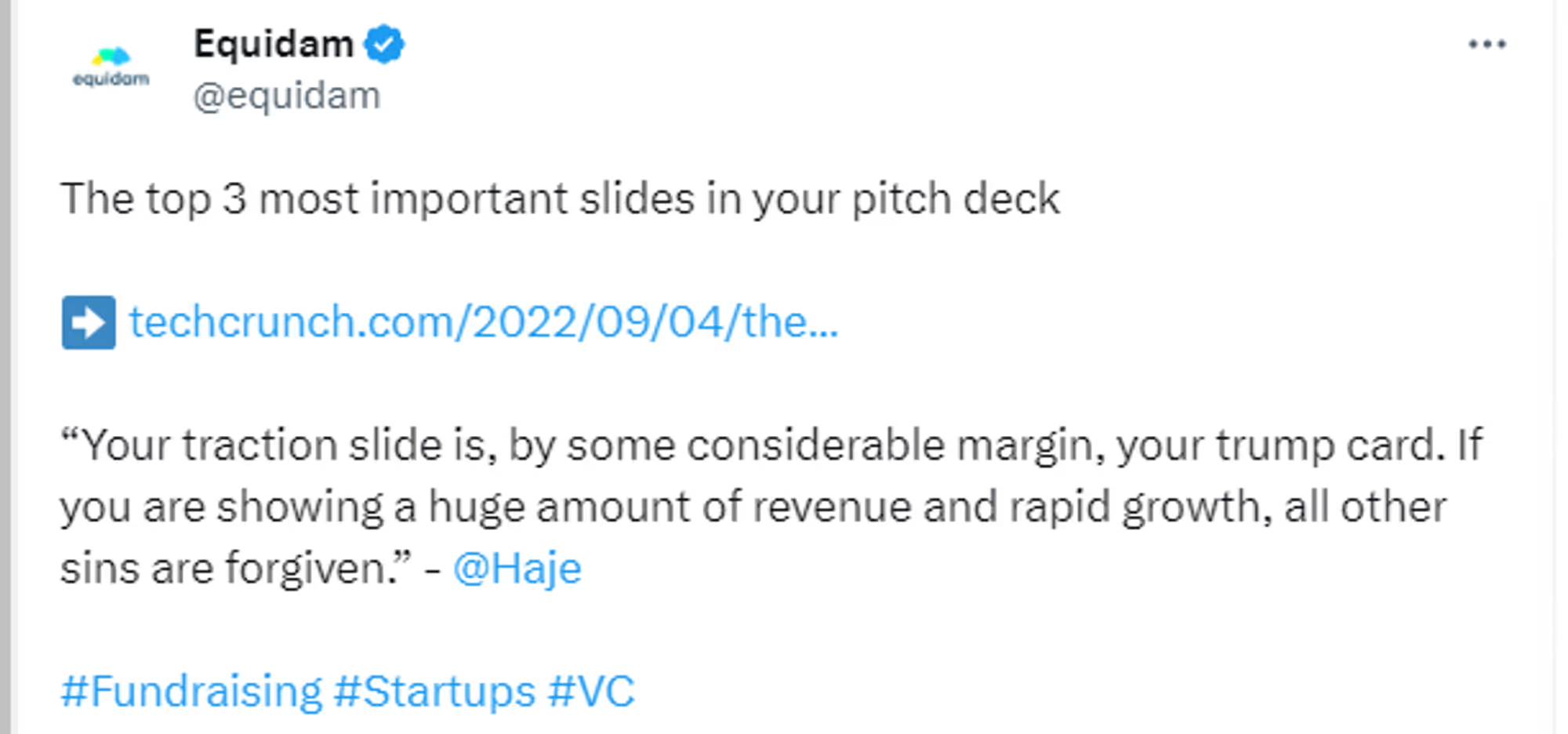
Whether you’re showcasing rising revenues or the new big-shot partnership you've clinched, the Traction Slide is your golden ticket. Think of it as your bragging rights: showcasing your startup’s momentum, validation, and most importantly, its potential to skyrocket.
In a world where startups can flicker out faster than a candle in the wind, your Traction Slide stands tall, whispering to investors, "Bet on us. We're going places."
Key Milestones to be Included in Traction Slide
Ever wondered what makes a Traction Slide pop and sizzle? It's all about showcasing the right milestones.
Let's unpack the essentials that'll make investors sit up and take notice.
User Growth Metrics
Got a growing user base? Flaunt it!
Users, after all, are the lifeblood of your startup. If your user numbers are climbing monthly, it's like having a glowing neon sign that screams: “We're hot right now!”
.avif)
Month-on-month growth isn't just a fancy metric; it's the pulse of your product's allure. Picture a graph, soaring upwards, capturing the excitement of every new sign-up, every active user.
This isn't just about boasting; it's about painting a vivid story of demand and scalability.
After all, in the pitch deck universe, a surging user graph isn't just data—it's pure adrenaline for investors.
Revenues
Show me the money! That's what every investor's inner voice is whispering, even if they're all smiles and nods.
Revenues in the traction slide?
Whether you're flashing dazzling MRR figures or charting an upward swoop in annual returns, revenue is a tangible testament to your startup’s allure.
.avif)
Not yet rolling in the green? Fear not! Even a budding sales funnel can hint at promising goldmines ahead.
But remember: honesty reigns supreme. A candid, month-by-month revenue snapshot doesn’t just charm investors; it tells them your startup isn’t just making noise—it’s making a bank.
Customer Testimonials/Case Studies
Ever heard the saying, "Your customers can be your best advertisers"?
In the startup world, this couldn't be truer. In the traction dance, customer testimonials and case studies are your show-stopping moves.
Positive feedback? That's your product’s standing ovation. Trustpilot raves or an enviable NPS score?
Consider those your encore calls. While raw numbers reveal your appeal, it's these firsthand accounts that offer investors a window into your impact.
.avif)
They show your solution isn’t just viable—it's transformative.
So, don't be shy; flaunt those rave reviews and quantifiable success stories.
Key Partnerships or Deals
Ever noticed how a startup suddenly becomes more "legit" after striking a deal with industry giants? That's the magic of key alliances.
Flaunting these partnerships in your pitch deck isn't just a boastful move; it's strategy. It showcases your business's credibility and its knack for rubbing shoulders with industry bigwigs.
By revealing these alliances, you're indirectly telling your investors: "Look who trusts us!"
So, whether it's a strategic collaboration or a nod from a renowned brand, wear it as a badge of honor on your traction slide.
After all, nothing screams a 'reliable bet' to investors more than established industry connections.
Product Development Milestones
In the startup world, standing still is moving backward! That's where product development milestones come into play.
On your traction slide, it's not just about flashing user numbers or profits; it's about showcasing your product's evolution journey.
From that first version, which was... let's admit, a bit rough around the edges, to your latest polished iteration. Every tweak, upgrade, and overhaul shows your commitment to excellence.
It tells your investors, "We're not just resting on our laurels; we're relentlessly refining!"
So, toss those development badges proudly on the slide. They're a testament to your never-ending quest for perfection.
Press and Awards
Press coverage and awards are your startup's shiny trophies, and they deserve a spotlight on your traction slide. It's not just about vanity; it's about validation!
Being recognized by the press or bagging an industry award tells investors that you're not just another startup; you're THE startup to watch. It's like having industry experts giving you a gold star.
Here is a compelling traction slide example of Klima’s pitch deck, a fight climate change app:
.avif)
So, go ahead, flaunt those headlines and glittering accolades.
They're not just bragging rights; they're investor magnets, turning casual glances into focused stares!
Best Tips for Traction Slide
Ready to give your traction slide some swagger? Dive into our top tips to ensure it's not just informative but irresistibly captivating!
Let’s make investors swoon!
Content Tips
Crafting the perfect traction slide? Here's the essence to encapsulate:
- Revenue Showcases: Highlight your earnings if they're rolling in already.
- Vital Metrics: App installs, downloads, user counts, leads, and marketing data - they validate your solution.
- User Feedback: Positive testimonials to reinforce product-market fit.
- Assumption Chronicles: Past predictions and their outcomes, revealing adaptability.
- Problem-Solving Proof: Requests, revenue, and relevant metrics demonstrating real-world problem-solving.
Design Tips
Elevate your traction slide with these snazzy design hacks:
- Font Finesse: Opt for clear, swift-to-scan font styles.
- Pixel Perfection: Always gravitate towards high-res images.
- Simplicity Rules: A minimalist design cuts through noise faster.
- Consistency Counts: Maintain a steady design flow; cohesion captivates.
Questions to be Answered
Here are five crucial queries that a killer traction slide should address:
- Moving forward or stuck in a rut?
- Did past assumptions hit the mark?
- Nailing that product-market fit yet?
- Are customers smitten with your product?
- Seeing a market surge? Got metrics to flaunt?
Final Thoughts
Wrapping up, traction slides aren’t one-size-fits-all. For the fresh-faced startup, it’s all about showcasing budding customer engagement. For the post-revenue pros? Flash those solid sales figures. Every startup has its unique rhythm and rhyme, but the beat remains the same: win investor trust. Your goal? Perfectly choreograph your traction game to captivate your investors. So, whether you’re taking baby steps or full-on moonwalking, ensure you’re belting out your startup’s momentum in the clearest tune. After all, it’s your pitch – make it resonate!
👉 Need help presenting your traction clearly and visually? Explore our Pitch Deck Design Service.

Ever been to a magic show? The magician pulls a rabbit out of an empty hat, the crowd gasps, and the applause erupts. That’s the reaction every founder dreams of when they unveil their pitch deck to a room of investors. But the truth? Not every pitch is magic.
According to DocSend, the average investor spends just 3 minutes and 44 seconds on a deck. Brutal, right? In that tiny window, red flags matter — the subtle signals that whisper, “This startup might not be worth the gamble.” Every startup carries risk, but many of the mistakes founders make are avoidable.
And before you even start spotting green flags or avoiding red ones, there’s one element that determines whether investors can judge your deck at all: your headlines. If your headlines aren’t written clearly, concisely, and with intent, investors can’t interpret the information beneath them — no matter how good your metrics are. Strong, simple, investor-ready headlines are one of the most essential parts of great pitch deck writing.
Get that right, and investors can finally see the story you’re trying to tell. Get it wrong, and even your best slide becomes invisible.
So, with that foundation in place, let’s dive into the biggest red flags that turn potential fireworks into damp squibs — and how to avoid them.
Most Common Red Flags in Startup Pitch Decks
Let's cut to the chase. In the heart-thumping world of startup pitches, red flags are the dreaded, deadly 'no-nos'. They're the errors and oversights that make investors swiftly swipe left.
Here lie the most prevalent blunders in startup pitch decks that make investors think twice:
Unrealistic Financial Projections
Picture a carnival. You see a Ferris wheel promising a city view, but it also claims to take you to the moon. Exciting, yet implausible.
That’s how unrealistic financial projections in a startup pitch deck feel to investors.
Sure, founders want to portray stellar growth, but investors know the startup ride’s twists and turns. They're looking for grounded projections, showing a clear path to profitability.
In the words of venture capitalist Fred Wilson, "Financial projections are a shot in the dark. But they need to be grounded in some reality, and that reality is how you make money."
So, display growth, but ensure it’s tethered to reality. Share your business model, and show that you've done your market size homework. Because, guess what? They will.
Vague Problem Statement
Imagine setting off on a journey without a destination in mind. You're strolling along, but where are you going? What's the point?
That's precisely the scenario when a pitch deck features a vague problem statement.
It's akin to being at sea, navigating the choppy startup waters without a compass, leaving investors perplexed about where you're headed.
Remember, your problem statement is the North Star that illuminates your startup's path. If it's not clear or too broad, investors will have a hard time fathoming your startup's raison d'être, its value proposition. They'll be left scratching their heads, wondering, "What's the real problem here?"
A compelling problem statement is specific, concise, and defines the problem your startup is addressing without ambiguity.
As Guy Kawasaki, the chief evangelist of Canva and former Apple employee, says, "If you can't define your problem statement in ten words or less, you don't have a focus for your model."
So, ensure you set a clear destination. Give your investors not just a journey, but a purpose to embark on it with you. Are you ready to set your North Star?
Ignoring the Competition
Picture this: You're a gladiator in the grand Colosseum, ready for battle, but you've got no clue who your opponent is. Does that make for a winning strategy? Certainly not.
This is the same scenario when a startup overlooks competition in their pitch deck.
It might seem counterintuitive, but having well-funded competitors is, in fact, a plus. It validates that other investors are keen on the space you're exploring, signaling a potential for future funding. However, ignoring them in your pitch deck is like going into battle blindfolded.
As seasoned entrepreneur and investor Marc Andreessen says, "The only unforgivable sin in business is to be boring; the second is to be unaware of your competition." So, let's avoid that second sin, shall we?
Highlight your competitors, but also showcase your unique strategy or competitive advantage. Let your potential investors know you've got the winning strategy, that you're the gladiator they should bet on.
Ready to take on the arena?
Missing Traction
Consider the pitch deck as your startup's stage, and traction - it's the dazzling star performer. It steals the limelight, brings credibility, and most importantly, keeps the audience - the investors - captivated.
In the grand opera of entrepreneurship, traction is not just another melody; it's the symphony that can make or break your pitch.
It's the tangible proof that your concept is more than just a dreamy idea; it's a reality that's already stirring the market.
Remember, investors are more than just financiers; they are risk assessors. They need evidence that their capital is not going to fall into a void, but it's seeding a venture that has already shown promise. That promise is your traction.
As Paul Graham, co-founder of Y Combinator, puts it, "Startups = Growth. If you have no traction, you have no startup."
Neglecting to highlight your traction is akin to burying your treasure; it may be there, but if investors can't see it, they won't value it.
In essence, traction is the linchpin of your pitch deck, the undeniable proof that your startup has momentum. It's the driving force that can nudge investors from interest to investment.
So, does your pitch deck showcase your star performer?
Inadequate Business Model Description
Your startup pitch deck with an inadequate business model description is a red flag waving high and mighty in front of investors.
Investors are not just investing in a product or a service; they are investing in a journey - your business journey.
They want to understand the route you'll take, the revenue streams you'll tap into, your pricing strategy, and the way you plan to scale.
Hence, your pitch deck must clearly illustrate how your business model tackles a problem effectively and how it will monetize the solution.
Remember, a rocket's flight plan is vital for a successful journey. Similarly, your business model description is crucial for a successful pitch.
So, have you charted your course meticulously? Is your pitch deck ready for take-off?
Poor Market Research
A pitch deck without clear, targeted market research is like a surfer stepping into the ocean without understanding the waves - they're both likely to wipe out.
Your revolutionary idea might be the surfboard, the vessel to ride the entrepreneurial waves, but comprehensive knowledge of the market - its size, your target audience, and the competition - is your understanding of the ocean's rhythm.
Investors, akin to experienced surfers, grasp the importance of this understanding, this market mapping. So, your investigation of the market landscape needs to be thoroughly mentioned in your deck.
Remember, your market research isn't just a tool, it's your surfboard leash, your safety line in the vast, unpredictable ocean of entrepreneurship.
It assures investors you're not just riding the waves, but mastering them. So, ready to surf?
Ineffective Valuation of Startup
A startup's valuation is not just about assigning a price to your business. It's an art that involves assessing the financial, market, and even emotional value of your startup.
It’s the bridge that can connect the entrepreneur’s vision with the investor’s expectations.
As the renowned venture capitalist and PayPal co-founder Peter Thiel once said, "You are not a lottery ticket. You have to persuade yourself that you're not just the product of various undirected, random events."
Your startup valuation should echo this sentiment. It should convince investors that their investment is not akin to buying a lottery ticket but a calculated, promising venture.
So, don't let your pitch deck become a shiny car with an elusive price tag. Paint a compelling, reasonable valuation that reflects your startup's true worth and potential.
Too Much Information (TMI)
In the investor-startup world, a pitch deck loaded with excessive information is akin to an overstuffed suitcase - it's heavy, cumbersome, and likely to burst open at the wrong time.
Consider your deck a concise, persuasive sales document. Its sole objective is to secure you a meeting with potential investors. It's not the time or place to delve into the minute details of every business operation.
A well-structured deck should have no more than 10 to 15 slides, each communicating a single, compelling idea with clarity and impact.
Renowned investor and LinkedIn co-founder, Reid Hoffman, has stated, "The key is not to prioritize what's on your schedule, but to schedule your priorities."
Each slide of your pitch deck must be that priority, a succinctly presented, vital aspect of your startup.
So, remember, you're not penning an autobiography; you're crafting a persuasive teaser. Keep it short, sharp, and impactful. Your pitch deck isn't the destination, it's the compelling trailer that makes investors want to see more.
Lack of a Clear Ask
Asking for funding without specifying the amount needed is like going to a restaurant and ordering "food".
When it comes to your pitch deck, the "Funds Needed" slide is that order, and it needs to be precise.
The 'Ask' in a pitch deck isn't a passing remark. It's the crux of why you're presenting to potential investors in the first place.
It's a clear statement of how much funding you require and what you intend to do with it. Without this, investors may be left with an unsavory taste of confusion and ambiguity.
Providing a clear ask doesn't just demonstrate your financial intelligence; it also gives your potential investors options. It allows them to weigh their willingness and capacity to invest.
So, make your order clear. Let your investors know exactly what you're asking for, how it's going to help your business grow, and why they should be a part of this exciting journey.
After all, isn't it better to savor the meal you really wanted?
Lack of Narrative Structure
Indeed, storytelling lies at the heart of compelling pitch decks. It's one thing to possess a groundbreaking business idea, and it's another entirely to narrate it convincingly to potential investors.
Your pitch deck isn't merely a collection of disparate facts and figures. Instead, it's a gripping narrative, a saga of your startup that keeps investors engrossed from the beginning to the end.
A pitch deck without a well-crafted narrative is akin to a ship drifting aimlessly in the open sea. It may boast all the makings of a robust vessel, but without direction, its journey becomes futile.
Your pitch deck is the stage to translate those midnight worries into a captivating narrative. It interweaves your business idea, market research, and financial projections into a story that's uniquely yours.
A compelling narrative seamlessly binds all the elements of your pitch deck, carrying your startup from the realm of abstract ideas to the tangible land of investment.
So, are you prepared to narrate your tale?
Conclusion
Now that we've set sail through the turbulent waters of pitch deck pitfalls, it's time to anchor our insights.
The truth is, mastering the art of crafting a persuasive pitch deck is akin to creating a hit song - it requires the right mix of elements, a catchy chorus (your key message), and a rhythm that keeps your audience tapping their feet (or in this case, nodding their heads in agreement).
You might have the next big startup idea - the proverbial unicorn - but if your pitch deck is riddled with red flags, your startup's flight might be grounded before it even takes off.
So, ensure your financial projections aren't a wild stab in the dark, your problem statement isn't a vague puzzle, and your understanding of the competition isn't just a passing mention.
Remember, the most compelling deck doesn't just show the 'what' of your business, it reveals the 'why'.
It's the well-woven narrative, the sweet spot between too little and too much information, and the clear 'Ask' that grabs the investors by their collar and makes them sit up.
In the end, your pitch deck is not just a collection of slides; it's your business's first impression. As they say, you never get a second chance to make a first impression, so make it count.
Let your pitch deck be the golden ticket to your startup's grand premiere!
Here is our complete guide for crafting a compelling pitch deck that boosts your chances of raising funds.
👉 Want expert help crafting a clear, powerful narrative investors won’t overlook? Explore our Pitch Deck Writing Services.